
Short answer
The sites that track error fares are flight deal clubs, and the best known keep mistake fares for paying members. Going sends them on Premium and Elite, not on its free Limited membership. Jack’s Flight Club lists error fares on its Takeoff and First Class plans, and Dollar Flight Club from Premium. Google Flights tracks a route you choose but only reports price changes. For a free check, Flare publishes fares at least 55% below its route reference, normally rebuilt every three hours.
Free plan, error fare plan and departures compared
Official pages checked on 16 October 2026. This compares what each service documents, not how fast it finds fares or how much you save. Plans and coverage change, so recheck before subscribing.
| Service | Free option | Error fares on | Departures |
|---|---|---|---|
| Going | Limited membership, without mistake fares. | Premium and Elite. | Guide written for US travellers and US airports. |
| Jack’s Flight Club | Standby, economy deals only, one home airport. | Takeoff and First Class. | Airports in the UK and Ireland, mainland Europe and the USA. |
| Dollar Flight Club | Basic, 1 to 3 domestic economy deals a week. | Premium and Premium+. | One departure airport on Basic, up to four on Premium. |
| Google Flights | Free price tracking for chosen dates or Any dates. | Not labelled. Emails report significant price changes. | Any route you search. |
| Flare | Free app and public error fare candidates page. | Candidates at least 55% below the route reference. Flare Plus removes the 40-minute alert delay. | Cities in its current departure directory. |
Which error fare sites send mistake fares, and on which plan
Going, formerly Scott’s Cheap Flights, says in its mistake fare guide updated on 14 October 2026 that its free Limited membership does not include mistake fares. Premium and Elite members receive them, along with international deals, by email or in the app.
Jack’s Flight Club compares three memberships on its homepage. The free Standby plan covers economy deals only. Takeoff adds premium economy, error fares and weekend trips, and First Class adds business and first class. Dollar Flight Club’s plan page lists mistake fares from its Premium plan, while the free Basic plan covers 1 to 3 domestic economy deals a week from one departure airport. Prices vary by region and currency, so check the live plan page before paying.
Is there a free way to track error fares?
Yes, with limits. The free tiers of Going, Jack’s Flight Club and Dollar Flight Club exist, but on their own pages none of them lists mistake fares. A free plan there is a way to try the service, not an error fare feed.
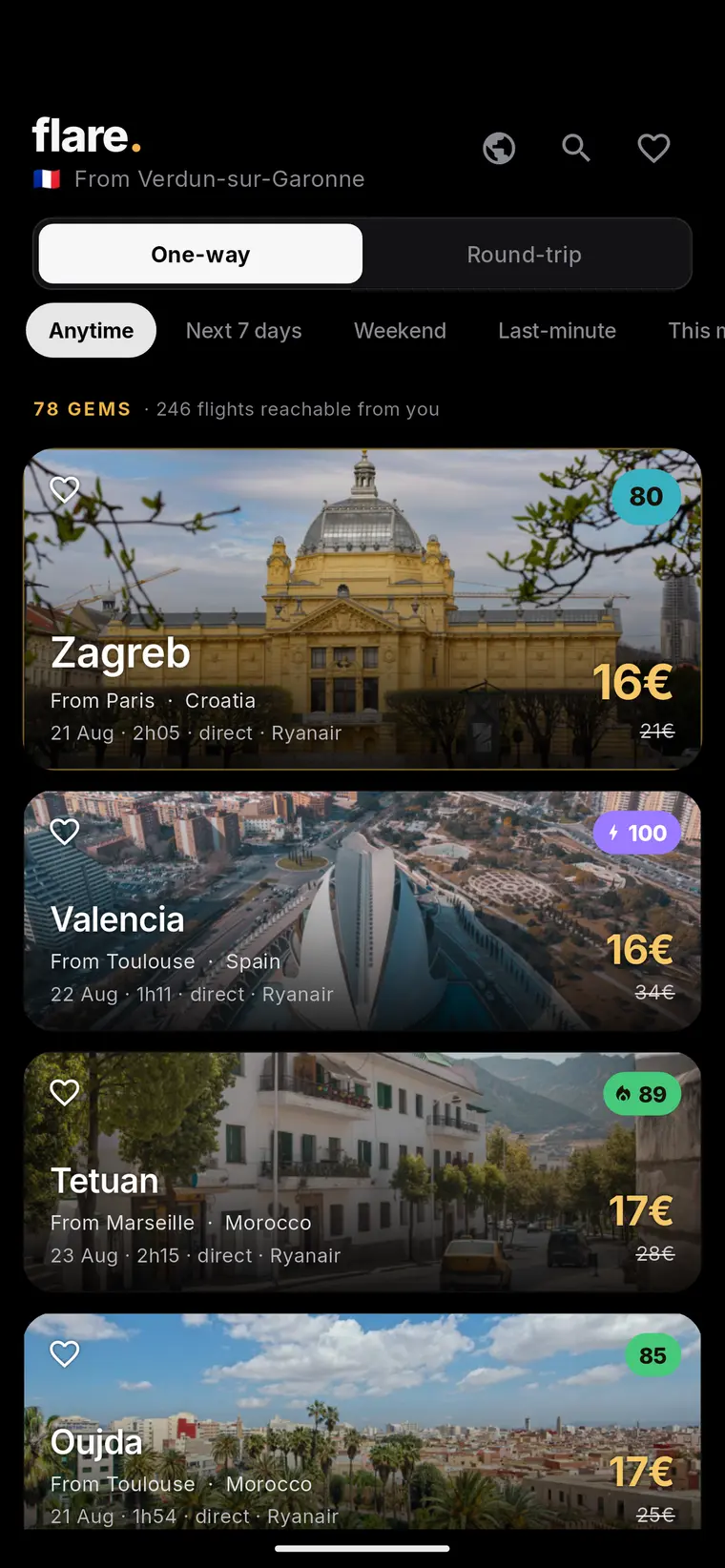
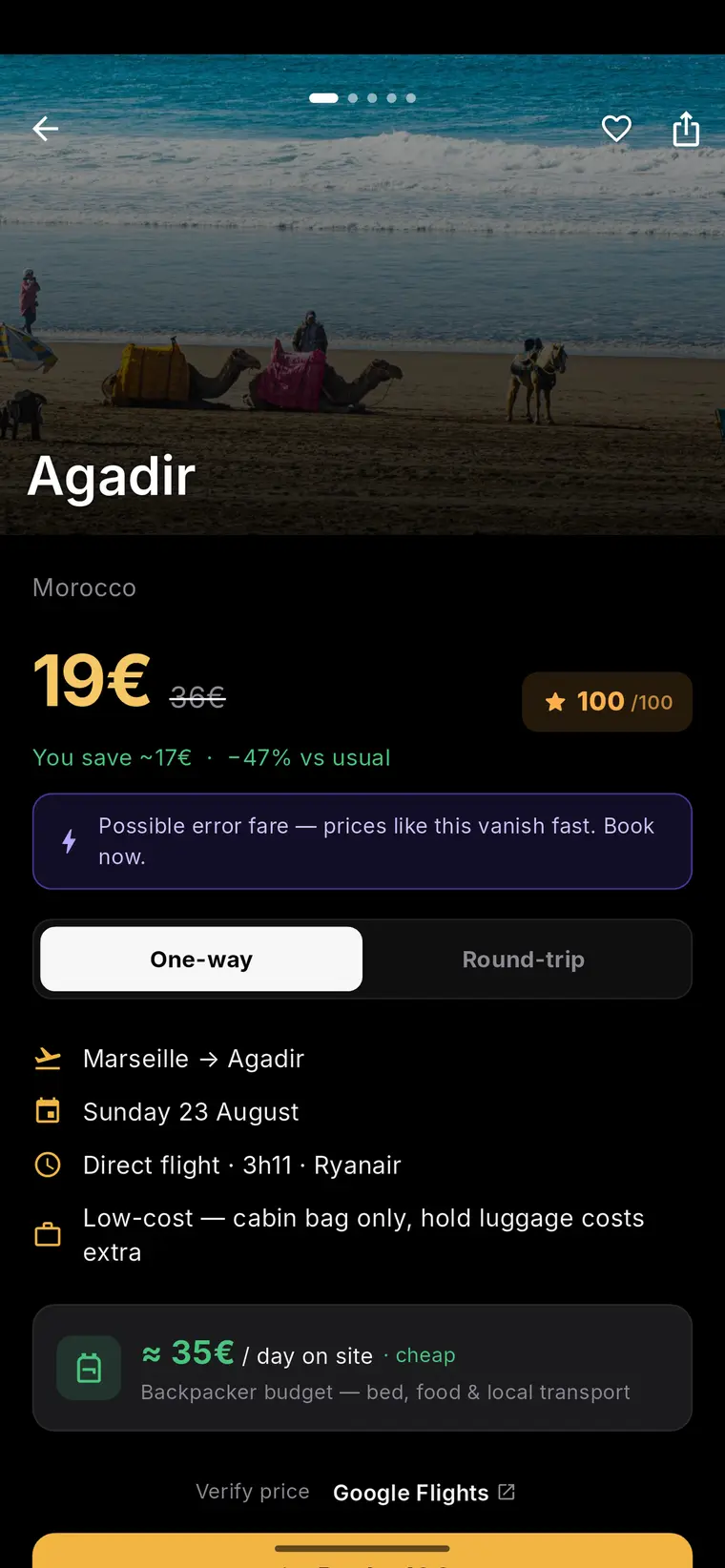
Flare keeps a free public page of error fare candidates. It shows only fares at least 55% below their route reference, from data batches no more than 12 hours old, and the page is normally rebuilt every three hours. The Flare app is free too. Alerts on the free plan arrive about 40 minutes after detection, and Flare Plus sends them as soon as they are detected.
Can Google Flights find error fares?
Google Flights is a search and tracking tool, not a deal club. Its help page explains that you can track prices for chosen dates or for Any dates, and that you get an email when the price for a tracked flight or route changes significantly.
That is useful once you know the route you want, or to check an alert you received elsewhere. The email reports a price change. It does not say whether the airline priced the ticket by mistake, so it will not surface a mistake fare on a route you are not already watching.
Pick the site that covers your departure airport
An error fare only helps if it leaves from an airport you can reach. Going’s guide describes its savings for US travellers, with deals from US airports. Jack’s Flight Club lists airports in the UK and Ireland, mainland Europe and the USA, and its free members can select only one home airport and no short-haul airports.
Dollar Flight Club’s Basic plan follows one departure airport and its Premium plan up to four. Flare’s departure directory lists the cities it currently covers, including departures from the UK, the US, Canada, Australia and much of Europe. Check your own airport on each list before you subscribe to anything.
How fast to act and what to check before you book
Going says mistake fares can last from a few minutes to several hours, and Jack’s Flight Club says the best error fares rarely last more than a few hours. Speed matters more than comparing every site.
Both clubs also advise waiting before you pay for anything non-refundable around the flight. Going recommends about two weeks and Jack’s Flight Club a couple of weeks. Going also suggests booking directly with the airline rather than an online agency.
- Confirm the live price on the airline or booking site, not from a screenshot or a forwarded alert.
- Book directly with the airline when you can, and keep the confirmation and your screenshots.
- Check baggage, stops and fare rules for the exact itinerary before paying.
- Make sure your passport, any visa and entry rules work for those dates.
- Hold off on non-refundable hotels and tours for about two weeks.
Where Flare fits
Flare is a fare discovery app, not a booking engine or a travel agent. It compares each observed fare with a reference for the same route and cannot see whether the airline meant to publish that price. Every row on its error fare page is a candidate to verify, not a confirmed mistake.
Use Flare when your dates are flexible and you want to see what is unusually cheap from your area, for free. Use a paid club if you want curated mistake fare emails from its team, and Google Flights to watch one route you already plan to fly.
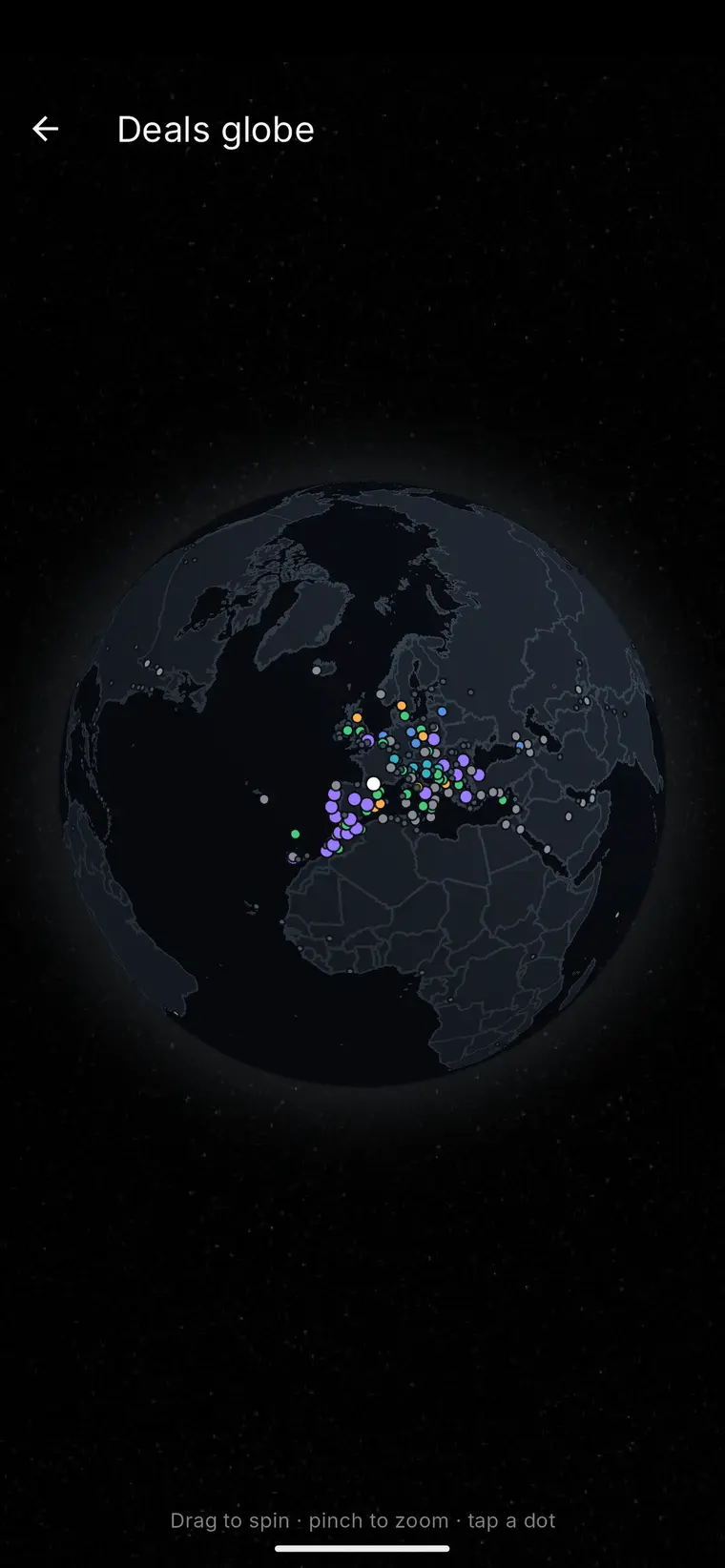
Live destination map
Fare data meets travel intelligence
Move from a current fare signal to a photographed destination page, then use Flare guides to evaluate the complete trip.



Frequently asked questions
What flight search site is best for tracking error fares?
It depends on where you fly from and whether you will pay. Going, Jack’s Flight Club and Dollar Flight Club send mistake fares on paid plans and each covers its own airports. Flare shows free error fare candidates from its covered departures. Google Flights tracks a route but does not flag mistakes.
Are there free error fare alert sites?
The free tiers of Going, Jack’s Flight Club and Dollar Flight Club do not list mistake fares on their own plan pages. Flare’s error fare page is free, and its free app alerts arrive about 40 minutes after detection.
Does Google Flights show error fares?
Not as such. It emails you when the price of a tracked flight or route changes significantly. It does not say whether a price is an airline mistake.
How long do error fares last?
Going says from a few minutes to several hours, and Jack’s Flight Club says the best rarely last more than a few hours. Book quickly, then verify.
Should I book my hotel right after an error fare?
No. Going recommends waiting about two weeks and Jack’s Flight Club a couple of weeks before booking anything non-refundable, in case the airline cancels the fare.
Sources and further reading
These resources provide the wider reference frame. Product statements on this page are limited to the public information provided by Flare.
- Going: how to find mistake fares and which memberships get them
- Jack’s Flight Club: membership comparison
- Jack’s Flight Club: departure airports and free member limits
- Jack’s Flight Club: what is an error fare and how to book one
- Dollar Flight Club: Basic, Premium and Premium+ plans
- Google Flights: track routes and dates
- Flare: today’s error fare candidates and extreme drops
- Flare: public fare observation method
- Mistake fares vs fare drops