


Cheap flight tickets: how to book without guessing
Anyone searching for cheap flight tickets and how to book them is really asking two questions. Where do low fares come from, and what should happen between spotting one and paying for it? The second question matters more. A low number on a screen is only a starting point. Most disappointments come from acting on it before checking what it includes, whether it still exists and whether the trip is actually possible for you.
This article focuses on that gap. It does not promise a secret day or trick that always produces the lowest price, because no honest source can. Instead it sets out a sequence that flexible travellers can follow. Widen the search, compare total trip costs and understand what a deal signal can and cannot tell you. Then confirm everything with the booking provider and official sources before committing.
Start flexible: dates, airports and destinations
Flexibility is the main lever most travellers control. You can shift departure by a few days, consider a nearby airport or stay open about the destination itself. Each of these gives you more fares to compare. Searching outward from your departure city, rather than fixing a destination first, can surface options you would not have thought to check.
That openness has limits, and it helps to define them before you start. Decide which dates are genuinely impossible, how far you will travel to an alternative airport and what total budget counts as worthwhile. Setting these boundaries early stops a cheap-looking fare from pulling you into a trip that costs more time, money or annual leave than it saves.
- List fixed constraints first: work, school dates, events you cannot miss.
- Note every airport you could realistically reach and the cost of getting there.
- Keep two or three destination ideas open rather than one.
Price the whole trip, not the headline fare
The fare shown in a search result rarely equals what you will spend. Several costs can change which option is actually cheaper: - checked bags and seat selection - payment charges - transfers to a distant airport - an overnight stay before an early departure - accommodation at the destination A fare that looks noticeably lower can lose its advantage once these are added.
A practical habit is to build a quick total for each serious option on the same basis. Use the luggage you will really carry, the times you will really travel and the ground transport you will really need. Comparing like with like is what turns a list of prices into a decision.
- Baggage and seat charges for your actual needs
- Getting to and from each airport, including early or late hours
- Extra nights or meals caused by awkward timings
- Change and cancellation terms if your plans are uncertain
What a deal signal does and does not tell you
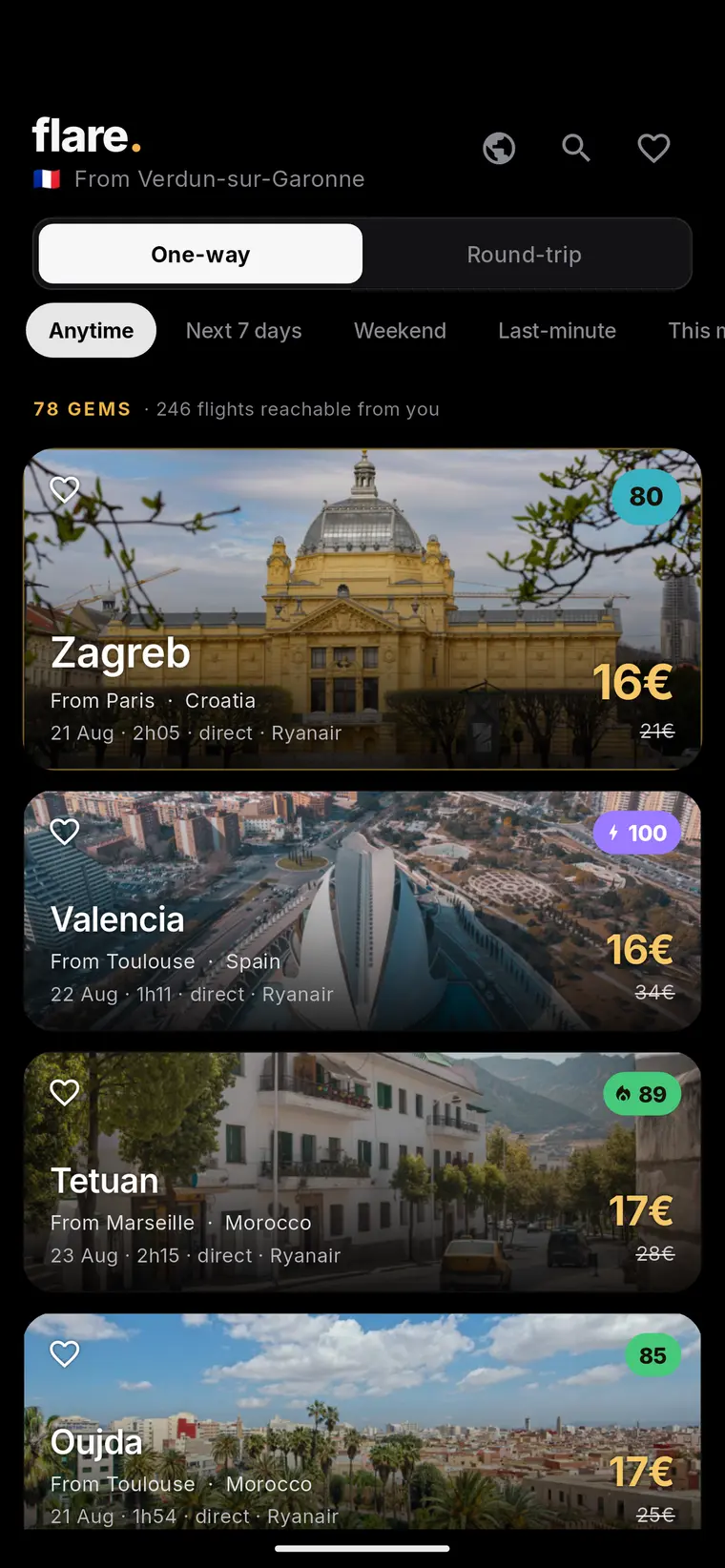
Deal alerts and discovery pages are useful for spotting fares worth investigating, but it helps to know how they define a deal. Flare publishes flight-deal pages starting from a traveller's departure city. Its methodology explains that it only surfaces fares its monitoring finds at least 30% under the reference price it uses for that route. That tells you a fare is low relative to a benchmark. It does not tell you the fare will still be bookable when you click, or that it fits your trip.
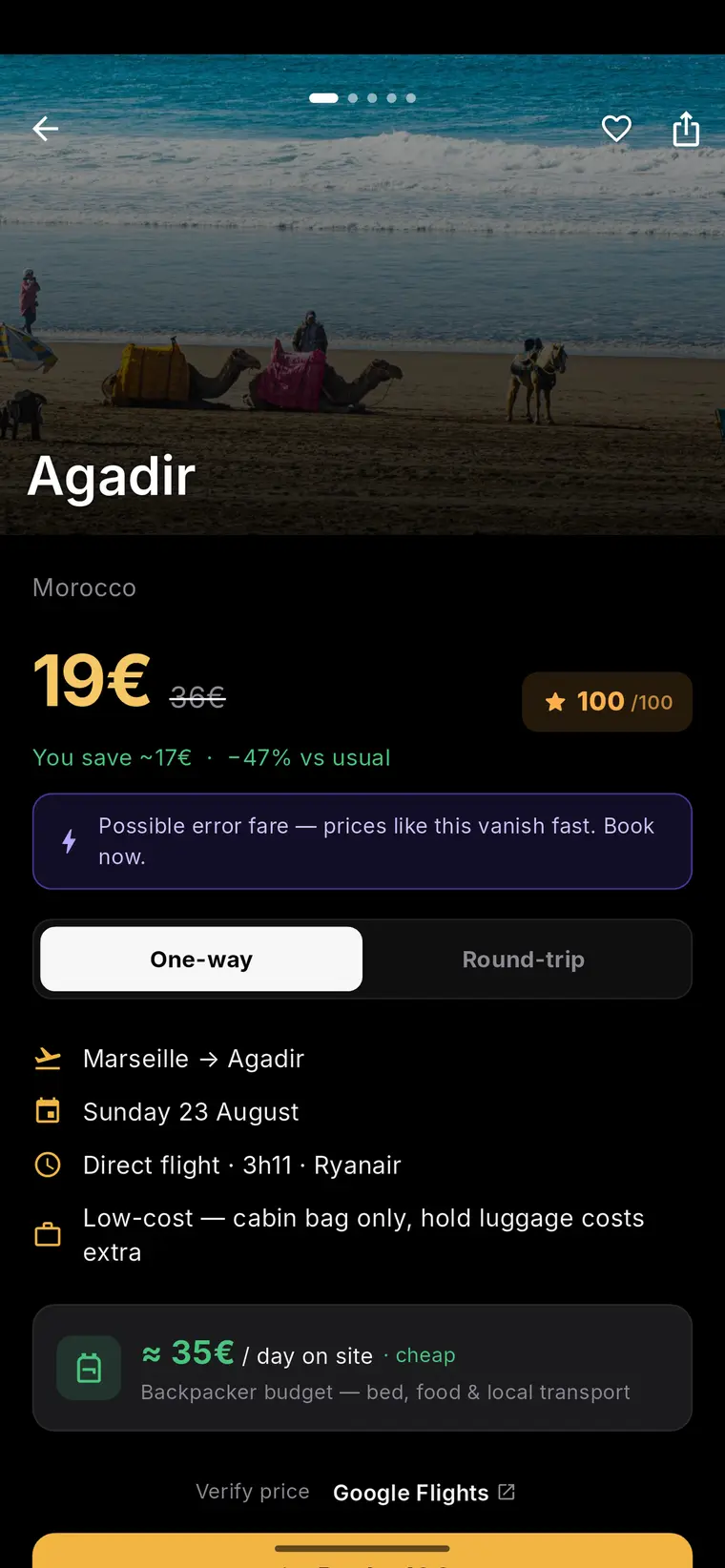
Flare's guide on mistake fares versus fare drops separates two different things. The first is a Flare price drop. This is a measured difference between an observed price and an internal reference, and it does not explain why that price exists. The second is a confirmed mistake fare, meaning a price the seller did not intend. Even a steep Flare signal cannot show whether a fare is a promotion, a different trip shape or a pricing error. Only the airline or booking agency can confirm that a fare was a mistake.
The guide adds that the main practical risk is that the price or availability has already changed. Before paying, repeat the exact search with the same IATA airport codes, dates, number of travellers and trip shape. If you plan to spend non-refundable money on hotels or other arrangements, wait until the ticket is issued with a ticket number and the booking is confirmed.
Worked example: comparing two cheap fares (hypothetical)
Example only, with illustrative figures. A traveller sees Fare A for 90 and Fare B for 130 to the same city. Fare A leaves at 6 a.m. from an airport two hours away and includes no checked bag. Fare B leaves mid-morning from the local airport with a bag included. Fare A then needs a bag at 40, a transfer at 30 and a hotel the night before at 70. That brings it to 230, against 130 for Fare B.
In this hypothetical, the apparently cheaper ticket costs more and adds a night away. The numbers are invented; the method is what matters. Write down every cost each option forces on you, then compare. If the totals are close, weigh flexibility terms and travel time. If they are far apart, the decision is usually obvious.
Before you pay: a booking checklist
Once one option clearly wins, slow down for a final check. Prices and seat availability can shift between the moment you see a fare and the moment you pay. The only figure that counts is the one the airline or booking provider confirms at checkout. Read the fare conditions there, not in a summary elsewhere.
Equally important are the rules that apply to you personally. Passport validity, visas, entry conditions and health requirements depend on your nationality, your destination and sometimes your route. Check current official government and airline sources before you book and again before you travel, since requirements can change.
- Repeat the exact search with the same airport codes, dates, travellers and trip shape.
- Confirm the final price and conditions on the provider's own checkout page.
- Wait for ticket issuance and confirmation before non-refundable spending elsewhere.
- Check passport validity and visa or entry rules on official sources.
- Review any health or transit requirements for your route, and recheck shortly before departure.
Live destination map
Fare data meets travel intelligence
Move from a current fare signal to a photographed destination page, then use Flare guides to evaluate the complete trip.



Frequently asked questions
How should I book cheap flight tickets safely?
Compare several options flexibly and add up the full trip cost, including bags and airport transfers. Then confirm the final price and fare conditions directly with the airline or booking provider. Before paying, check current official passport, visa, entry and health requirements for your nationality and destination.
Does a fare marked as a deal guarantee I can still book it?
No. A deal label usually means a fare was found to be low compared with a reference price, but prices and availability can change at any time. Repeat the exact search before paying. The only reliable figure is the one confirmed by the airline or booking provider at checkout.
What is the difference between a mistake fare and a fare drop?
On Flare, a fare drop is a measured difference between an observed price and an internal route reference. It does not explain why the price exists, so it could be a promotion, a different trip shape or a pricing error. A mistake fare is a price the seller did not intend, and only the airline or booking agency can confirm one. Either way, wait until the ticket is issued and confirmed before spending non-refundable money elsewhere.
Sources and further reading
These resources provide the wider reference frame. Product statements on this page are limited to the public information provided by Flare.