

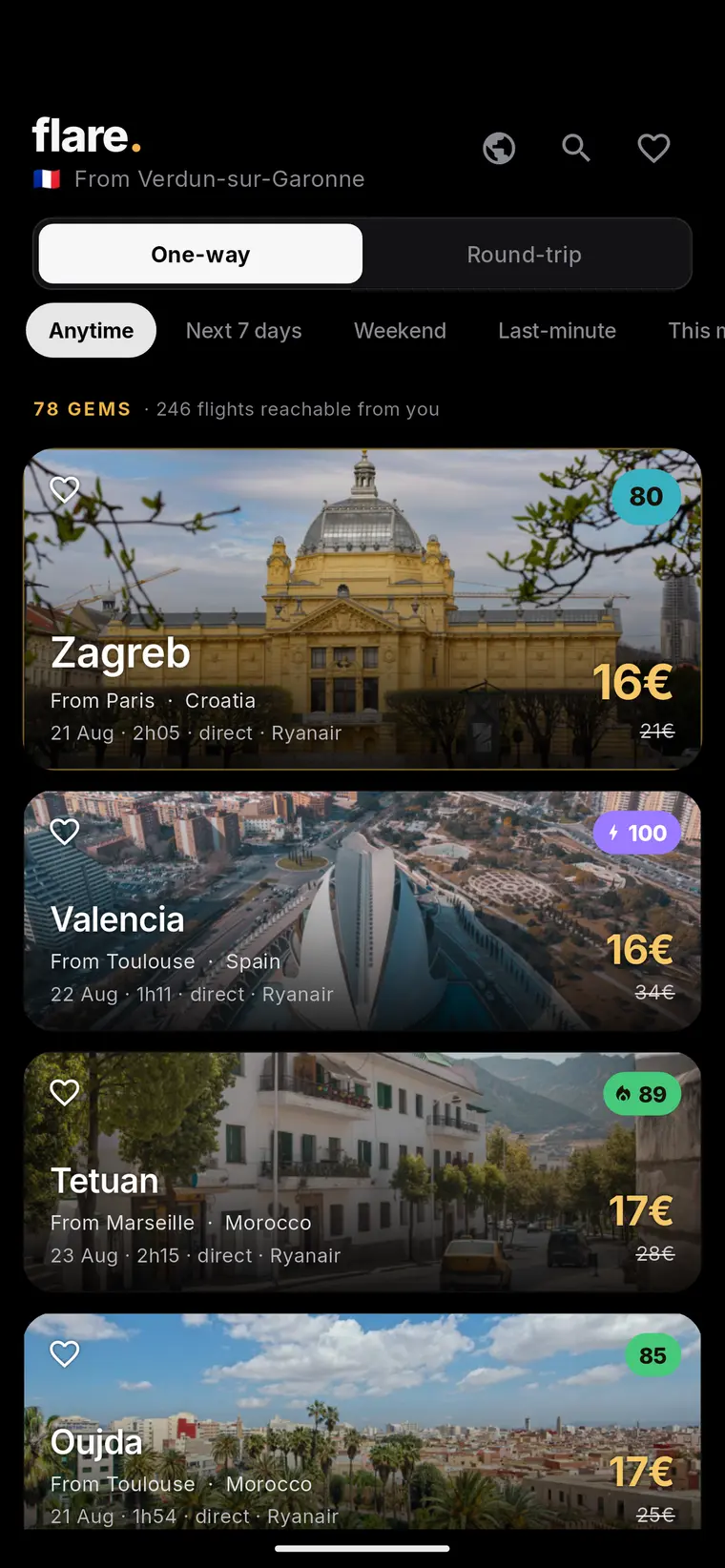
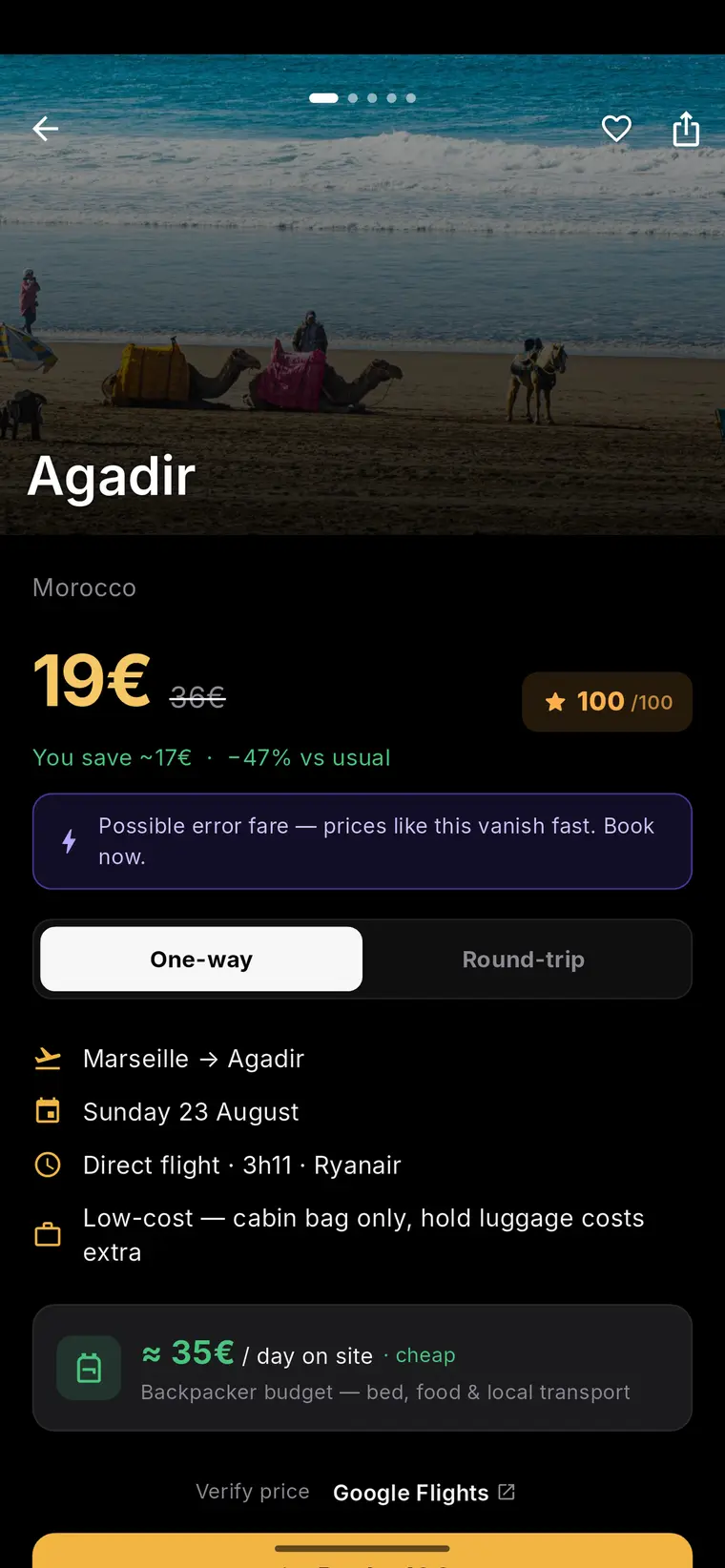

What a mistake fare website actually does
A mistake fare website is a service that spots airfares priced far below what a route normally costs and tells travellers about them quickly. Some of those fares come from genuine errors, such as a missing fuel surcharge, a currency conversion slip or a misfiled fare class. Others are simply aggressive sales that look like errors because they are so low. The site does not sell the ticket or control the price. It points you toward a fare that exists, for now, somewhere else.
That distinction shapes everything that follows. When you act on an alert, you are dealing with the airline or booking provider, not the site that flagged the fare. The alert is a lead, not a reservation, and the price you saw may already be gone or different by the time you reach checkout.
Mistake fares versus ordinary fare drops
Not every unusually cheap fare is a mistake, and the difference matters for how you behave after booking. A true pricing error carries a specific risk: the carrier may decide not to honour it and cancel or reprice the ticket. A fare drop, by contrast, is a price the airline intended to offer, even if it is short-lived. Both can look identical on a search results page.
Flare's guide on mistake fares versus fare drops is useful here because it treats the label as something to reason about rather than a promise. A reasonable working rule is to treat any striking fare as uncertain until the booking is confirmed and has stood for some time, regardless of what an alert calls it. Whether an airline must honour an erroneous fare depends on its terms and local rules, which vary, so check the carrier's conditions rather than assuming either outcome.
Limits that apply before you act on any alert
The first limit is time. Low fares on popular routes tend to disappear or change, so the figure in an alert is a snapshot. Always confirm the final price, baggage rules and fare conditions on the booking provider's own page before paying.
The second limit is the rest of the trip. A cheap seat can become an expensive journey once you add checked bags, seat selection, airport transfers, accommodation in a pricey week, or a long layover that forces an overnight stay. Comparing total-trip cost across two or three flexible options usually tells you more than the headline fare alone.
The third limit is you. Entry rules, passport validity, visas and health requirements differ by nationality and destination, and they can change. A fare is only a deal if you can actually travel, so check current official government sources before booking and again before departure.
Where Flare fits, and where it stops
Flare builds deal-discovery pages around the city you fly from, which suits travellers who are flexible about where they go and want to compare ideas side by side. According to its published methodology, a fare is only surfaced when its monitoring detects it at a level at least 30% under the reference price it uses for that route.
That threshold describes how a fare was selected, not whether it is an error, whether it is still bookable, or whether it suits your plans. Flare does not issue tickets, and nothing on its pages replaces confirming the live price with the provider or checking official entry requirements yourself.
Example: deciding on a fare that looks too good
Example, hypothetical: Sam sees a return fare from their home city to a European capital at roughly half the price they usually see for that route. The alert suggests it may be a mistake fare. Sam's dates are flexible within a two-week window, and their passport has seven months of validity left.
Sam opens the provider page and confirms the price still appears, then checks that it excludes checked luggage. Adding one bag each way narrows the saving but it remains substantial. Sam compares that total against a second destination with a smaller discount but cheaper accommodation, and finds the first option still comes out ahead for the planned week.
Sam books the flight only, then waits several days before reserving a refundable hotel and avoids non-refundable extras until the airline has issued the ticket and the booking looks settled. Before booking, Sam also checks the destination's official entry page to confirm that their passport validity meets the requirement. If the fare is cancelled, Sam has lost little beyond time.
A pre-booking checklist for mistake fare alerts
Use this list each time an alert tempts you. It is deliberately short so you can run through it before the fare vanishes, without skipping the checks that protect you if something goes wrong.
- Confirm the live price and fare conditions on the booking provider's page, not just the alert.
- Add bags, seats, transfers and accommodation to estimate the total-trip cost.
- Compare at least one alternative destination or date range if you are flexible.
- Check passport validity, visa and health entry rules on current official sources.
- Wait until the ticket is issued and has stood for a while before booking non-refundable extras.
- Read the airline's terms on cancellations so you know what happens if the fare is withdrawn.
Live destination map
Fare data meets travel intelligence
Move from a current fare signal to a photographed destination page, then use Flare guides to evaluate the complete trip.



Frequently asked questions
Is a mistake fare website the same as a travel agent?
No. A mistake fare website flags unusually low airfares it has found, but it usually does not sell or guarantee the ticket. You book with the airline or a booking provider, so the price, availability and conditions must be confirmed there before you pay.
Can an airline cancel a ticket bought at a mistake fare?
It can happen. Whether a carrier honours an erroneous fare depends on its terms and the rules that apply where you booked, and these vary. A cautious approach is to avoid non-refundable hotels or extras until the ticket is issued and the booking has stood for some time.
What should I check before booking a very cheap flight from an alert?
Confirm the current price and fare rules with the booking provider, estimate the full trip cost including bags and accommodation, and verify passport, visa and health entry requirements on official government sources for your nationality and destination, both before booking and again before departure.
Sources and further reading
These resources provide the wider reference frame. Product statements on this page are limited to the public information provided by Flare.