



What cheap airfares for all airlines alerts can realistically promise
People searching for cheap airfares for all airlines alerts usually want one thing: a single notification stream that watches every carrier and tells them when a fare becomes unusually low. That is a reasonable goal, but no source quoted here claims that complete coverage. Alert tools work from the fare data they can reach, and the wording each one uses for its coverage is the honest boundary of what it watches.
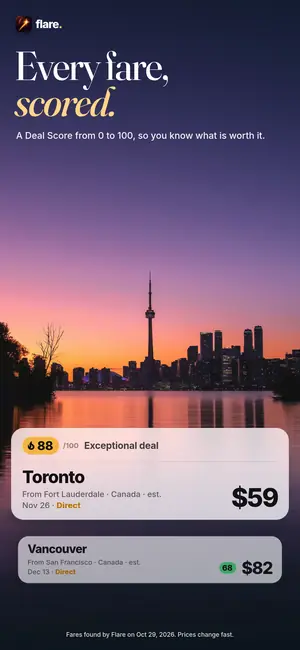
Flare is one example. Its methodology describes combining fare candidates from multiple airline and flight-search data feeds, then publishing deal discovery pages organised around a departure city. That is broad, but it is not a guarantee that every airline, every fare class or every seat is represented. Treat any alert as a lead worth checking, not as proof that you have seen the whole market.
How a fare drop is measured before an alert fires
Every alert answers the question "cheap compared with what?" and the answer shapes what you receive. Google's help page for Google Flights explains that when you track a route for any dates, you get an email when the route's minimum price drops significantly over a month, and otherwise a regular email with the best available prices. The threshold for "significant" is not spelled out in that excerpt, so the alert tells you about movement rather than giving you a fixed benchmark.
Flare's methodology is more explicit about its own gate. Where enough route history exists, the comparison value is a median of observed baseline prices, with the outer 10% of observations trimmed first, and a fare must sit at least 30% below that reference to qualify for the public collection. A separate Deal Score, which must reach at least 55, is described as an internal prioritisation signal weighing the size and confidence of the drop alongside stops, duration and trip shape. The methodology is clear that a high score is not an external rating and does not make a fare verified.
The practical lesson is to understand the baseline before trusting the adjective. A large percentage drop against a well-established route median means something different from a drop against a short or patchy history, and neither tells you whether the fare still exists when you click through.
Route alerts versus discovery from your departure city
There are two broad ways to use alerts, and they suit different travellers. Route tracking, as Google describes it, starts from a departure airport and a destination you already chose, with options for specific dates, flexible dates or even a specific flight. It is useful when the destination is fixed and the open question is timing. Google also says it may notify you when prices on a tracked route are likely to rise or when a current fare is expected to expire soon.
Discovery starts from the opposite end: you know where you leave from and are open on where you go. Flare's public pages follow that pattern, grouping timestamped observations by departure city and destination. For a flexible traveller, this supports genuine comparison across destinations rather than watching one route and waiting. Many people combine both, using discovery to find an idea and route tracking to watch it afterwards.
Reading an alert in total-trip context
A fare alert reports one number, but the trip has several. Before reacting, translate the headline fare into the full cost and effort of the journey. Flare's own scoring considers stops, duration and trip shape, which is a reminder that a low fare with a long connection or an awkward itinerary may not be the bargain it looks like.
Think about the components the alert does not show: getting to and from the airports involved, any extra nights needed to fit the dates, and whatever the booking provider charges beyond the base fare. Compare like with like by building the complete trip on the provider's site rather than comparing a headline fare against your memory of a different itinerary.
- Check the number of stops and total travel time, not just the price.
- Confirm which airports are involved at both ends and how you would reach them.
- Look at the full price on the booking provider's checkout, including any extras you need.
- Consider whether the dates force extra accommodation or time off.
Worked example: deciding whether to act on an alert
Example (hypothetical, for illustration only): a traveller with flexible spring dates sees a discovery page flagging a return fare from their city to a coastal destination, marked as well below the route reference. They had not considered that destination, but it fits their budget. Instead of booking immediately, they use a short decision sequence.
First, they open the booking provider and rebuild the exact itinerary, accepting that the price or seats may already have changed since the observation was timestamped. Second, they compare total travel time against a direct alternative they would normally choose. Third, they add the costs of reaching the departure airport and of the nights the dates require. Only then do they check entry and document requirements for their own nationality. If the fare survives all four steps, it is a real option; if it falls apart at step one, the alert still did its job by surfacing an idea.
- Step 1: Reconfirm price and availability with the booking provider.
- Step 2: Compare stops and duration with your usual alternative.
- Step 3: Add ground transport, accommodation and extras for a total-trip figure.
- Step 4: Check current official entry, passport, visa and health requirements.
- Decide: book, set a route tracker, or let it go.
Checks no fare alert can do for you
Even the most transparent alert describes a past observation. Flare's methodology says plainly that its public pages are not a booking engine, a travel agency quote or a promise that a seat is still available. Fares move, and the booking provider is the only place where the price and the seat can be confirmed at the moment you pay.
Travel eligibility is a separate question entirely. Entry rules, passport validity, visas and health requirements vary with your nationality and your destination, and they can change. Check current official sources for your situation before booking and again before departure. An alert can tell you a trip looks affordable; only those checks can tell you whether it is possible.
Live destination map
Fare data meets travel intelligence
Move from a current fare signal to a photographed destination page, then use Flare guides to evaluate the complete trip.



Frequently asked questions
Do cheap airfare alerts really cover all airlines?
Not necessarily. Alert tools work from the fare data they can access, which may come from several airline and flight-search sources without including every carrier or fare. Read each tool's own coverage description and treat any alert as a starting point rather than a complete view of the market.
How do fare alerts decide that a price is cheap?
Each tool compares the current fare against a reference. Google Flights describes emailing tracked-route users when a route's minimum price drops significantly over a month. Flare's published methodology uses a trimmed median of observed route prices as a reference and only surfaces fares at least 30% below it, alongside an internal prioritisation score.
What should I check before booking a fare from an alert?
Reconfirm the price and availability directly with the booking provider, since fares can change after an alert is generated. Then compare stops, travel time and total trip costs, and verify current official entry, passport, visa and health requirements for your nationality and destination before booking and again before you travel.
Sources and further reading
These resources provide the wider reference frame. Product statements on this page are limited to the public information provided by Flare.