


What airfare alerts actually tell you
Airfare alerts are notifications that tell you a fare has moved, or that a price looks unusually low compared with some point of reference. They save you from checking the same route every morning. They answer one narrow question: did a number change? They do not tell you whether the trip is right for you, whether the seat will still be there in an hour, or what the journey will cost once everything else is added.
Before acting on an alert, it helps to know which number it is reacting to. Some alerts follow one route and set of dates you picked yourself. Others scan many routes and flag fares that stand out against a typical price. Both are useful, but they mean different things. A drop on a route you were already planning is a timing signal. A standout fare to somewhere you had not considered is an idea that still needs checking.
Route tracking versus deal discovery
Google's help page explains that Google Flights lets you track prices for specific flights, or for a route on chosen dates or on 'Any dates'. You then receive email updates when the price changes significantly, and Google may also email you when prices are likely to rise. This kind of tracking works best when your destination is fixed and your main question is when to book. The trade-off is that you only hear about trips you already thought of. Features and notification options can change over time, so check the current help page rather than relying on a fixed description.
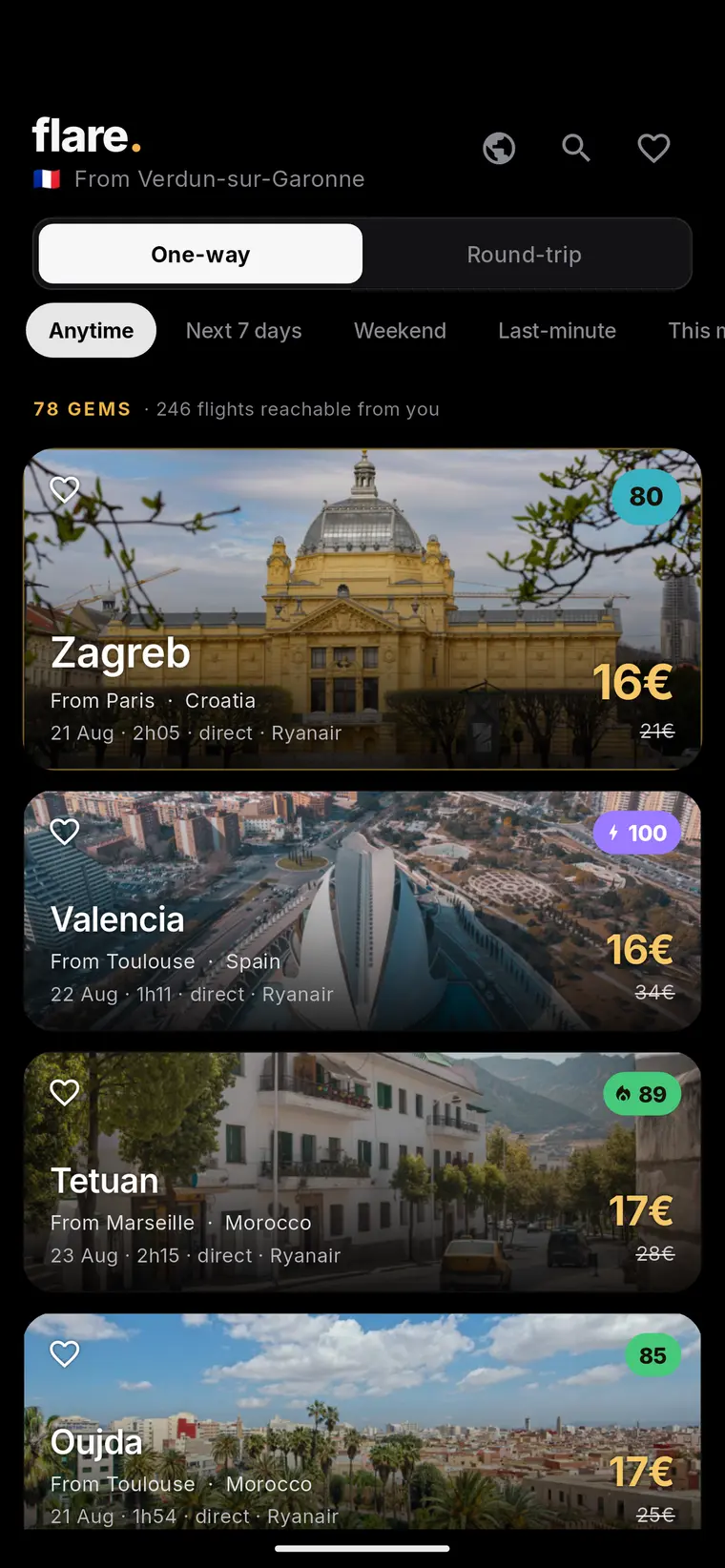
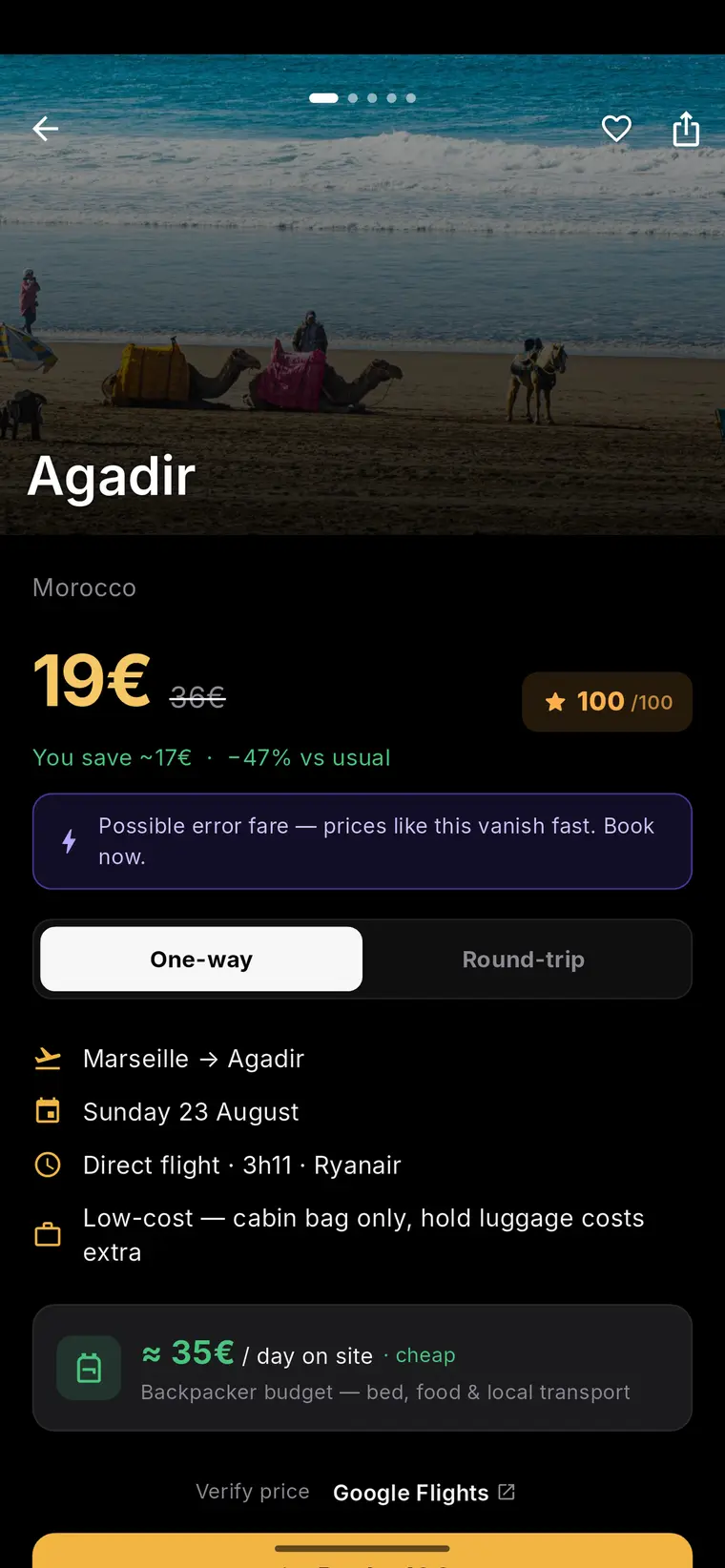
Discovery-style alerts start from where you fly from and work outward. Flare publishes flight-deal pages built around a traveller's departure city. According to its published methodology, a fare is surfaced only when it sits at least 30% under the reference price its monitoring uses for that route. That threshold tells you a fare is unusual relative to Flare's own benchmark. It does not mean the fare beats every other option on the market, or that it will stay at that level.
The two approaches suit different moments. Use tracking when the destination is decided. Use discovery when you are flexible about where or when and want ideas worth comparing.
The limits every alert shares
The most important caveat is timing. A fare shown in an alert reflects what was observed at a certain moment. Prices and seat availability can shift between the notification and your click, and again between search and payment. Treat every alerted price as provisional until the booking provider confirms it on the final payment screen.
The second limit is what the price includes. A low headline fare may come with restrictive conditions: no checked bag, no seat selection, limited changes or no refund. An alert rarely shows these details, so the saving can shrink once you add what you actually need.
The third limit is the reference point. A fare is only "low" against something: a past price for that route, an average, or a benchmark defined in a methodology. When a service explains how it sets that benchmark, read it. That tells you what the discount really measures.
Putting an alerted fare in total-trip context
A flight is usually the start of a trip, not the whole cost. Accommodation, airport transfers, local transport and time off work can easily outweigh a difference of a few dozen in the airfare. A cheap flight that lands after midnight may force an expensive taxi or an extra hotel night. A deal that only works on dates you cannot take off is not a deal for you.
Flexible travellers get the most from alerts because they can adjust dates, airports or destinations to fit a low fare. That flexibility works best when you compare whole trips side by side, not single fares.
Worked example and a pre-booking checklist
Example (hypothetical, for illustration only): a traveller sees an alert for a return flight to a coastal city that is well below the usual fare for that route. Before booking, they open the airline's site and find the price is slightly higher than the alert showed. The fare also excludes a checked bag, which they need for a week-long stay. The outbound flight arrives late, so they would need a taxi rather than the train. After adding the bag and the transfer, the saving is smaller but still real, and the dates work. They book. A second alert for a different city looks even cheaper. But accommodation there is expensive that week, and the return flight lands on a workday morning, so they skip it.
The point of the example is the order of questions, not the outcome. Use this checklist before acting on any alert:
- Confirm the live price and availability with the booking provider before paying.
- Read the fare conditions: baggage, seat selection, changes and refunds.
- Add transfers, accommodation and any extra nights to get a total-trip figure.
- Check arrival and departure times against public transport and your schedule.
- Compare against at least one alternative date or nearby airport.
- Verify current entry, passport, visa and health requirements for your situation.
Official checks no alert can make for you
Entry rules are personal. Whether you need a visa, how long your passport must remain valid, and which health requirements apply all depend on your nationality, your destination and sometimes your route. A fare alert cannot know any of this, and a low price does not mean a destination is open to you on your dates.
Check official government sources for the destination, and for any transit country, before you book. Check again shortly before you travel, because requirements can change. Doing this first stops a good fare from turning into a non-refundable ticket you cannot use.
Live destination map
Fare data meets travel intelligence
Move from a current fare signal to a photographed destination page, then use Flare guides to evaluate the complete trip.



Frequently asked questions
Do airfare alerts guarantee that I can book the price shown?
No. Airfare alerts report a price observed at a particular moment, and fares and seat availability can change before you complete a booking. The only price that counts is the one the airline or booking provider confirms at checkout, so verify it there before paying.
What is the difference between tracking a flight price and receiving deal alerts?
Price tracking follows a specific route, and often specific dates, that you choose. It tells you when that fare moves, which helps if your destination is fixed. Deal alerts scan routes from your departure area and flag fares that look unusually low against a reference price, which helps if you are flexible about where or when you travel.
What should I check before booking a flight from an alert?
Confirm the live fare and availability with the booking provider. Read the fare conditions on baggage, changes and refunds, and add transfers and accommodation to judge the full trip cost. Then verify current official entry, passport, visa and health requirements for your nationality, destination and any transit points.
Sources and further reading
These resources provide the wider reference frame. Product statements on this page are limited to the public information provided by Flare.