

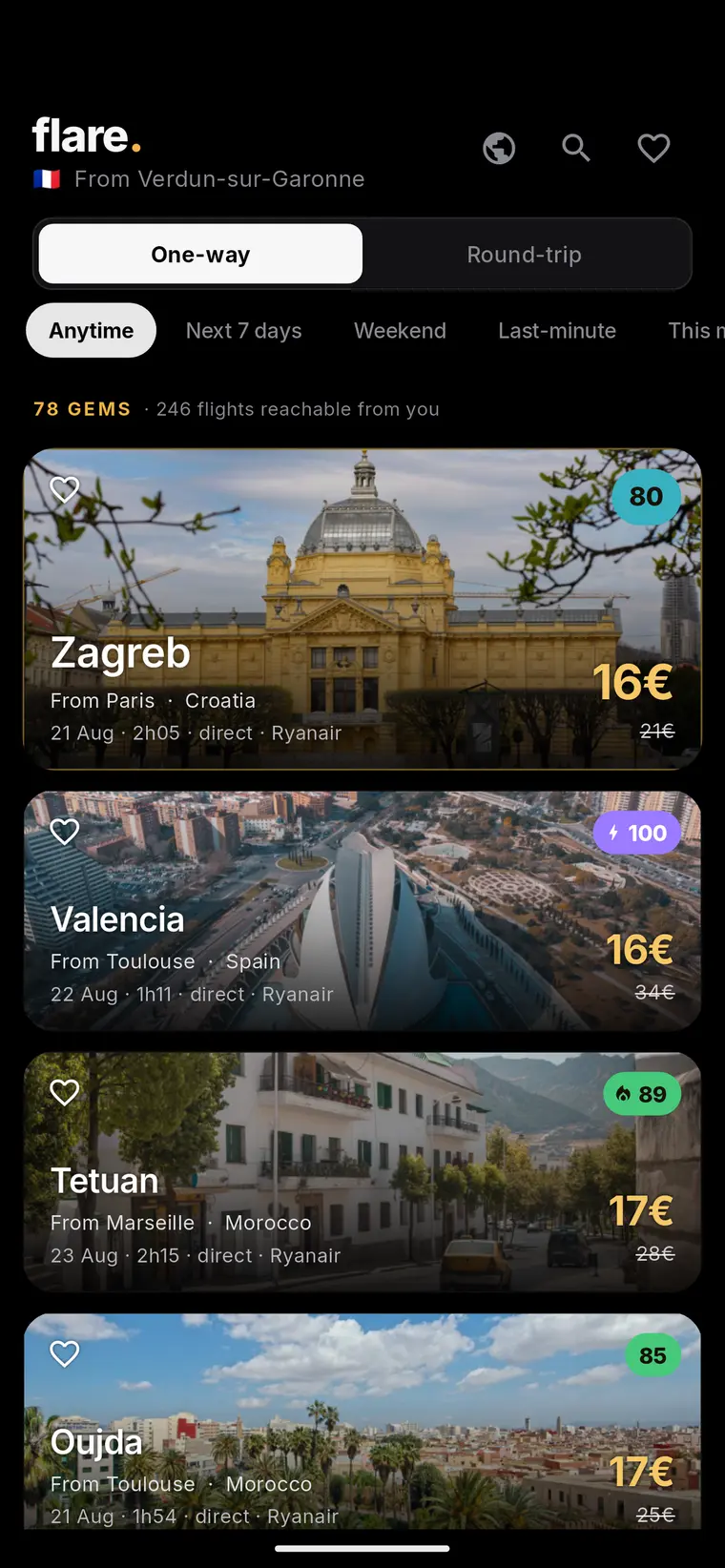
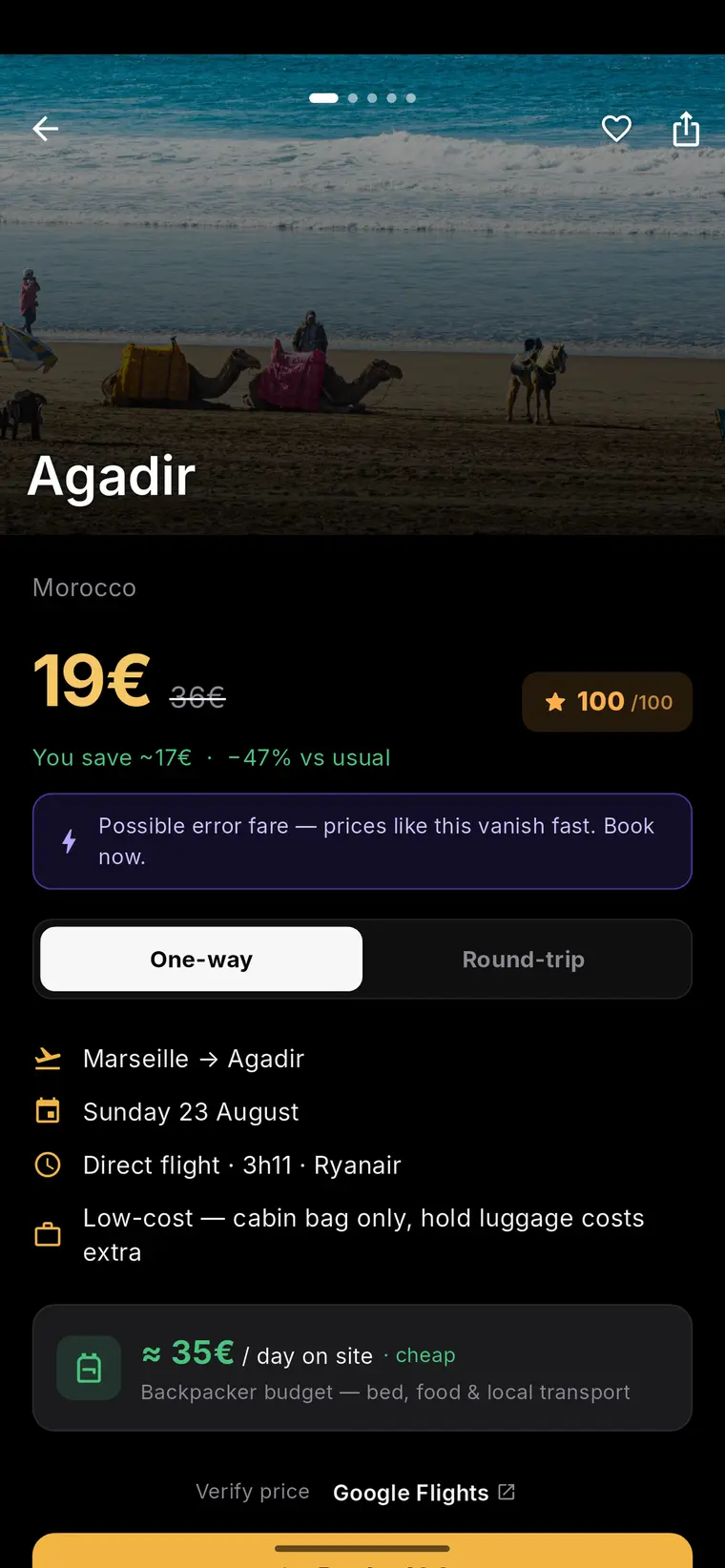
What the best website for airfare deals alerts actually depends on
People searching for the best website for airfare deals alerts usually want one name. No single site fits every traveller, though. The right choice depends on how you travel. If your dates and destination are fixed, you need a tool that watches one route closely. If you could leave any weekend for almost anywhere, you need a tool that shows you places you had not considered. These are different jobs, and an alert that is excellent for one can be noise for the other.
A more useful question is what an alert is claiming when it reaches your inbox. Some alerts say a price changed on a route you chose. Others say a fare is unusually low compared with some baseline. Neither one promises that the seat is still there when you click, that the total trip is cheap, or that you can enter the destination. This article covers those differences and the limits that apply before you act.
Two kinds of alerts: route tracking versus deal discovery
Route tracking starts from your own search. Google's Travel Help page describes this model for Google Flights at the time of writing. You choose an origin, a destination, stops, cabin and number of tickets, then switch on price tracking. You can track your exact dates, a specific flight, or "Any dates" if you are flexible. In the any-dates mode, the help page says you get an email when the route's minimum price drops significantly over a month. If there is no large enough drop, you get a regular email with the best available prices. It also describes notices when prices are likely to rise or when a current fare is about to expire. Features like these can change, so check the current help page rather than relying on a summary.
Deal discovery starts from a departure point and looks outward. Flare works this way: it publishes flight-deal pages organised around the city you would leave from. A fare only appears there when it measures at least 30% below the reference price its monitoring uses for that route. Discovery suits travellers who are open on destination. Route tracking suits travellers who already know where they are going. Many flexible travellers sensibly use both.
How to read a "deal" claim and its reference price
Calling a price a deal only means something once you know what it is being compared with. Flare's methodology page sets out its comparison. Where there is enough route history, the reference is a median of observed baseline prices, with the outer 10% of observations trimmed first. A minimum history is required before the comparison can suggest a large drop. The page also lists further gates, including a Deal Score threshold. It describes that score as a prioritisation signal rather than an external rating, and says a high score does not make a fare verified.
The general lesson applies to any alert service. A percentage drop is only as meaningful as its baseline. A drop against a trimmed median of real observations tells you something different from a drop against an inflated list price. Look for a methodology page. If a service never explains its comparison, treat its "deal" label as marketing language rather than measurement.
Limits that apply before you book
Every alert is a snapshot. Flare's methodology describes its public pages as timestamped observations from recent scans, not a booking engine or a travel agency quote. A route tracker's email is likewise a report of what the price was when it checked. Fares and seat availability move, sometimes within minutes. The price that matters is the one the airline or booking provider confirms at checkout.
The fare is also only part of the cost of a trip. A low base fare can come with no checked bag, a far-off airport, an awkward overnight connection or a return that costs more than the outbound. Entry rules matter as well. Passport validity, visas and health requirements depend on your nationality, your circumstances and the destination. A cheap fare to a place you cannot easily enter is not a deal. Check current official government sources before booking and again before departure.
A decision checklist, with a worked example
Before acting on any alert, run through a short check. It takes a few minutes and filters out most disappointing "deals".
Illustrative example (hypothetical, not real data): a traveller with flexible autumn dates sees a discovery page listing a return fare from their city to a coastal destination, flagged as well below the route reference. They also have a Google Flights tracker on a different route, with a fixed date. They open the discovery listing and go through to the booking provider. The confirmed price has risen slightly but is still low. Adding a checked bag and a train from the arrival airport narrows the gap with their tracked route. They then check the destination's official entry page and find their passport has enough remaining validity. With the total cost and entry confirmed, they book. If either check had failed, the alert's headline percentage would have been irrelevant.
- Confirm the live price and seat availability with the booking provider, not the alert.
- Add bags, seat fees, airport transfers and any extra night caused by the schedule.
- Compare the total with what your own route tracker shows for similar dates.
- Check passport validity, visa and health entry rules on current official sources.
- Read the alert service's methodology so you know what its comparison measures.
- Decide your own price ceiling in advance so urgency does not decide for you.
Choosing a setup that fits how you travel
If your destination is fixed, a route tracker with flexible-date options is the most direct tool, because it watches exactly what you care about. If your destination is open, a departure-city discovery feed surfaces options you would not have searched for. Pair it with a methodology you can read, so you know why something was flagged. Using one of each covers both situations without flooding your inbox.
Whatever you choose, judge the service on clarity rather than on how exciting the alerts sound. Good alerts explain their baseline, show when the price was observed, and send you to the provider for confirmation. Flare's public pages are bounded in this way: they show where an observed fare stood against its route reference, and booking, availability and entry questions stay with the provider and official sources.
Live destination map
Fare data meets travel intelligence
Move from a current fare signal to a photographed destination page, then use Flare guides to evaluate the complete trip.



Frequently asked questions
What is the difference between a flight price tracker and a flight deal alert?
A price tracker watches a route or flight that you chose and tells you when its price changes. A deal alert surfaces fares that a service judged unusually low against its own reference price, often across many destinations. Trackers suit fixed plans, deal alerts suit flexible ones, and neither guarantees the price will still be available at booking.
How can I tell whether an airfare deal alert is trustworthy?
Look for a published methodology explaining what the price is compared with. Examples include a median of past observed prices, how much history is required, and when the fare was observed. Then confirm the live fare with the airline or booking provider and add extras such as bags and transfers before deciding whether it is really a good price.
Does a cheap fare alert mean I can travel to that destination?
No. A fare alert only describes a price at a moment in time. Passport validity, visa and health entry requirements depend on your nationality, your circumstances and the destination. Check current official government sources before booking and again shortly before departure.
Sources and further reading
These resources provide the wider reference frame. Product statements on this page are limited to the public information provided by Flare.