

What a travel error app is really telling you
People who search for a travel error app usually want one thing: an alert when a flight appears at a price so low it looks like an airline or agency slipped up. The appeal is obvious. A fare far below normal can turn an unrealistic trip into a plausible one. But before acting on any alert, it helps to be precise about what the notification actually contains.
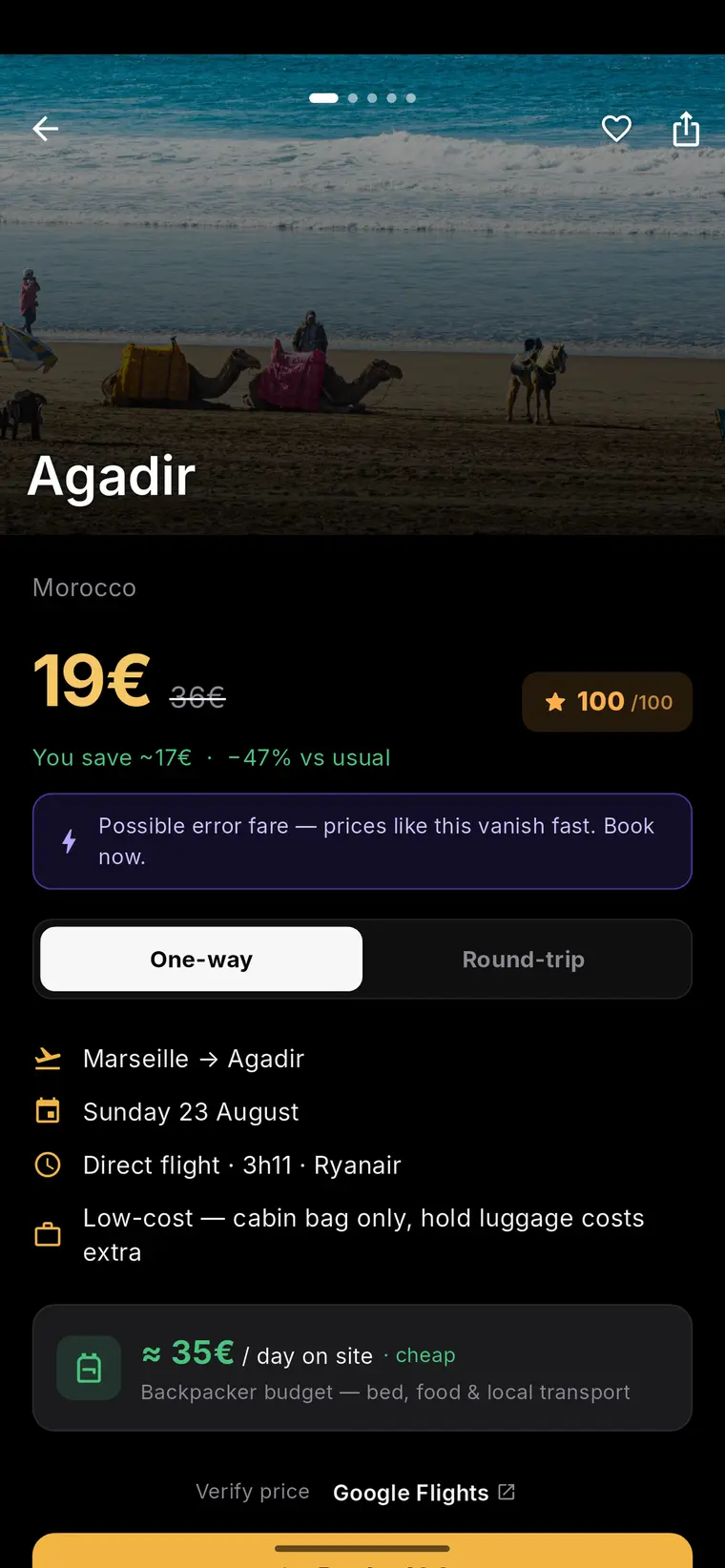
In practice, an alert is a report that a price was observed at a certain moment and that it sits well below some comparison value. That is useful information, but it is not the same as proof that a seller made an error, and it is not a promise that the seat is still there. The gap between those two ideas explains most of the disappointment and risk around error fares.
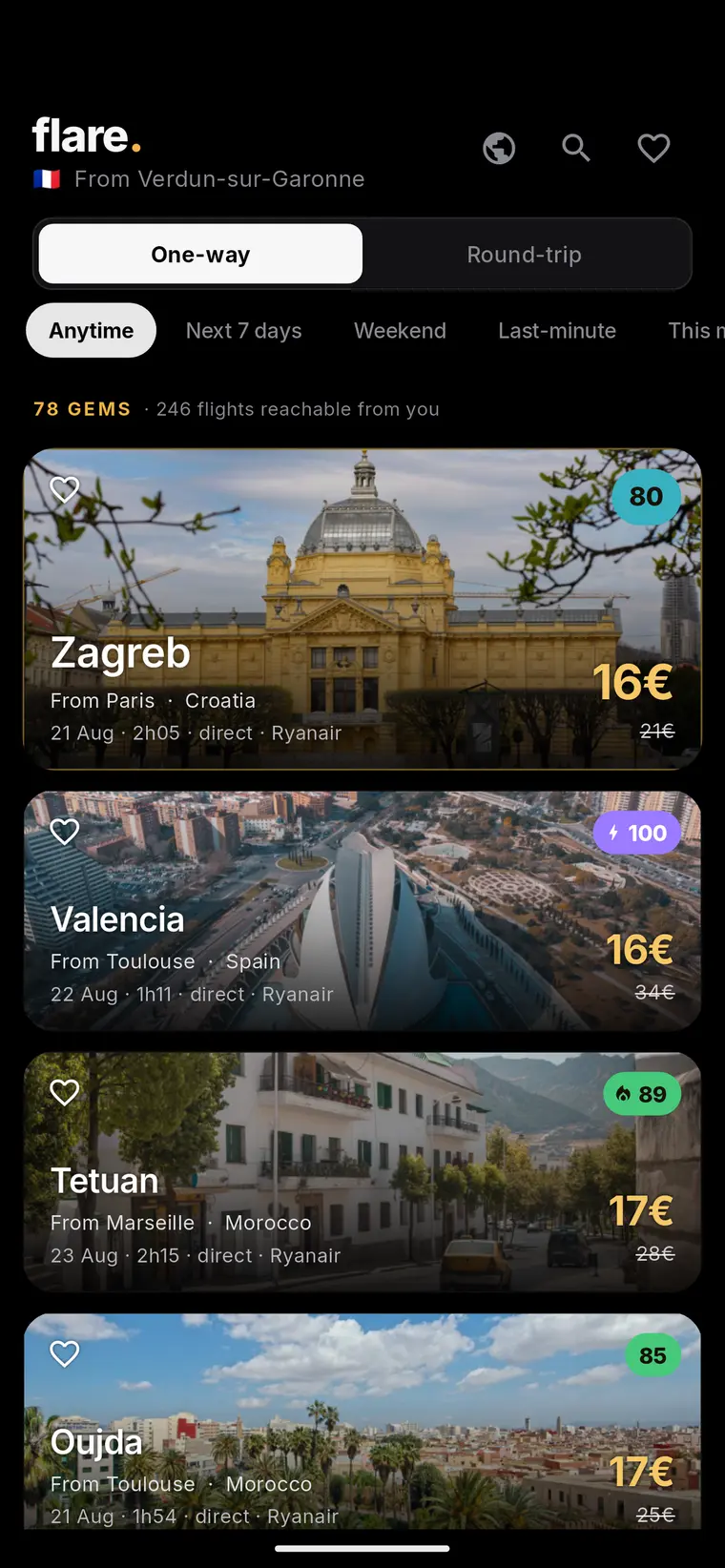
Flare is one example of this kind of fare-discovery product: it surfaces deals from a traveller's departure city, and its methodology states that a fare only appears publicly when it is measured at least 30% under the reference price its monitoring uses for that route. The rest of this article uses that public method to show where any alert's certainty ends.
Mistake fare or measured price drop: why the label matters
The phrase mistake fare normally describes a ticket offered far below the amount the seller intended, perhaps because of a technical fault, a human error, a currency conversion problem or a missing charge. The defining feature is intent. A fare is a mistake because the seller did not mean to publish it, not simply because the discount is large.
A measured price drop is a different claim. It says the observed amount is well below a reference calculated from route history. Airlines run sales, release cheap seats on quiet dates and reprice constantly, so a deep discount can be entirely deliberate. Flare's guide on this topic is explicit that its calculation identifies a meaningful difference but does not diagnose why the price exists.
This distinction changes how you should behave. If a fare is a genuine pricing error, the main risk is that the ticket is cancelled or never issued once the seller corrects it. If it is a deliberate low fare, the main risk is that it sells out or reprices before you finish booking. Treating every cheap alert as an error, or every error as safe, leads to the wrong precautions.
What the numbers behind an alert can and cannot prove
It is worth understanding where the comparison figure comes from, because the whole alert depends on it. Under Flare's published method, where enough route history exists the reference is a median of observed baseline prices after the outer 10% of observations are trimmed, and a minimum amount of history is required. For some long-haul routes a conservative fallback reference can be used instead. A different app may use a completely different baseline, so the same fare can look dramatic in one place and ordinary in another.
Scores need similar care. Flare's Deal Score weighs the size and confidence of the drop alongside stops, duration and trip shape, and must be at least 55 for a fare to appear. The methodology describes it as a prioritisation signal rather than an external rating, and states that a high score does not make a fare verified. That is a sensible way to read any score inside any app: it ranks candidates, it does not certify them.
What the data can establish is the amount, the route, the time of observation and the difference from the reference. What it cannot establish is the seller's intent, current availability or whether the ticket will be honoured. Only the airline, the agency or a reliable confirmation can settle those questions.
Judging the whole trip, not only the headline fare
A low airfare is only one line in the cost of travel. Baggage rules, seat fees, an awkward departure time that requires an extra hotel night, a long connection or a remote airport can all erode the saving. Before getting excited, estimate the total trip cost against a normal alternative rather than comparing two ticket prices in isolation.
Flexibility is what makes these alerts usable. Someone who can shift dates, choose between several destinations or depart from a nearby city is far better placed than someone with fixed plans. If you need a specific week and place, an alert is a pleasant bonus, not a strategy.
Practical conditions also sit outside the fare entirely. Entry rules, passport validity, visas and health requirements vary with your nationality and destination, and they change. Check the official government sources for your own situation before you book and again before you travel, because a cheap ticket to a country you cannot enter is not a deal.
A pre-booking checklist for any travel error app alert
The following checklist turns the points above into decisions you can make in a few minutes. It applies whichever app sent the alert.
Example, for illustration only: imagine an alert for a return flight that appears far below the usual price for the route. You repeat the exact search on the booking provider and find the fare still listed, but with a checked bag adding a meaningful amount and a connection of nine hours. You compare the total with an ordinary direct option, confirm you can enter the destination, and read the fare conditions. If the trip still makes sense and you could absorb a cancellation, booking is reasonable; if not, letting it go is also a sound decision.
- Repeat the exact search with the booking provider; the displayed fare and seats can change at any time.
- Ask whether the price is plausibly a sale or a seller error, and adjust your precautions accordingly.
- Calculate the total trip cost, including bags, seats, transfers and any extra nights.
- Check entry, passport, visa and health requirements on official sources for your own circumstances.
- Hold off on non-refundable hotels, tours or connecting tickets until the ticket is issued and confirmed.
- Read the fare conditions so you understand what happens if the ticket is changed or cancelled.
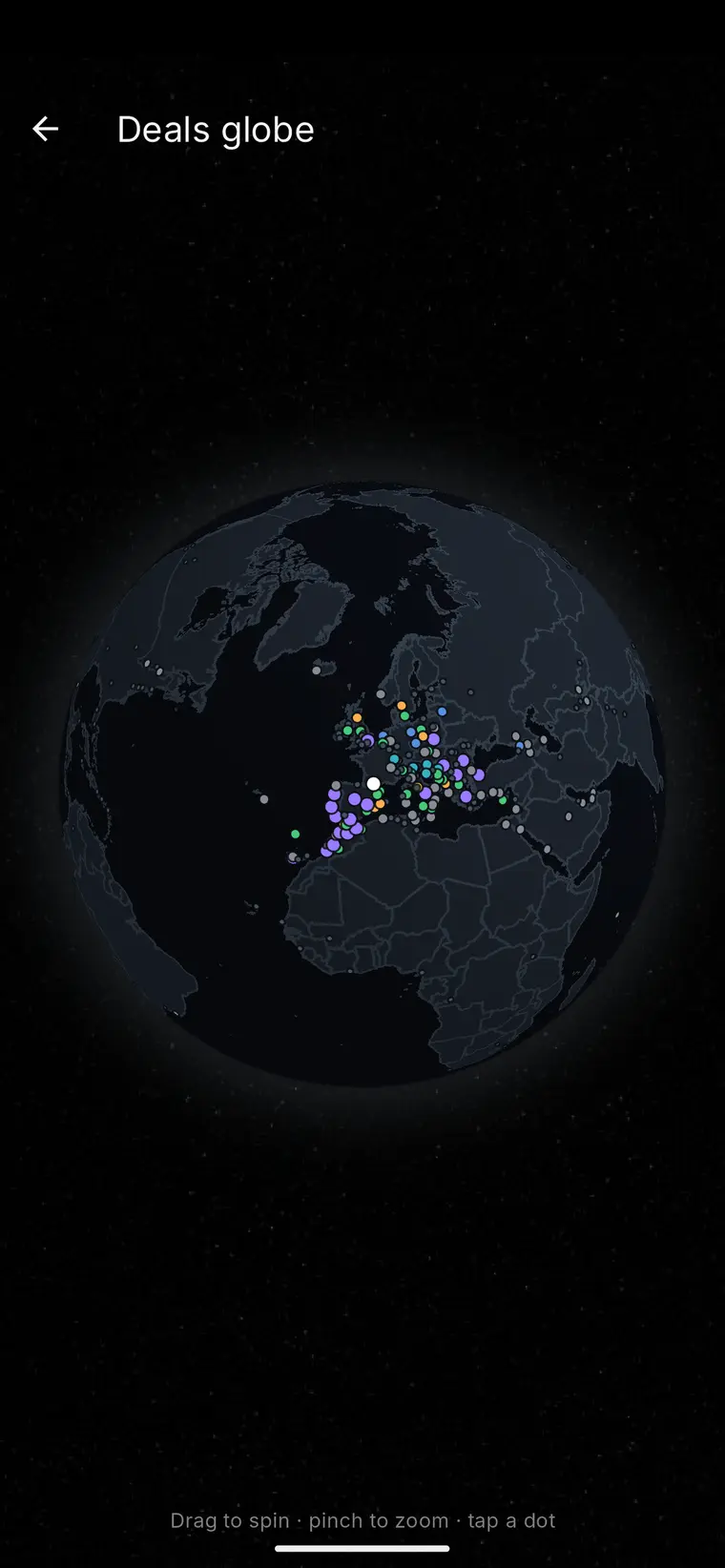
Live destination map
Fare data meets travel intelligence
Move from a current fare signal to a photographed destination page, then use Flare guides to evaluate the complete trip.



Frequently asked questions
Does a travel error app confirm that a fare is an airline mistake?
Usually not. An app can report that a price was observed at a given time and how far it sits below its own reference price. Whether the seller published it unintentionally can only be confirmed by the airline, the travel agency or a reliable source, so a very low price should not be assumed to be an error.
Will an airline honour an error fare I have already booked?
Sometimes, but never automatically. The decision belongs to the airline or agency that sold the ticket, and some cancel tickets after correcting a pricing mistake. Wait until the ticket is issued and confirmed before committing to non-refundable hotels, tours or onward flights, and read the fare conditions.
What should I check before booking a cheap fare from an alert?
Repeat the exact search with the booking provider because fares and availability change quickly, add up the full trip cost including baggage and transfers, confirm current entry, passport, visa and health requirements on official sources, and review the ticket's change and cancellation conditions before paying.
Sources and further reading
These resources provide the wider reference frame. Product statements on this page are limited to the public information provided by Flare.