

What an error fare Netherlands search is really asking
People who search for an error fare Netherlands deal usually want two things at once: a remarkably cheap ticket leaving a Dutch airport, and confidence that the ticket will still exist at check-in. Those are different problems. Finding a low number is a search task. Knowing whether the seller intended that number, and whether the ticket will stand, depends on the seller and the rules that govern the sale.
This article treats the Netherlands as a departure point, not as a special pricing zone. The practical advice is the same whether you start from Amsterdam or another Dutch city. What changes from trip to trip is the route, the seller, the fare conditions and the entry rules at your destination. Keeping those variables separate is the best protection against acting on excitement alone.
Mistake fare or simply a large measured drop?
A mistake fare, in the usual sense, is a ticket offered far below what the seller meant to charge, perhaps because of a human slip, a technical fault, a currency conversion problem or charges accidentally left out. The defining feature is the seller's intent, not the size of the discount. A fare can be dramatically cheap and still entirely deliberate.
A measured price drop is a narrower claim. It says only that, at a particular moment, a price for a specific route sat well below a reference value. It describes a gap without explaining it. The risks differ: a deliberate low fare mostly risks disappearing before you book, while a genuine error risks being cancelled or never issued after you have paid.
The honest starting assumption is that any striking fare is an unexplained low price until the airline or agency indicates otherwise. Labelling it an error fare in your own head can create false confidence or false alarm.
How Flare reads a low fare, and where its figures stop
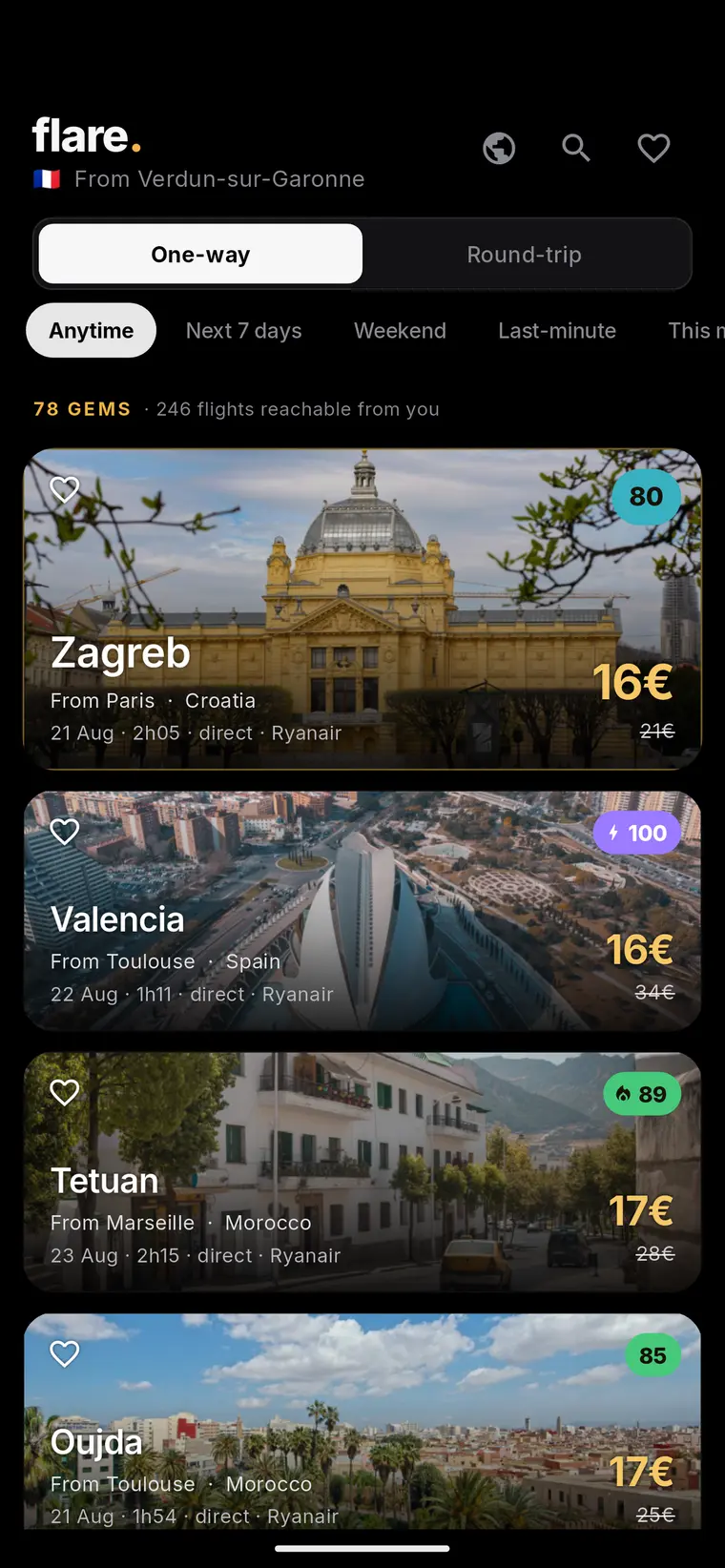
Flare organises its deal discovery around the city a traveller leaves from, so a Dutch departure city is a natural lens for this search. According to its methodology, a fare only enters its public collection when it is at least 30% below the route reference, holds a Deal Score of at least 55, and both amount and reference are positive. With enough route history, the reference is a median of observed baseline prices after trimming the outer 10% of observations.
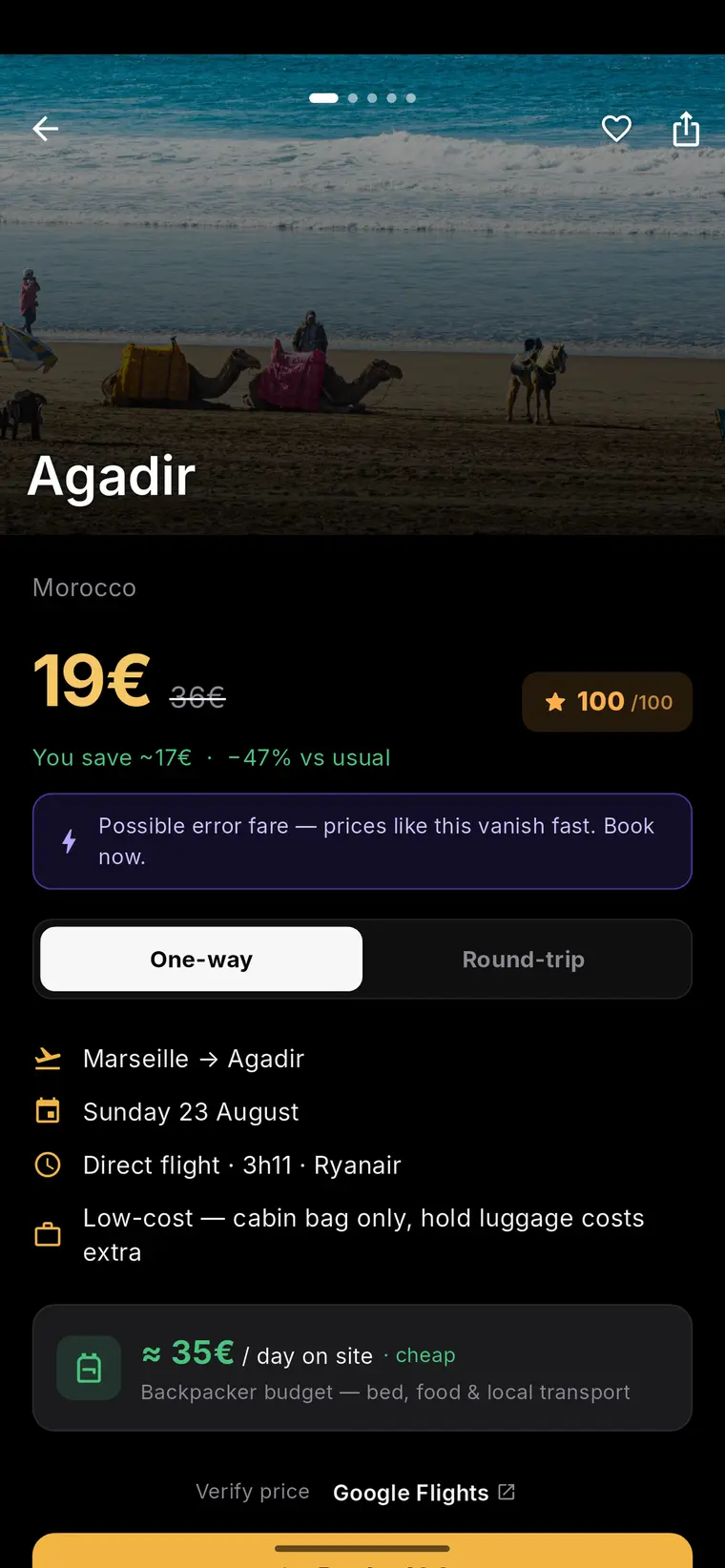
Those gates make a candidate worth a closer look, but they do not diagnose its cause. Flare can confirm a timestamped observation and its gap from an internal reference; it cannot prove a seller published an unintended price. The Deal Score is a prioritisation signal, not a verification or an external rating.
Each price is also a snapshot. The public collection is rebuilt on a schedule, every three hours according to the methodology, so a fare can vanish between a page refresh and your own search. That is why repeating the exact search with the seller is the first real step.
Cancellation risk and the total cost of the trip
Airlines sometimes honour tickets sold in error, but never automatically. Whether a ticket stands depends on the seller's conditions and the consumer law that applies to that particular sale, and an airline or online agency may cancel or decline to issue a ticket after spotting the problem. The sensible response is to confirm the price still exists, then consider waiting for an issued ticket before committing money you cannot recover.
The airfare is only part of what you could lose. Related non-refundable spending, such as hotels, onward connections or event tickets, can exceed the ticket price if a cheap flight is withdrawn. Judging a fare on its headline amount ignores that exposure; weighing the whole trip is what turns a lucky find into a sound decision.
Worked example: a striking fare out of Amsterdam
Example, hypothetical and for illustration only: you spot a return fare from Amsterdam to a long-haul city far below anything you have seen. The page shows when the price was observed and how far it sits beneath the route reference. Nothing on it tells you whether the seller meant to charge it.
Read the gap carefully. For some long-haul routes with limited history, Flare's methodology notes that the reference can be a conservative, distance-calibrated fallback with lower confidence, so a large percentage drop on such a route says less than one measured against rich route history. A cautious sequence keeps your exposure small until the ticket is confirmed:
- Repeat the exact search with the same dates, cabin and passenger count on the booking provider's site.
- Read the fare conditions: baggage, change and refund rules, and whether the total includes all taxes and charges.
- If you proceed, book only the flight first and hold off on non-refundable hotels and extras.
- Wait for a ticket number or issued confirmation before building the rest of the trip.
- Check passport, visa and entry requirements for your nationality and destination on official sources.
- Compare flexible alternatives, such as nearby dates or another Dutch departure airport, in case the fare disappears.
Official requirements and flexible comparison
A valid ticket is useless if you cannot board or enter the destination. Passport validity, visas, transit rules and health requirements depend on who is travelling and where, and they can change. Checking current official sources before booking, and again before departure, is part of judging whether a cheap fare is usable for you.
Flexibility is the other half of the strategy. Travellers who can shift dates, consider several destinations or start from more than one airport are better placed to benefit from unusual prices and less exposed if one disappears. Treat any single low fare as one option among several, and the decision becomes calmer.
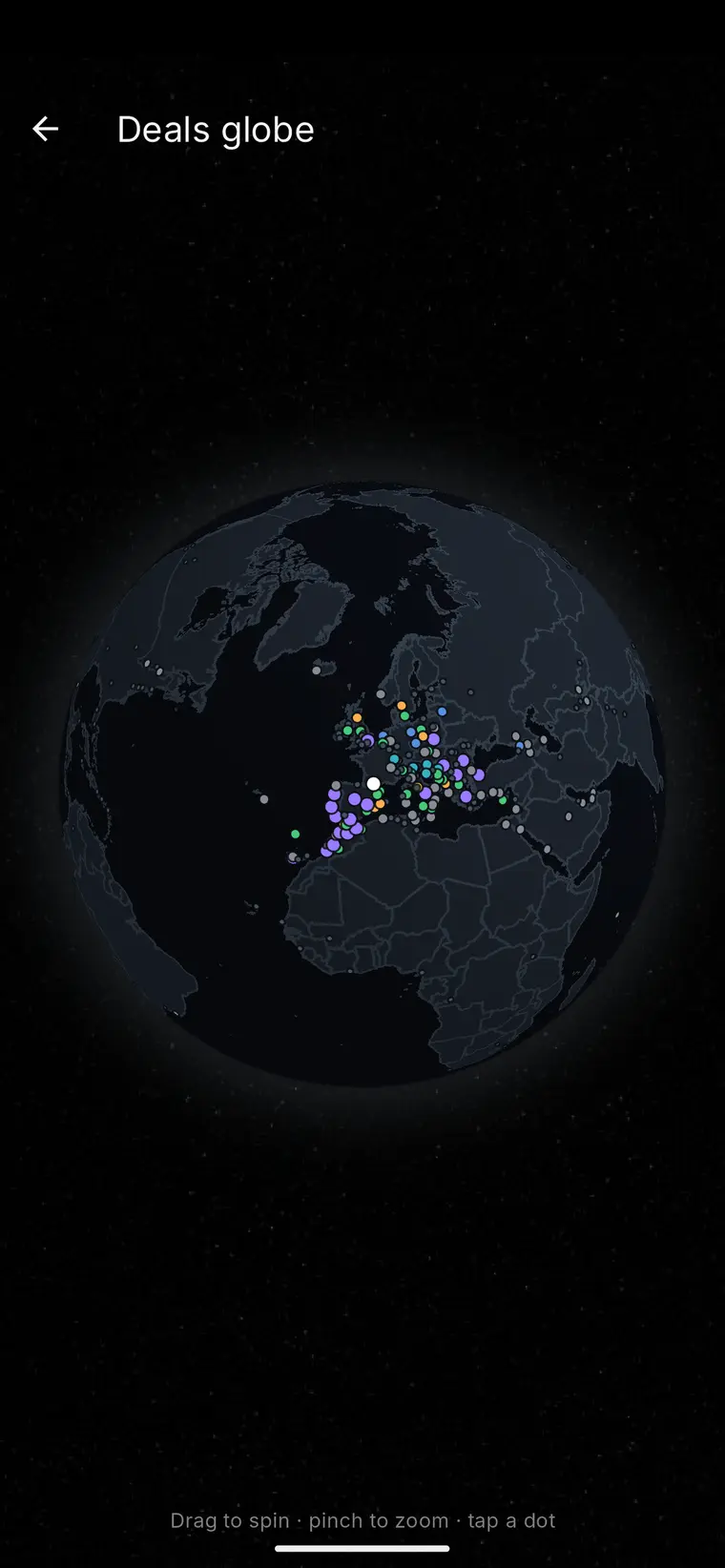
Live destination map
Fare data meets travel intelligence
Move from a current fare signal to a photographed destination page, then use Flare guides to evaluate the complete trip.



Frequently asked questions
Is every very cheap flight from the Netherlands an error fare?
No. A very low price can be a deliberate promotion or simply a measured drop below typical route prices. A fare is a genuine mistake fare only when the seller published a price it did not intend, and only the airline, the agency or a reliable source confirming it can establish that.
Will an airline honour a mistake fare booked from a Dutch airport?
Sometimes, but never automatically. The outcome depends on the seller's conditions and the consumer law that applies to the sale, and the airline or online agency may cancel or decline to issue the ticket after noticing the error. Waiting for an issued ticket before buying non-refundable extras limits what you could lose.
What should I check before booking a suspected error fare?
Repeat the exact search with the booking provider, since displayed prices are snapshots that can change quickly. Read the fare conditions and full price, avoid non-refundable add-ons until the ticket is issued, and verify current passport, visa, entry and health requirements on official sources before booking and before departure.
Sources and further reading
These resources provide the wider reference frame. Product statements on this page are limited to the public information provided by Flare.