

What a flight error buy actually involves
A flight error buy usually means purchasing a ticket priced far below what the seller meant to charge. The cause might be a human slip, a technical fault, a currency conversion problem or charges that were left out of the total. What makes it an error is the seller's intent, not simply how big the discount looks.
That distinction matters because the buyer is acting on a price the seller may not stand behind. An airline or online travel agency can decide afterwards that the ticket should not be honoured. Before acting, the useful question is not only "is this cheap?" but "what happens to the rest of my plans if this ticket disappears?"
Why a very low price is not proof of a mistake
A fare that looks unbelievable can have an ordinary explanation: a promotion, a different trip shape, another airport, a currency effect or limited inventory at that price. From the outside, a deliberate offer and a genuine pricing error can look identical. Only the seller, or a reliable source that has confirmed it with the seller, can say why a price exists.
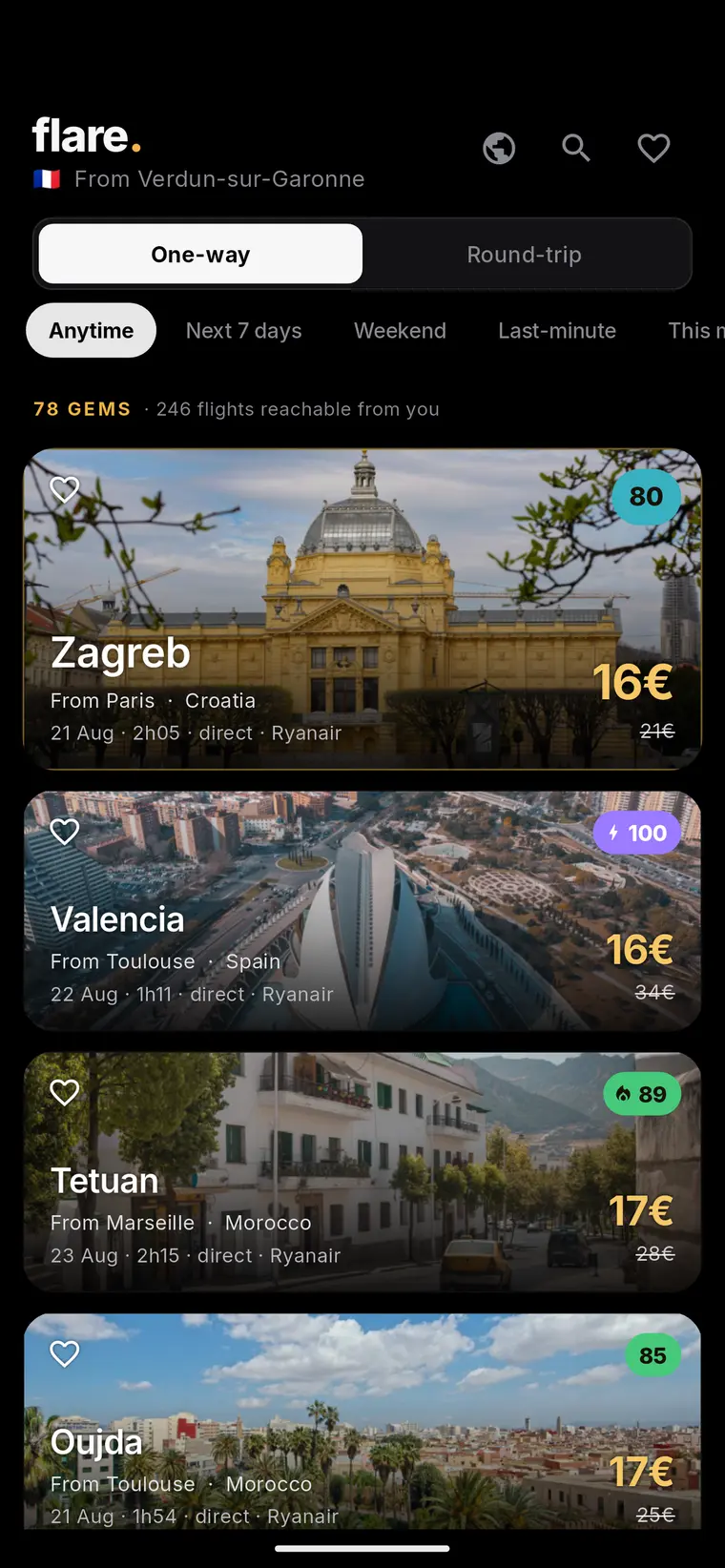
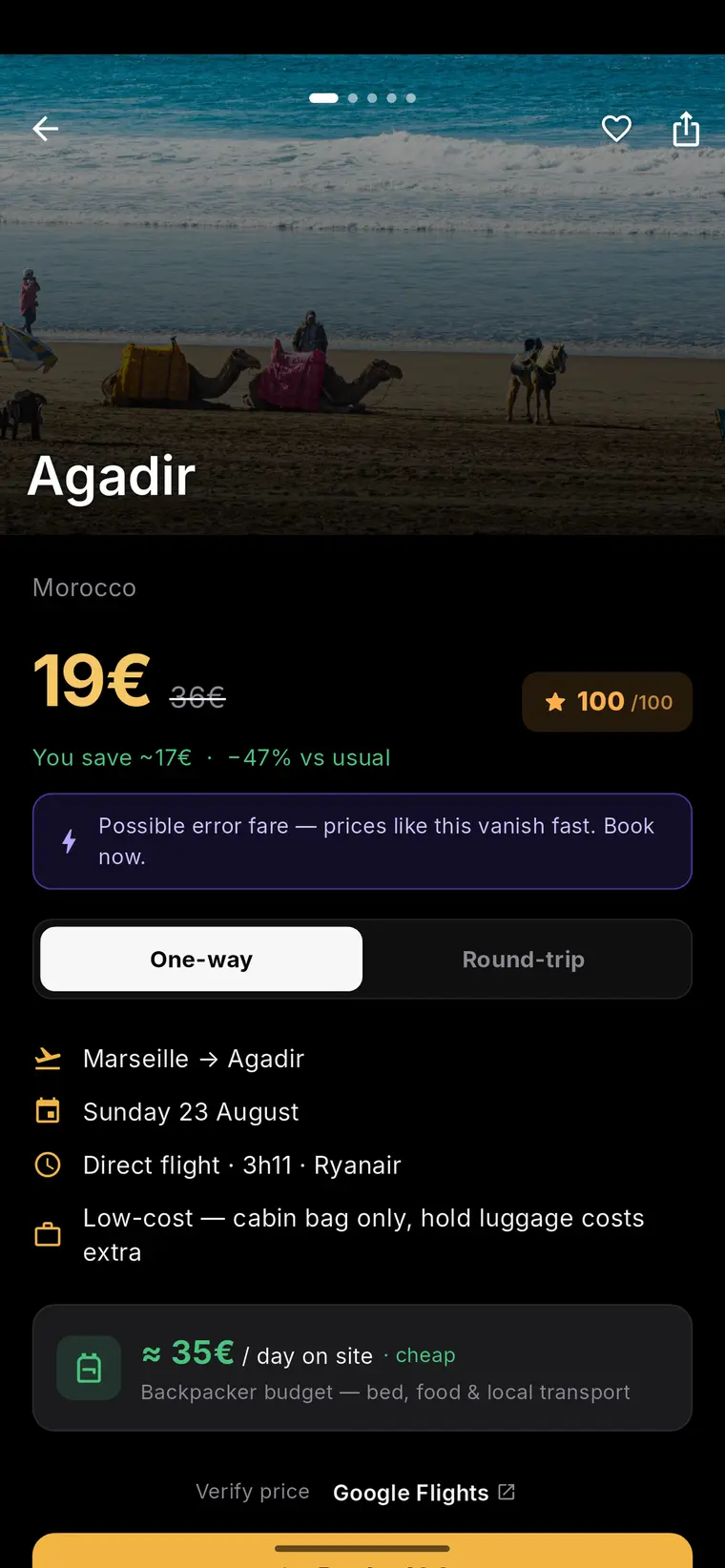
Flare, which surfaces flight deals from a traveller's departure city, is explicit about this boundary. Its pages show a timestamped observation and how far that amount sits below a reference price, and a fare only appears when that gap is at least 30%. The reference is usually a median of observed route prices with the outer 10% trimmed, or a conservative fallback for some long-haul routes. That identifies a meaningful difference; it does not diagnose the cause.
Flare also ranks candidates with a Deal Score, which must reach at least 55. That score is a way of prioritising what to look at, weighing the size and confidence of the drop alongside stops, duration and trip shape. A high score does not make a fare verified, and it certainly does not confirm an error.
The limits that apply before and after you book
The first limit is time. Any fare seen on a discovery page reflects a moment, and the amount or the seats may already have changed. The only price that counts is the one the booking provider shows you when you complete the purchase, so repeating the exact search is the practical first step.
The second limit is honouring. Sellers sometimes honour a mistaken price, but never automatically. A ticket can be cancelled or simply not issued once the seller corrects the error. For the United States, Flare's guide points to a Department of Transportation notice dated 8 May 2015 that was presented as temporary pending a final rule, so its current status needs to be checked. Elsewhere, the seller's conditions and the consumer law that applies to the sale decide, which is something to confirm rather than assume.
The third limit is everything around the flight. Entry rules, passport validity, visas and health requirements vary by traveller and destination, and they do not become simpler because the fare was cheap. Current official sources are the place to confirm them before booking and again before departure.
A checklist before any flight error buy
The aim of this checklist is to keep a potential bargain from turning into a chain of non-refundable losses. It treats the ticket as uncertain until the seller has clearly issued it, and it keeps the total trip in view rather than the headline fare alone.
Work through it in order; if an item cannot be satisfied, that is a signal to pause rather than push ahead.
- Repeat the exact search with the same dates, airports and passenger count, and confirm the final total on the booking provider's checkout page.
- Look at nearby dates or airports for flexible comparison, keeping in mind that this gives price context only and cannot tell you whether the fare is an error.
- Read the fare rules for changes, refunds and baggage so the real cost is clear.
- Wait for a ticket number or clear issuance confirmation before paying for anything non-refundable.
- Price the total trip: hotels, transfers, extra bags, time off work and the cost of rebooking if the ticket is cancelled.
- Check current official entry, passport, visa and health requirements for every traveller.
Worked example: weighing a suspiciously cheap long-haul fare
Hypothetical example, not real data: imagine a return long-haul fare showing at well under half the usual price for that route. A discovery page lists it with a large measured drop and a high Deal Score. It is tempting to book flights, a non-refundable hotel and a tour on the same evening.
A calmer sequence would be to repeat the search on the booking provider, confirm the total including bags, and buy the flight only if the loss of that money would be acceptable should the ticket be cancelled. Then wait for issuance confirmation and allow some time before committing to anything that cannot be refunded. Meanwhile, check passport validity and entry rules for the destination.
If the ticket is later cancelled, the damage is limited to the flight itself rather than an entire trip. If it is honoured, very little has been lost by waiting a short while to book the rest. The decision is less about spotting the deal and more about controlling the downside.
Live destination map
Fare data meets travel intelligence
Move from a current fare signal to a photographed destination page, then use Flare guides to evaluate the complete trip.



Frequently asked questions
Is every extremely cheap flight a mistake fare?
No. A very low price can come from a promotion, a different trip shape, another airport, a currency effect or limited inventory at that price. A fare is only a mistake fare when the seller published a price it did not intend, and only the seller or a reliable source confirming it with the seller can establish that.
Will an airline always honour a ticket bought at an error price?
No. Sellers sometimes honour mistaken prices, but never automatically, and a ticket can be cancelled or not issued after the seller corrects the price. Check the seller's terms and wait for clear issuance confirmation before buying non-refundable extras such as hotels or tours.
What should I do first when I see a possible flight error fare?
Repeat the exact search with the booking provider to confirm the current total and availability, since displayed fares can change quickly. Then review the fare rules, consider the full trip cost, and verify current official entry, passport, visa and health requirements before committing.
Sources and further reading
These resources provide the wider reference frame. Product statements on this page are limited to the public information provided by Flare.