


What people mean by an error fare from Vancouver
Someone searching for error fare vancouver usually wants one of two things. They may be looking for a ticket out of Vancouver priced far below what the route normally costs. Or they may want to know whether a striking price they have already seen is a genuine mistake. In everyday use, an error fare is a price that seems to come from a pricing or data mistake rather than a deliberate sale. That is different from a normal promotion, even a generous one.
The distinction matters because the two behave differently once you act on them. A planned sale has been approved by the seller and is meant to be sold. A price that is actually a mistake may be corrected quickly, may disappear before you finish checkout, or may be questioned after you book. Before you think about the destination, ask a simpler question: what do I actually know about why this price is low?
Error fare or ordinary fare drop?
Many fares described online as errors are really steep but legitimate reductions. Flare's guide to mistake fares versus fare drops covers this difference. A dramatic discount can come from a promotion or another ordinary pricing change, so a fare well below normal is not automatically a mistake. Treating every large drop as an error can push you to rush a booking that did not need rushing.
You cannot reliably diagnose the cause from the outside. The reason behind a low fare is known only when the seller or a reliable source confirms it. Until then, the honest position is that the cause is unknown. A big gap from the usual price is a reason to verify the details carefully. It is not evidence of a mistake.
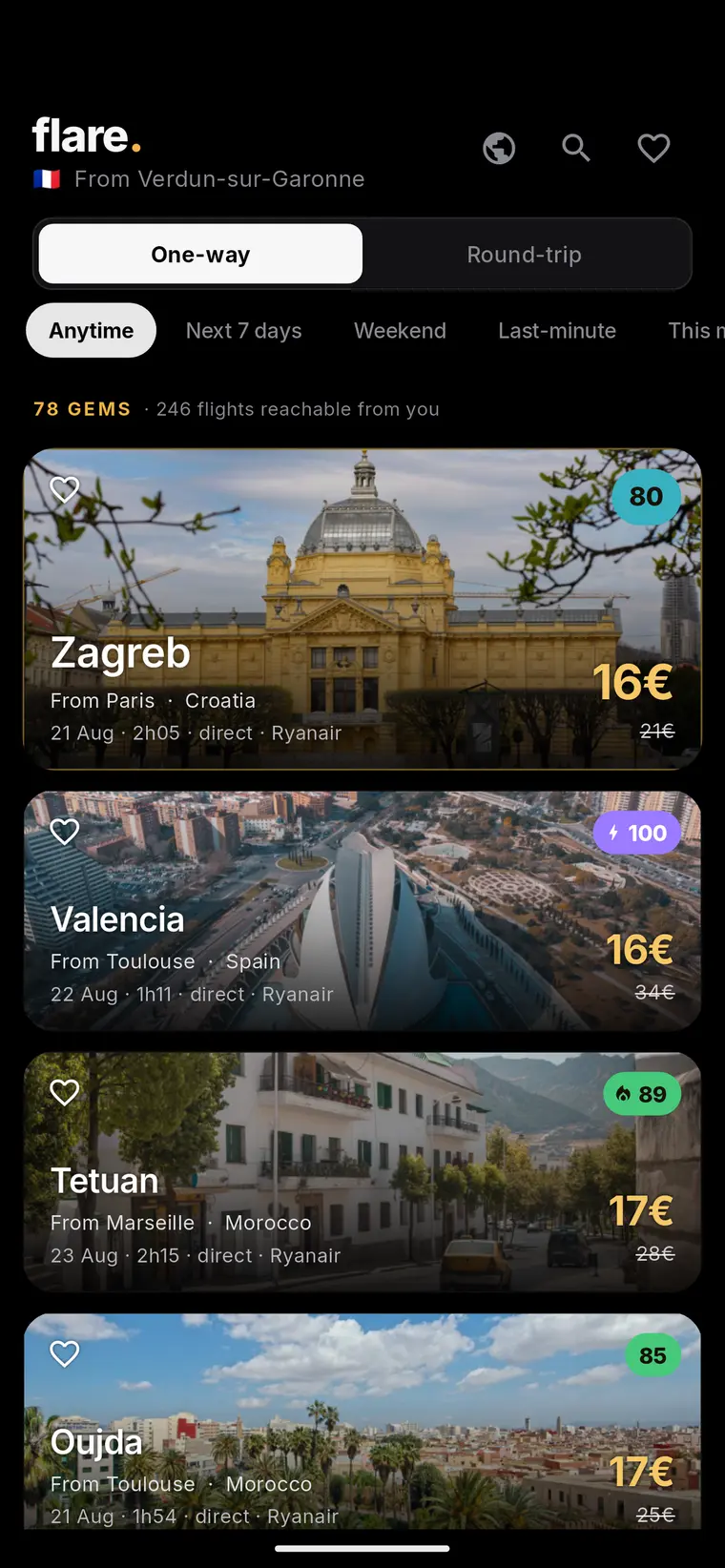
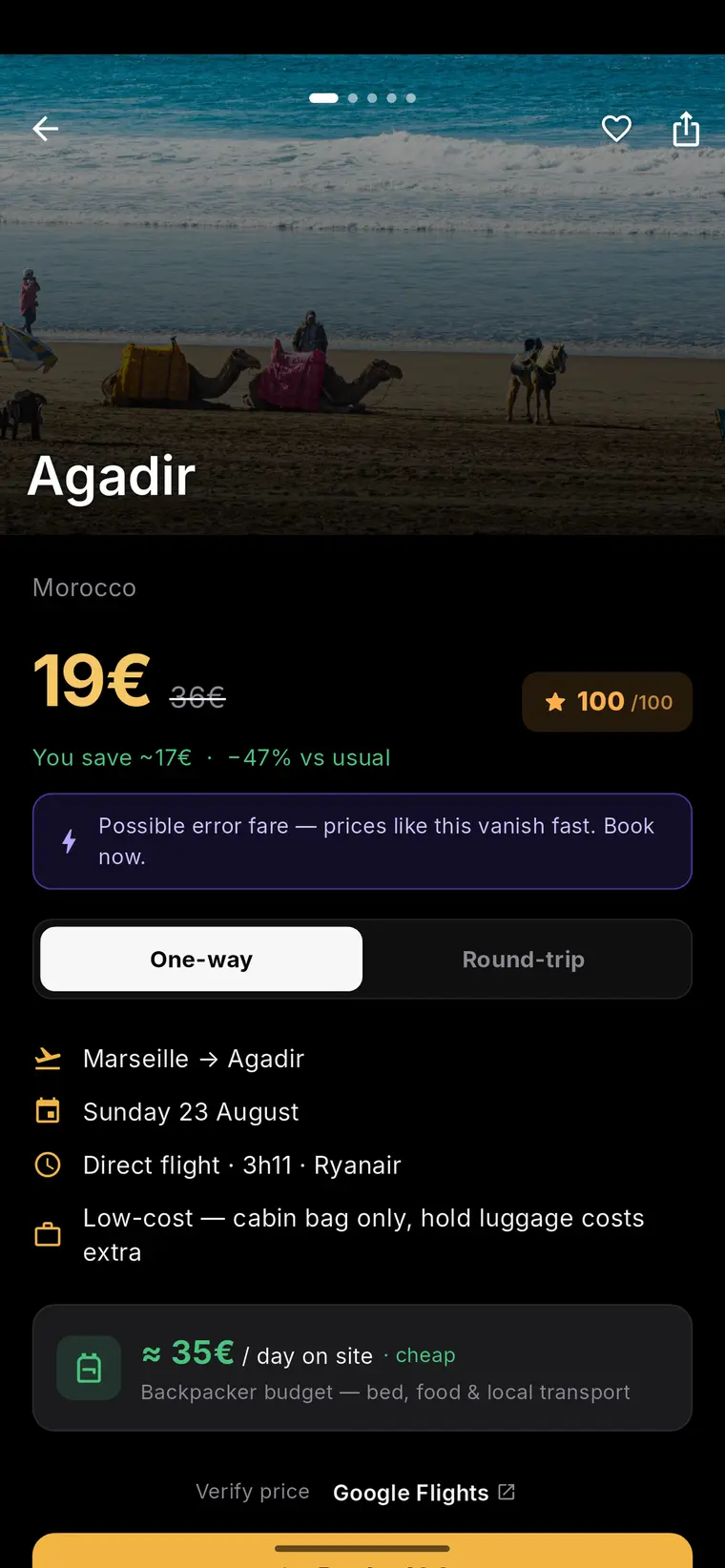
For context, Flare's methodology page explains that a deal appears on its pages only when the price is at least 30% below the reference price its monitoring uses for that route. That measures how unusual a fare is against a benchmark. It does not say whether the fare is a mistake, how long it will last, or whether it will be honoured. Flare does not reserve seats or sell the ticket. If the result you can reproduce differs from what a deal page showed, the seller's current public price is the one that counts.
The limits that apply to any Vancouver error fare
The first limit is time and volatility. Several things can change the final amount you pay: seat inventory, currency conversion, the point of sale, the number of passengers, taxes and optional services. A result can also disappear between the moment a page was refreshed and the moment you search. Whatever you saw on a deal page or in an alert, the airline or booking site you buy from has the final word on price and availability.
The second limit is certainty after booking. Paying for a ticket at a surprising price does not guarantee you will fly on it. How a seller handles pricing problems depends on the provider, its conditions of carriage and the rules where the ticket was sold. Read those terms instead of assuming an outcome, and seek proper advice if a dispute arises.
The third limit is you. Entry, passport, visa and health rules vary by nationality, residency and destination, and they can change. A cheap seat to a country you cannot easily enter on your passport is not a bargain. Confirm current official requirements before booking and again before departure.
Weigh the whole trip, not just the ticket
A low airfare from YVR can hide costs that change the picture. Look at baggage fees, seat selection, connections that force an overnight stay, and ground transport at the far end. Also check accommodation on the specific dates the fare allows. Those details, more than the headline fare, decide what the trip really costs.
Flexibility is the real advantage. If you can move your dates, choose between several destinations, or travel with only carry-on, you can respond to an unusual price without forcing it to fit fixed plans. If your dates are fixed by work or family, a modest, dependable fare may serve you better than a striking one that could change before you pay.
Example: weighing a hypothetical YVR fare
Example only. This scenario is illustrative and does not describe a real fare. Imagine you see a return ticket from Vancouver to a long-haul city at roughly a third of the price you have usually seen for that route. The dates are six weeks out.
Working through it calmly: the size of the gap tells you nothing certain about its cause, but it is a good reason to verify. You reproduce the search on the seller's own site and confirm the total for your passenger count, including taxes and the bags you need. You check that your passport and visa position allow entry. If the price you can actually book differs from what you first saw, you treat the seller's figure as the real one.
If the confirmed total still works, you book. You then hold off on non-refundable hotels and tours until the ticket is issued and the booking is stable. If the fare is later withdrawn, you lose little beyond time. If it holds, you build the rest of the trip around it.
Checklist before and after you book
Use this sequence to keep a tempting price from turning into an expensive tangle. It applies whether you found the fare through Flare's departure-city deal pages or anywhere else.
The goal is not to avoid unusual fares but to act on them with your eyes open: confirm, protect yourself from knock-on costs, and keep the trip flexible until it is settled.
- Confirm the final price, cabin, dates and routing on the seller's own checkout page.
- Read the fare rules on changes, cancellations and baggage before paying.
- Check current official entry, passport, visa and health requirements for your situation.
- Book with a payment method whose protections you understand.
- Wait for a ticket number and confirmation from the airline before booking anything non-refundable.
- Recheck official requirements and flight details shortly before departure.
Live destination map
Fare data meets travel intelligence
Move from a current fare signal to a photographed destination page, then use Flare guides to evaluate the complete trip.



Frequently asked questions
Is an error fare from Vancouver guaranteed to be honoured?
No. A fare that results from a pricing mistake may be corrected before checkout or questioned after booking. What happens depends on the seller's terms and the rules where the ticket was sold, so read the conditions and avoid non-refundable extras until the ticket is confirmed.
How can I tell a mistake fare from a normal sale out of YVR?
Usually you cannot tell from the outside. A dramatic discount can come from a promotion or another ordinary pricing change, and the cause is known only when the seller or a reliable source confirms it. Treat a large gap from the usual price as a reason to verify the details with the seller, not as proof of an error.
What should I check before booking a very cheap flight from Vancouver?
Confirm the price and availability with the airline or booking site you will pay, since inventory, currency, point of sale, passenger count, taxes and extras can change the total. Read the fare rules and baggage costs, estimate the full trip cost, and check current official entry, passport, visa and health requirements before booking and before departure.
Sources and further reading
These resources provide the wider reference frame. Product statements on this page are limited to the public information provided by Flare.