

What the error flight market actually refers to
People searching for the error flight market are usually looking for the loose ecosystem of very cheap tickets that appear to have been priced by mistake: fares that seem to ignore a surcharge, convert a currency wrongly, or come from a human or technical slip. The phrase describes a category of tickets and the travellers who hunt for them. It is not a formal marketplace with rules, guarantees or a central place where error fares are traded.
The defining feature is the seller's intent. A fare counts as a mistake because the airline or travel agency did not mean to publish it, not simply because it is cheap. That distinction matters before you act, because the seller, not the buyer or any deal site, ultimately decides whether a ticket bought at that price will be honoured.
Why a low price in the error flight market is not proof of a mistake
Many fares that look like errors are ordinary price drops: a sale, unsold capacity, or an unusual date combination. From the outside, an intentional promotion and an accidental price can look identical. Only the seller, or a reliable source that the seller has confirmed, can establish that a price was unintended.
This is why the size of a discount alone settles nothing. A fare that is half the usual price might be a deliberate sale that will be fully honoured, while a smaller-looking reduction could still stem from a missing charge. Treat any label such as "error fare" as a hypothesis until there is confirmation, and plan your spending around that uncertainty rather than around the excitement of the headline price.
How Flare frames a deep fare drop, and where its view stops
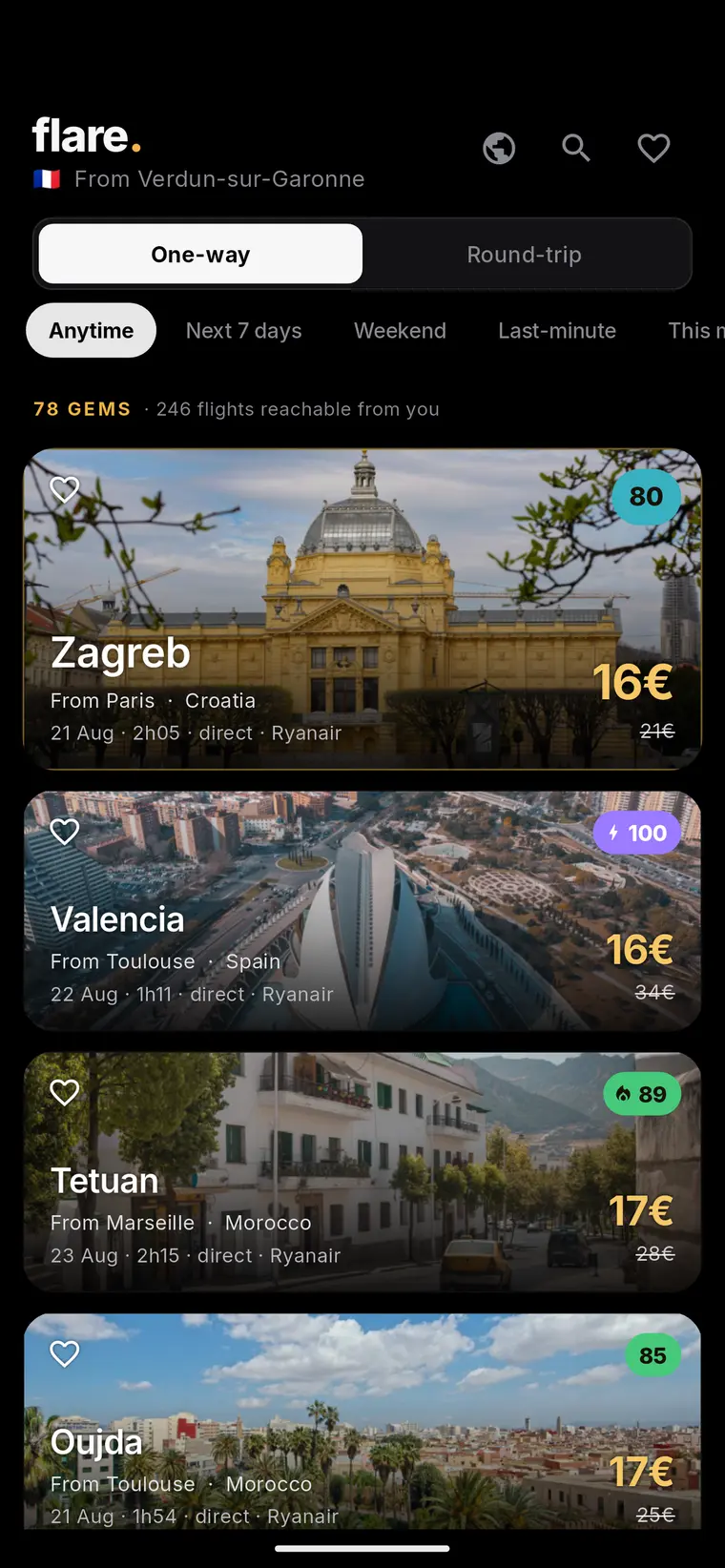
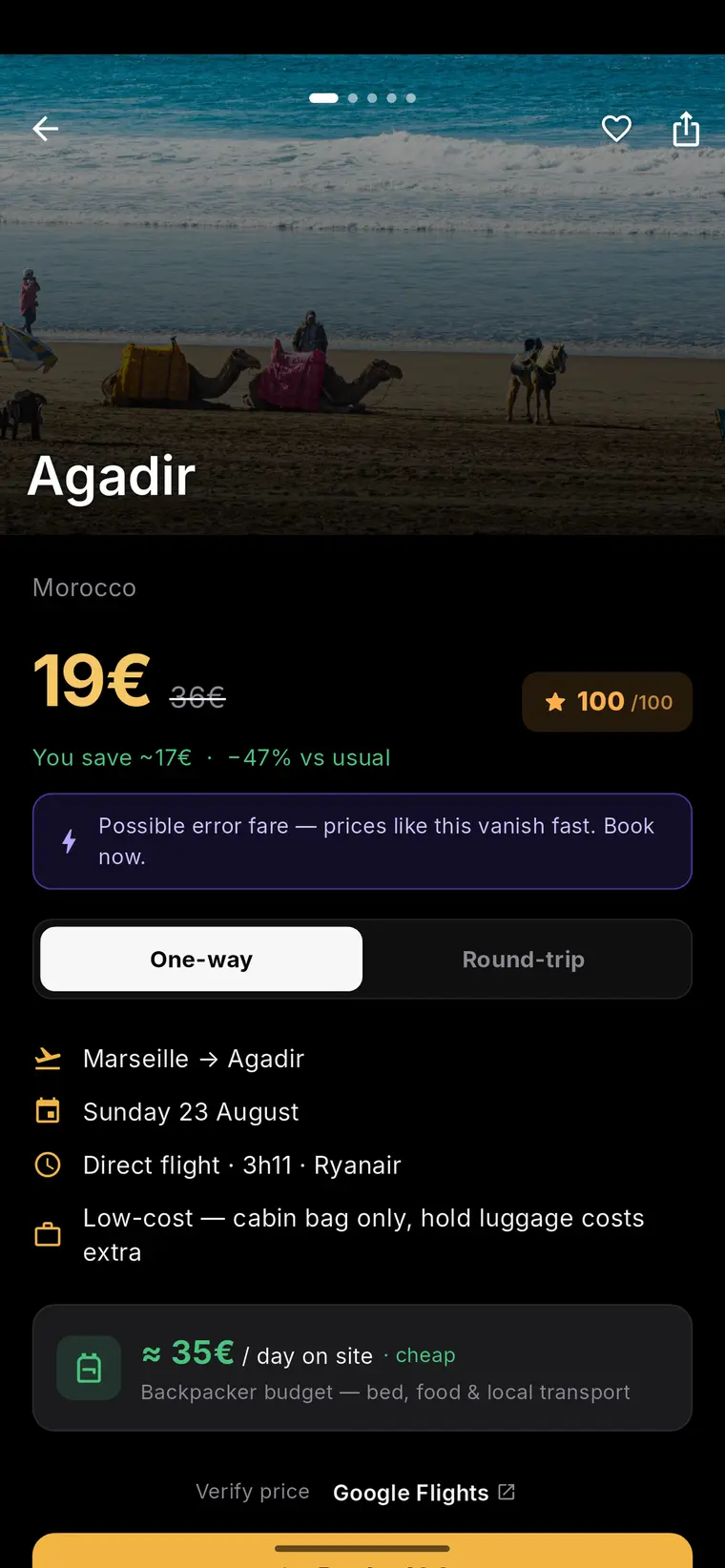
Flare is a fare-monitoring and discovery service that shows flight ideas from a traveller's departure city. Its methodology explains that a fare only appears publicly when it sits at least 30% under the comparison price its monitoring uses for that route, alongside a minimum internal Deal Score of 55. Where enough route history exists, that comparison is a median of observed prices with the outer 10% of observations trimmed; some long-haul routes use a conservative fallback instead.
What this can tell you is narrow but useful: a specific amount, on a specific route, at a specific time, was well below a reference. It cannot tell you why the price existed. Flare's own guidance is explicit that without airline or agency confirmation it cannot prove a seller published an unintended price, and that its pages are timestamped observations rather than bookable quotes. A Flare listing is a reason to look closer, never a verdict that a fare is an error.
The real risks behind a suspected error fare
The two risks differ depending on what the price really is. With an ordinary drop, the main danger is timing: the fare or the seats may already have changed by the time you search again, so the price you saw is not the price you get. With a genuine mistake, the bigger danger is that the ticket is cancelled or never issued once the seller corrects it. Whether airlines honour such tickets varies; it is sometimes the case and never automatic.
The second layer is total-trip cost. A cheap flight often pulls other spending with it: non-refundable hotels, connecting transport, time off work, or a second flight to reach the departure airport. If the ticket is later cancelled, those linked costs can outweigh the saving. Entry, passport, visa and health rules also depend on who is travelling and where, so a cheap route is only usable if you can actually make the trip under current official requirements.
A decision checklist before acting on an error flight
Use the list below as a practical filter. It does not predict whether a seller will honour a fare; it helps you limit what you could lose either way.
If several items are uncertain, the calmer choice is usually to secure only the flight, if the seller's terms allow cancellation, and wait before committing anything else.
- Repeat the exact search with the booking provider and confirm the fare, dates, baggage and fees shown at checkout.
- Read the seller's cancellation and refund terms before paying.
- Hold off on non-refundable hotels, tours or connecting tickets until the ticket is issued and confirmed.
- Add up the total trip, including getting to and from the airports, not only the headline fare.
- Check current official entry, passport, visa and health requirements for your nationality and destination.
- Compare a few alternative dates or nearby airports so you have a fallback if the fare disappears.
Worked example: a hypothetical too-good fare
Example (hypothetical, for illustration only): a traveller sees a long-haul return fare listed at roughly 40% under the usual route reference. They re-run the search directly with the seller and the price holds, but checkout adds a baggage charge that narrows the saving. Their dates are flexible, so they book the flight under terms that allow a refund if the seller cancels, and they do not book accommodation yet.
Over the following days they wait for the ticket to be issued, then check entry requirements for their passport before reserving anything non-refundable. In this scenario, the traveller never needed to know whether the fare was a true mistake. By treating it as an unconfirmed opportunity, comparing the total trip and delaying linked commitments, they kept the downside small whatever the seller eventually decided.
Live destination map
Fare data meets travel intelligence
Move from a current fare signal to a photographed destination page, then use Flare guides to evaluate the complete trip.



Frequently asked questions
Is an error fare the same as a very cheap flight?
No. An error fare, or mistake fare, is a ticket the airline or travel agency did not intend to sell at that price, for example because of a technical problem, a currency error or a missing charge. A very cheap flight can also be an ordinary sale or price drop. Only the seller, or a reliable source the seller has confirmed, can establish that a fare was a mistake.
Will an airline honour a ticket bought at a mistake fare?
Sometimes, but never automatically. The decision belongs to the airline or agency that sold the ticket, and some mistake-fare tickets are cancelled or not issued after the price is corrected. Before buying, read the seller's cancellation and refund terms, and avoid non-refundable hotels or connecting travel until the ticket is issued and confirmed.
Can a fare-tracking site confirm that a low price is a pricing error?
Generally a fare-tracking or deal-discovery site can only show that a price was observed at a certain time and how far it sat below a reference price. It cannot prove why the price existed or whether the seller meant to publish it. Always repeat the exact search with the booking provider, since fares and availability change, and check current official travel requirements before booking.
Sources and further reading
These resources provide the wider reference frame. Product statements on this page are limited to the public information provided by Flare.