
How to book cheap flights without baggage: start with what the fare actually covers
If you want to know how to book cheap flights without baggage, the useful first step is not hunting for the lowest number on a results page. It is working out what that number buys. Two fares on the same route can look close and still differ in what they let you bring, change or cancel. Travelling light only saves money when the fare you choose matches the bag you will really carry.
So treat the advertised price as a starting point, not a verdict. Before comparing anything else, decide honestly what you need on board: one small bag, a laptop, a coat, nothing more. That decision turns a vague search into a precise one, because you can now judge every option against the same packing plan.
Compare the whole trip, not the headline fare
A bag-free fare is cheap only in context. The total trip cost includes anything you might add later, the cost of reaching the departure airport, and the value of flexibility you give up. An option that looks lower by a small margin can end up costing more once one forgotten extra is added at the gate or during check-in.
Flexibility is your strongest lever here. If you can shift dates, fly from a nearby city or accept a different time of day, you widen the pool of fares worth comparing. Compare each option on the same terms: identical packing plan, identical dates where possible, and the full amount you expect to pay rather than the first figure shown.
Where a discovery tool helps, and where it stops
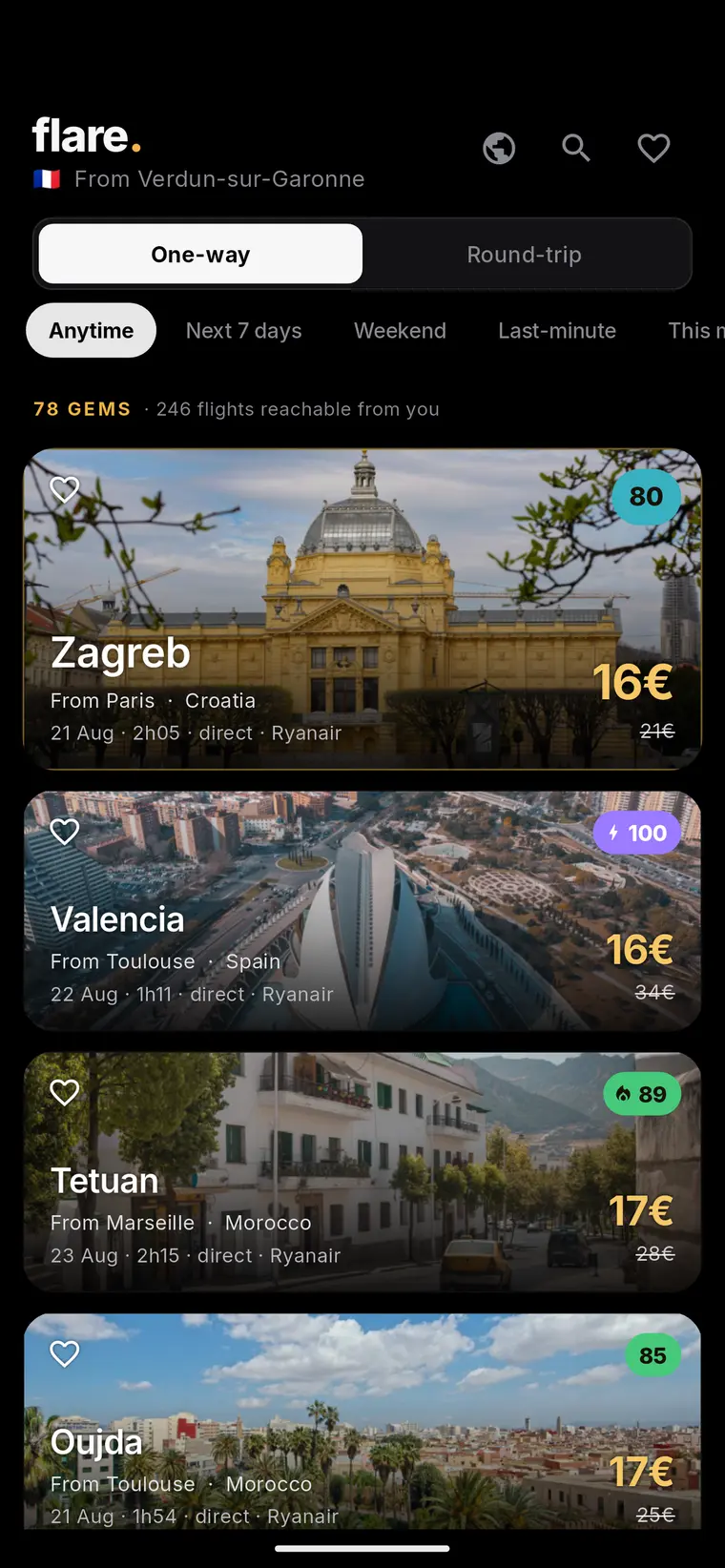
Flare builds deal pages around the city you leave from, which suits flexible travellers who start with a budget and a departure point rather than a fixed destination. Its methodology explains that a fare only appears publicly when it sits at least 30% below the reference price its monitoring uses for that route. Where enough history exists, that reference is a median of observed prices after the most extreme tenth of observations is trimmed; some long-haul routes use a conservative fallback instead.
That threshold tells you a fare stood out against past prices at the moment it was observed. It does not tell you what baggage is included, whether the seat is still there, or why the price is low. Flare describes its public figures as timestamped observations, not a booking engine or a quote, so the provider you book with remains the authority on what the ticket includes and what it costs right now.
Worked example: deciding whether bag-free really wins
Example (hypothetical figures for illustration only): a traveller sees two return options to the same city. Option A shows 90 and includes only a small under-seat item. Option B shows 125 and includes a larger cabin bag. Their packing list for four days fits in a small backpack, so Option A looks like a 35 saving.
Now apply the checks. Will the backpack meet Option A's stated size limits as measured, not as guessed? Would they want to bring anything home that would no longer fit? If adding a larger bag to Option A later would cost more than the 35 gap, the saving depends entirely on discipline at the packing stage. If the answer to any question is uncertain, Option B may be the steadier choice despite the higher headline price.
The point of the example is the method, not the numbers: fix the packing plan, compare total cost, then ask what happens if the plan changes.
- Write down the bag you will actually carry
- Compare each fare's stated inclusions against it
- Estimate the cost if you need to add a bag later
- Choose the option that still works if plans shift
Checks that keep a cheap bag-free booking reliable
Prices and seat availability move, sometimes between your search and your payment. The safest habit is to repeat the exact search on the booking provider's site immediately before paying, and to read the fare conditions on that final page rather than relying on a summary seen earlier.
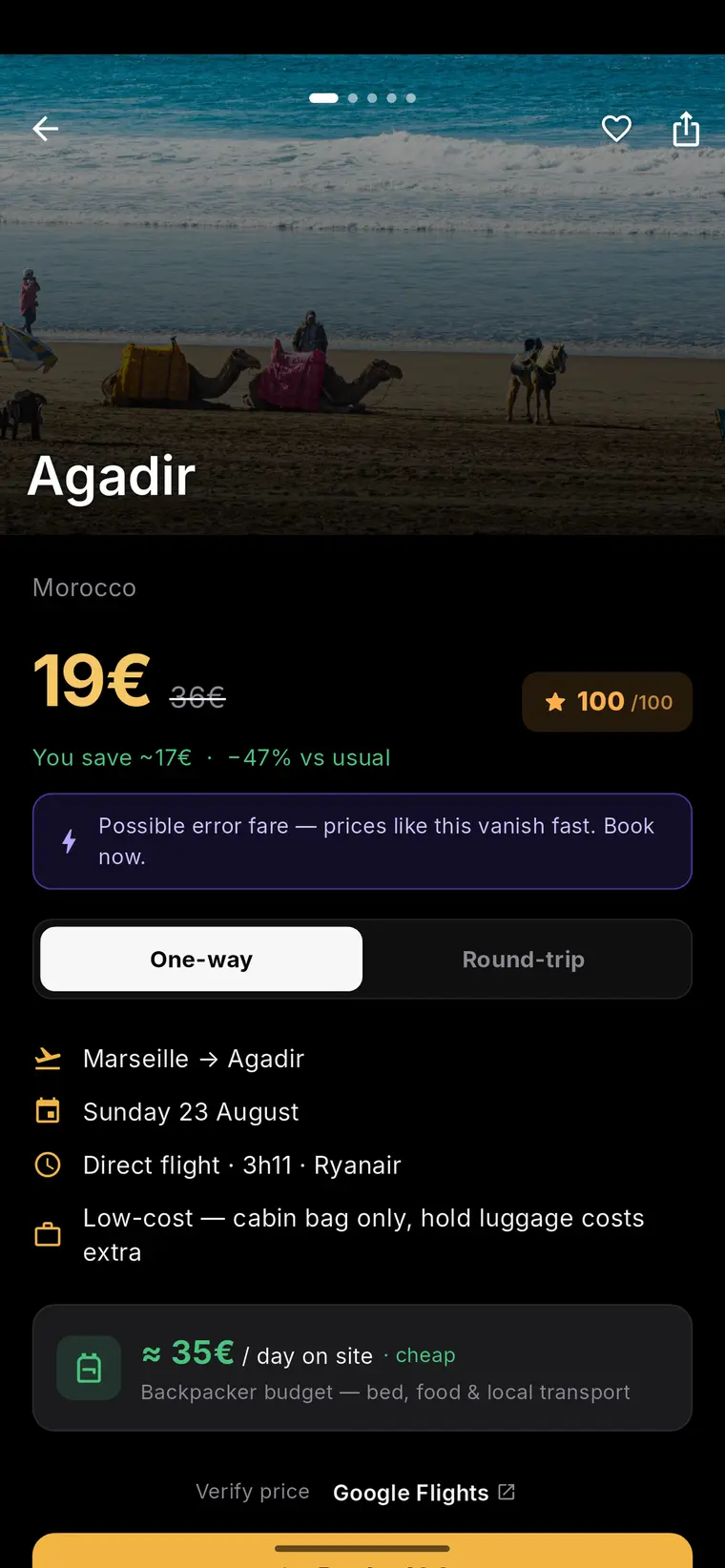
A very low price also deserves a second look. Flare's guide on mistake fares points out that a big discount is not proof of a pricing error; it only shows a measurable difference from a reference. Genuine mistake fares can be cancelled by the seller after correction, so where a price seems implausibly low, waiting for confirmation before making other non-refundable bookings is prudent.
- Re-run the identical search just before paying
- Read baggage, change and cancellation terms on the final booking page
- Confirm the total amount, including any extras, before entering payment
- Avoid stacking non-refundable plans on an unconfirmed, unusually low fare
- Save the booking confirmation that lists what is included
Documents and rules a light bag does not change
Packing less never reduces the paperwork. Passport validity, visas, entry conditions and health rules vary by nationality and destination, and they can change. Check the relevant official government sources before you book and again before you travel, because a cheap ticket you cannot use is not a saving.
Keeping these checks separate from the price hunt helps. Treat fare discovery as one task, inclusions and total cost as a second, and official entry requirements as a third. Each answers a different question, and skipping any one can undo the value of the others.
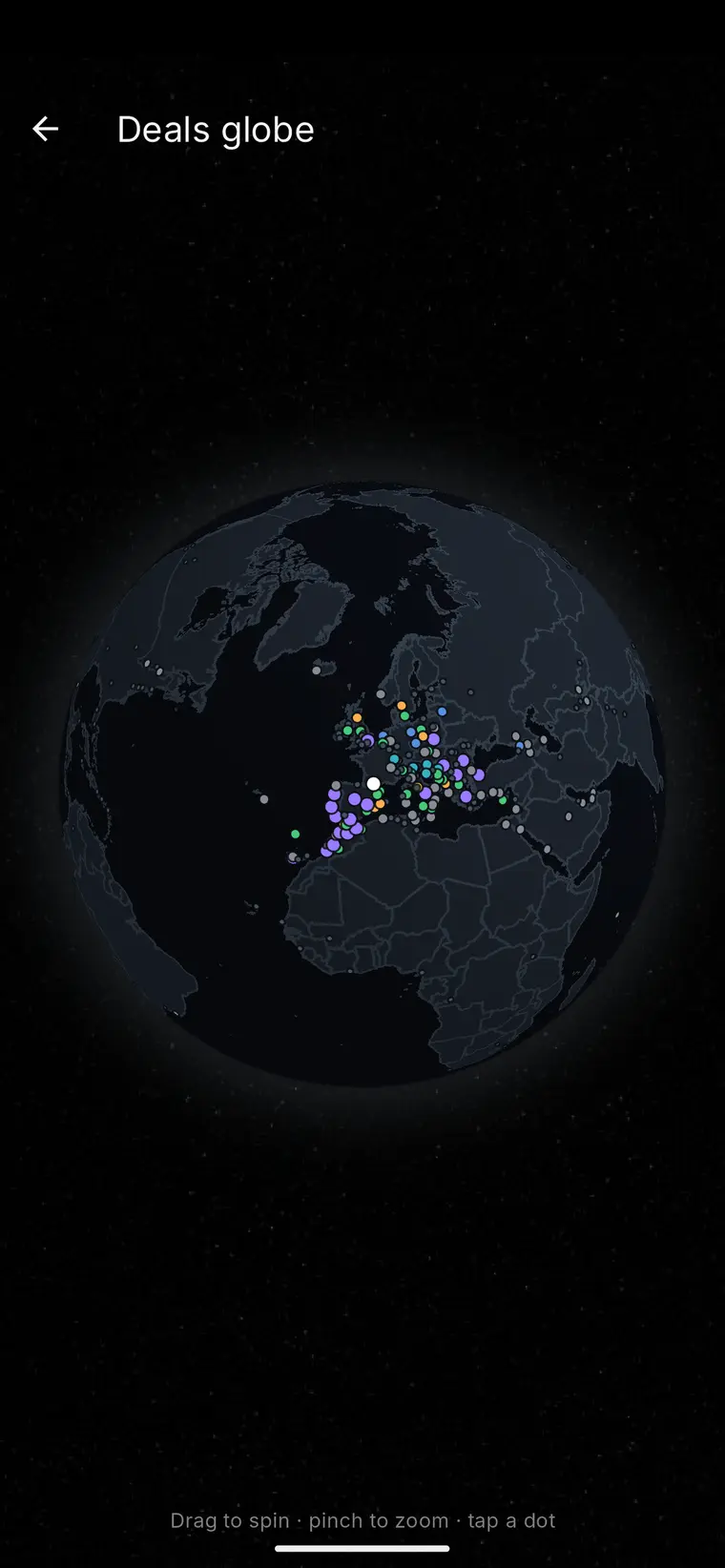
Live destination map
Fare data meets travel intelligence
Move from a current fare signal to a photographed destination page, then use Flare guides to evaluate the complete trip.



Frequently asked questions
Is the cheapest flight without checked baggage always the best value?
Not necessarily. A low fare that excludes bags is only good value if your luggage fits what that fare allows. Compare the full cost of the trip, including any bag you might need to add later, and read the provider's fare terms before paying.
Does a fare shown well below its usual price mean it is a mistake fare?
No. A large drop against a route's historical reference only shows the price is unusually low at the time it was observed. A true mistake fare involves a seller publishing a price it did not intend, which can only be confirmed by the seller or a reliable source, and such tickets may be cancelled.
What should I check right before booking a bag-free flight?
Repeat the exact search on the booking provider's site, confirm the final total and what baggage is included, read the change and cancellation rules, and verify passport, visa and entry requirements with official sources for your nationality and destination.
Sources and further reading
These resources provide the wider reference frame. Product statements on this page are limited to the public information provided by Flare.