

How early to book flights: why no single date works
People asking how early to book flights usually want a number, such as a set count of weeks before departure. The honest answer is that no single figure holds for every route, season and traveller. Fares on one route can move differently from fares on another, and the seats on a given flight can sell out or reprice at any point. A rule copied from someone else's trip may not fit yours.
A more reliable approach swaps the question "when should I book?" for "how do I recognise a good fare, and how much waiting can I afford?" Timing still matters, but it works as one input alongside your flexibility, your total trip costs and the conditions attached to the ticket. Once those are clear, the right moment to book is usually the moment a fare meets your criteria and the checks hold up.
Start from your constraints, not the calendar
Your own limits are the strongest guide to booking early or late. A trip pinned to a wedding, a school holiday or a fixed work commitment gives you little room to wait, because the only flights that fit may be the ones other travellers also want. In that situation, booking earlier mainly protects your access to suitable flights rather than guaranteeing a lower price.
A traveller who can shift dates, airports or even destinations has much more freedom. Being able to say yes to whichever reasonable option looks good lets you watch the market and act when a fare stands out, without being tied to a calendar countdown. Before you search, write down which elements are fixed and which can bend. That list decides how much waiting risk you can accept.
- Fixed date or event: prioritise securing a workable flight over chasing the lowest possible fare.
- Flexible dates, fixed destination: compare several departure days before committing.
- Flexible destination: compare ideas by value rather than locking in one place first.
Judge a fare against a reference price
Booking timing only means something if you can tell whether a price is good. A useful habit is to compare the fare you see with what that route typically costs, rather than with the last price you happened to notice. A fare that looks cheap in isolation may be ordinary for that route, while a modest-looking number can be well below normal.
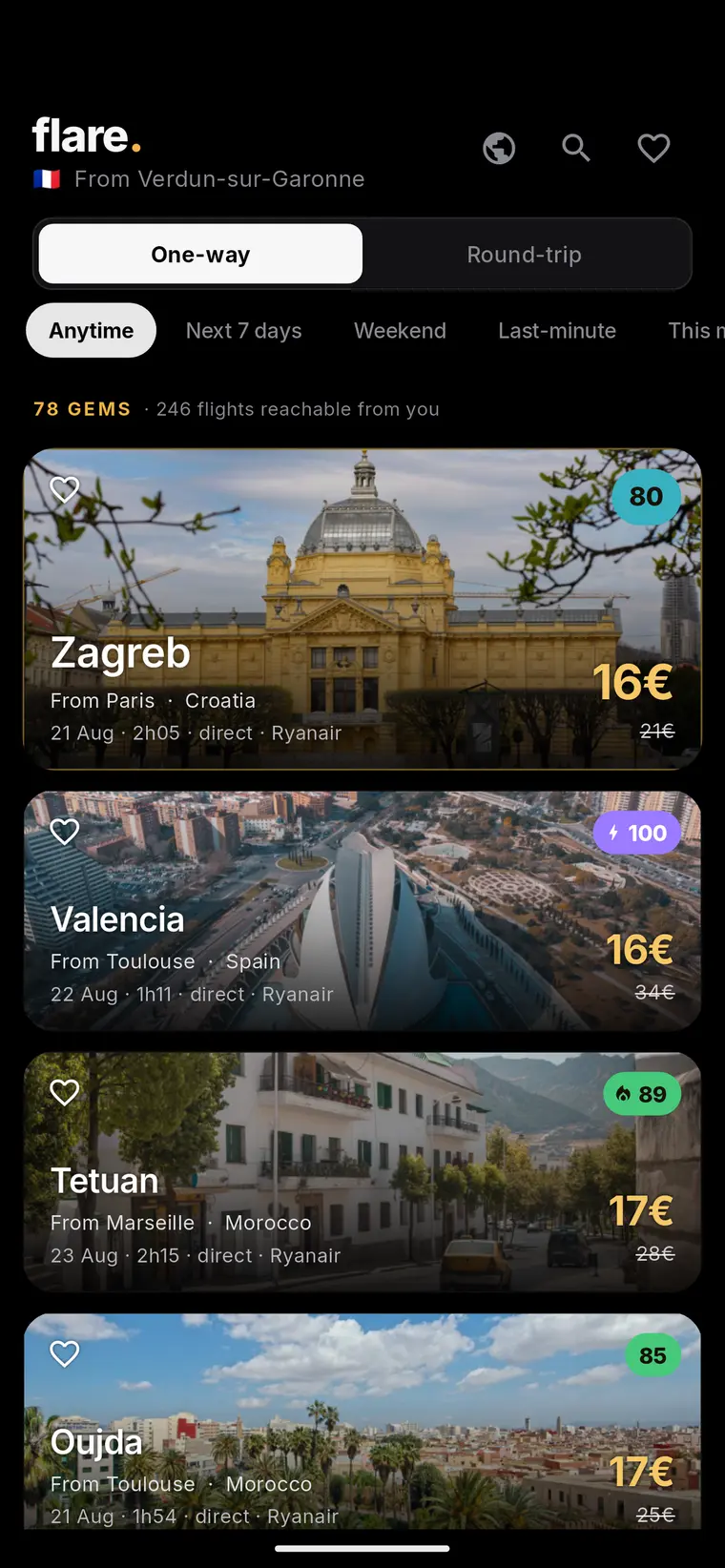
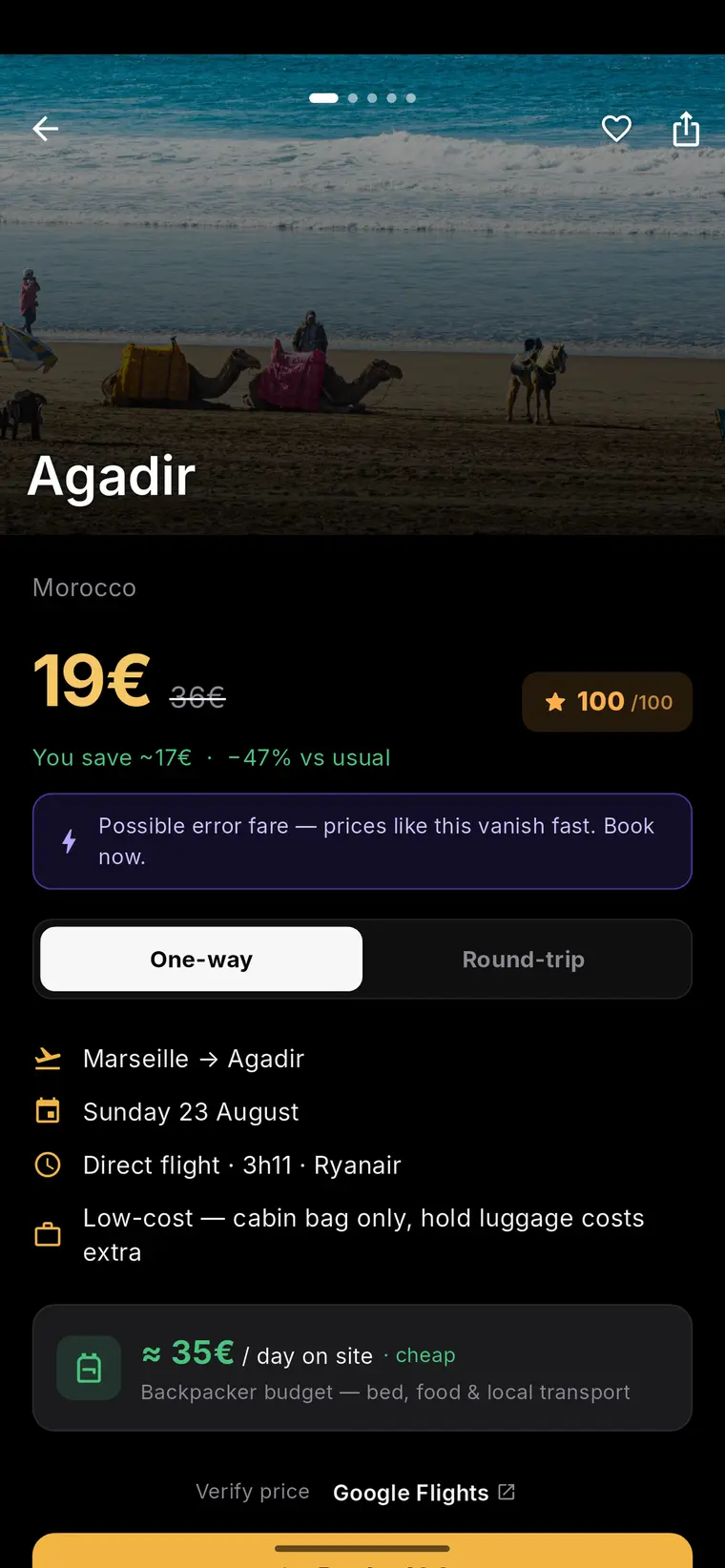
This is where Flare fits in, within clear limits. Flare surfaces flight ideas from your departure city, and according to its published methodology a fare is only shown when it measures at least 30% below a route reference price. Where enough route history exists, that reference is a median of observed baseline prices, taken after trimming the outer 10% of observations. For some long-haul routes with limited history, a conservative fallback reference can be used instead. Either way, the reference is an internal product measurement used by Flare's monitoring, not a universal market average and not a price published by airlines, so it should not be read as the route's official market price.
The figures on Flare's pages are timestamped observations, not booking quotes. They help you spot an unusual difference; they do not promise the seat or price still exists when you search. Flare's guidance also separates a measured price drop from a mistake fare. A large gap from the reference shows a difference, not its cause. If a fare looks implausibly low, treat it as possibly unintended and avoid non-refundable extra bookings until the ticket is confirmed by the seller.
Count the whole trip before committing
A cheap fare booked early can still be the costlier trip. Baggage, seat selection, travel to a distant secondary airport, an overnight connection or an inconvenient arrival time can all add expense once you count them. Compare offers on what the journey costs from your door to your destination, not just the headline amount.
Ticket conditions belong in the same calculation. A flexible or refundable fare can justify booking earlier, because you keep room to adjust if plans change. A rigid, non-refundable fare makes sense when your dates are firm and the price clearly beats the route's usual level. Flexibility is part of what you are paying for, so weigh it rather than ignoring it.
Checks to run before you pay
Whenever you decide to book, a short routine keeps the result reliable. Fares and seat availability change, so any price you saw earlier, whether on Flare or elsewhere, needs confirming directly with the airline or booking provider at the moment of purchase. Repeat the exact search with the same dates, airports and passenger count.
Entry rules are just as important as price. Passport validity, visas and health requirements vary with your nationality and destination, and they can change. Check the current official sources for your situation before booking, and again before departure, because a great fare is useless if you cannot board.
- Repeat the exact search and confirm the final price with the booking provider.
- Add baggage, seats and airport transfers to compare total cost.
- Read change and refund conditions before paying.
- Check passport, visa and health requirements on official sources.
- If a fare seems implausibly low, wait for ticket confirmation before booking non-refundable extras.
Example: a flexible traveller decides when to book
Hypothetical example: a traveller wants a week somewhere warm in spring and can leave on any weekday within a three-week window. Because neither dates nor destination are fixed, they skip the countdown approach and compare options as they appear, looking for a fare clearly below what each route normally costs.
They notice a flight idea well below its usual route level. Before booking, they repeat the search with the provider, add a checked bag and the train to the departure airport, and confirm the total still beats the alternatives. They then check entry requirements for their nationality and read the refund rules. Only once all of this holds do they book. Had the price changed or the bag fee erased the saving, they would keep watching, because their flexibility makes waiting a low-risk option.
Live destination map
Fare data meets travel intelligence
Move from a current fare signal to a photographed destination page, then use Flare guides to evaluate the complete trip.



Frequently asked questions
Is there a best number of weeks before departure to book a flight?
No single number applies to every route, season and traveller. A more reliable method is to compare a fare with what the route usually costs, account for the full trip cost and ticket conditions, and book when an offer clearly meets your criteria after confirming it with the booking provider.
Should I book early if my travel dates are fixed?
When dates are tied to an event or other commitment, booking earlier mainly protects access to flights that fit your schedule, since suitable seats can sell out or reprice. It does not guarantee the lowest fare, so still compare the total cost and check change and refund conditions.
Does a fare shown on a flight-deal page mean I can still book it at that price?
Not necessarily. Deal pages typically show timestamped observations, and prices or seats can change afterwards. Always repeat the exact search and confirm the final price with the airline or booking provider, and verify current official entry requirements before you pay.
Sources and further reading
These resources provide the wider reference frame. Product statements on this page are limited to the public information provided by Flare.