
What flight deal alert apps to save money actually do
Flight deal alert apps to save money share one basic job: they watch fares on your behalf and tell you when something looks worth a closer look. They do not sell you a cheaper seat by themselves, and they cannot hold a price. What they offer is time. Instead of checking the same route every evening, you receive a signal and decide whether to act.
That distinction matters because an alert is a prompt, not a promise. Between the moment a fare is spotted and the moment you reach a checkout page, the price can move, the seat class can sell out, or the deal can turn out to require dates that do not suit you. The most useful way to think about these tools is as a filter that narrows thousands of possible fares down to a handful worth verifying.
Route tracking versus deal discovery
Most alert tools fall into two broad styles. The first is route tracking: you already know where you want to go, and you ask to be notified when the price on that route changes. Google's help page on tracking flights and prices in Google Travel describes this approach, where you choose a route and dates (or leave dates flexible) and receive updates about price movements. Features like this can change over time, so check the current help page for how it works today.
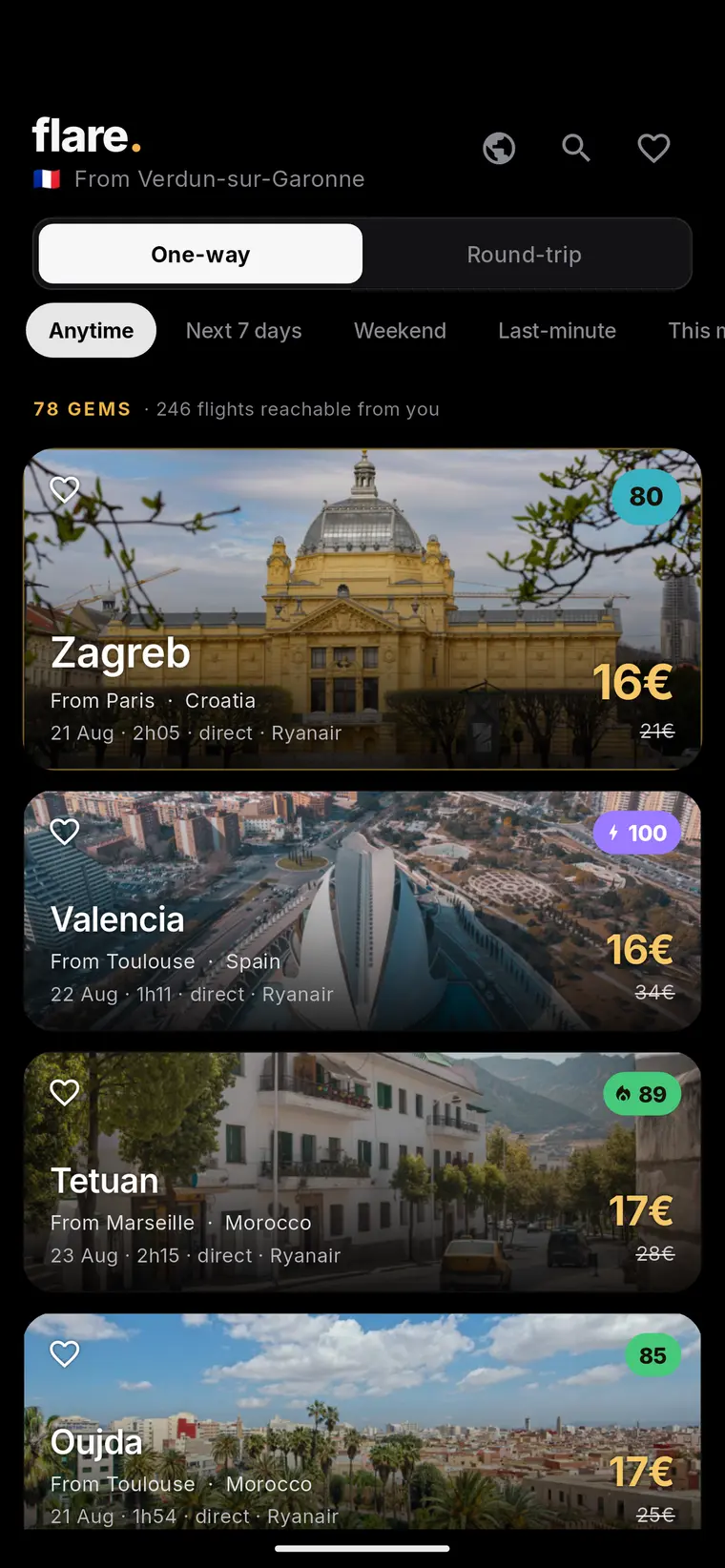
The second style is deal discovery: you start from where you live and let the tool surface unusually low fares to places you may not have considered. Flare works this way, publishing flight-deal pages built around a traveller's departure city. This suits people whose destination is open but whose budget is not. If you have a fixed wedding to attend, route tracking is the natural fit; if you simply want a cheap long weekend somewhere warm, discovery gives you more to choose from.
Many flexible travellers end up using both: discovery to find an idea, then route tracking to watch that specific route while they sort out leave, accommodation and companions.
What a 'below normal price' signal really means
When an app calls a fare a deal, it is comparing it against some reference: a typical price for that route, a recent average, or another internal benchmark. The quality of the alert depends on how sensible that reference is. A fare that is cheap compared with last month's spike may still be ordinary compared with the rest of the year.
Flare is explicit about its own yardstick. Its methodology page explains that it only surfaces a fare when it sits at least 30% under the reference price its monitoring uses for that route. That gives a clear threshold for what counts as noteworthy, but it is still a comparison against a reference, not a guarantee of the lowest fare anywhere, and it says nothing about whether the itinerary suits you.
When you compare any alert service, look for a published explanation of how it decides what a deal is. If a tool cannot tell you what it is measuring against, treat its percentages with caution.
Judging a fare in total-trip context
A headline fare is rarely the full cost of a trip. Checked bags, seat selection, transfers from a distant secondary airport, an overnight layover, or a return flight at an awkward hour can each erode the saving. The same applies outside the flight: accommodation prices during a local festival or a peak season can outweigh whatever you saved on the airfare.
Flexibility is where alert apps pay off most. If you can shift dates by a few days, accept a different nearby destination, or travel light, you are far more likely to capture the low fares these tools surface. If your dates are fixed and you need luggage, the realistic saving is smaller, and it is worth tracking the route rather than chasing every discovery alert.
Worked example and checklist for acting on an alert
Example (hypothetical, for illustration only): a traveller receives an alert for a return fare from their city to a coastal destination, shown at about 40% under the route's usual level. Before booking, they check the airline's own site and find the fare excludes checked luggage; adding one bag each way narrows the saving noticeably. The outbound lands near midnight at a secondary airport, so they price a late transfer. Accommodation for those dates is moderate. After adding everything, the trip still costs less than their usual alternative, so they confirm entry requirements and book directly with the provider.
The same steps work for any alert, whichever app sent it:
- Open the fare on the booking provider's site and confirm the price, dates and cabin are still available.
- Add baggage, seat and payment fees to see the real fare.
- Check arrival airport, transfer cost and arrival time.
- Price accommodation for the exact dates before committing.
- Compare the total with what the same trip normally costs you.
- Verify entry, passport, visa and health requirements on official sources for your nationality and destination.
Checks that no alert app can do for you
Every price shown in an alert, on Flare or elsewhere, can change before you pay, and availability can disappear quickly on unusually low fares. The booking provider is the only place where the final fare and conditions are confirmed, so read the fare rules there, including change and refund terms.
Travel documents are a separate question entirely. Whether you need a visa, how long your passport must remain valid, and whether any health formalities apply depend on your nationality, your destination and sometimes your transit points. Those rules can change, so check current official government sources before you book and again before you leave. A cheap fare is only a good deal if you can actually take the trip.
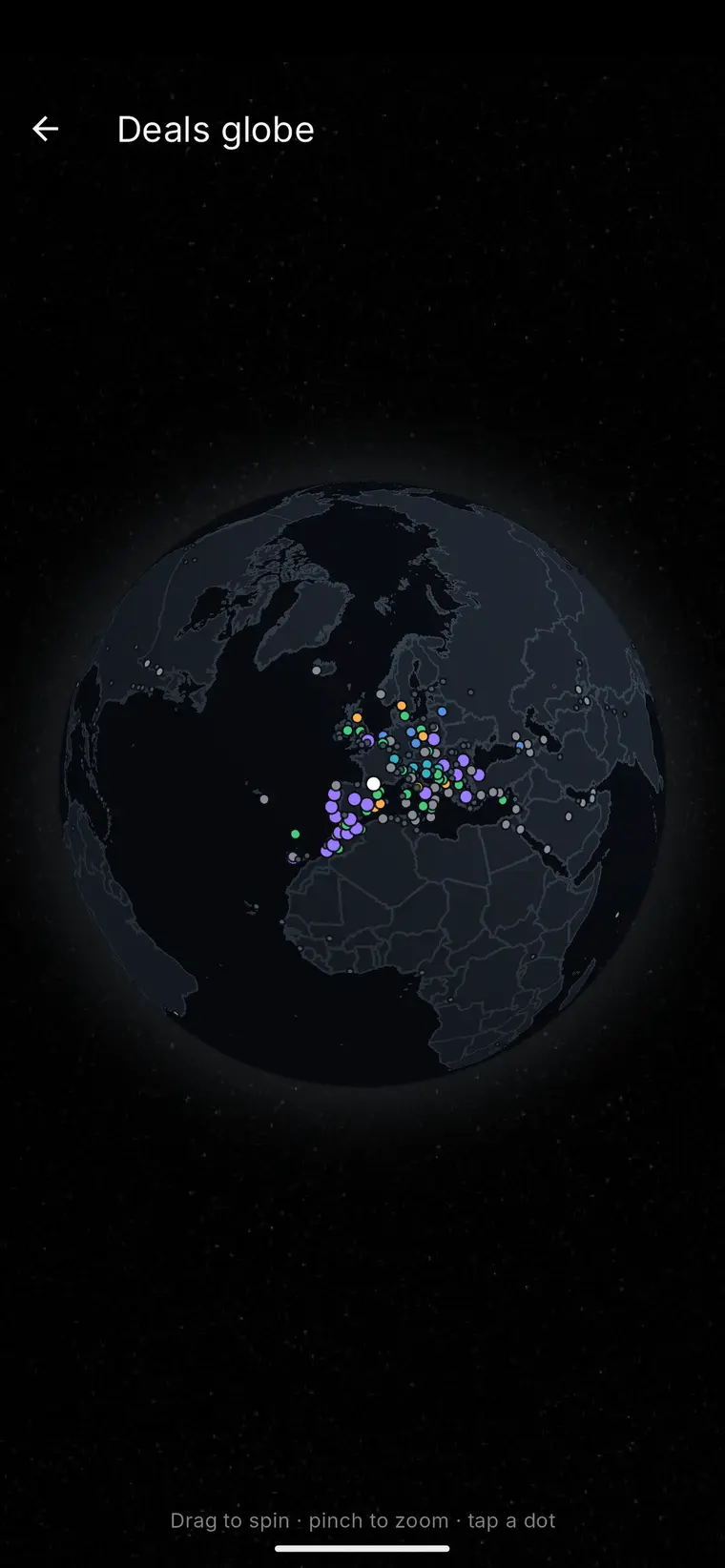
Live destination map
Fare data meets travel intelligence
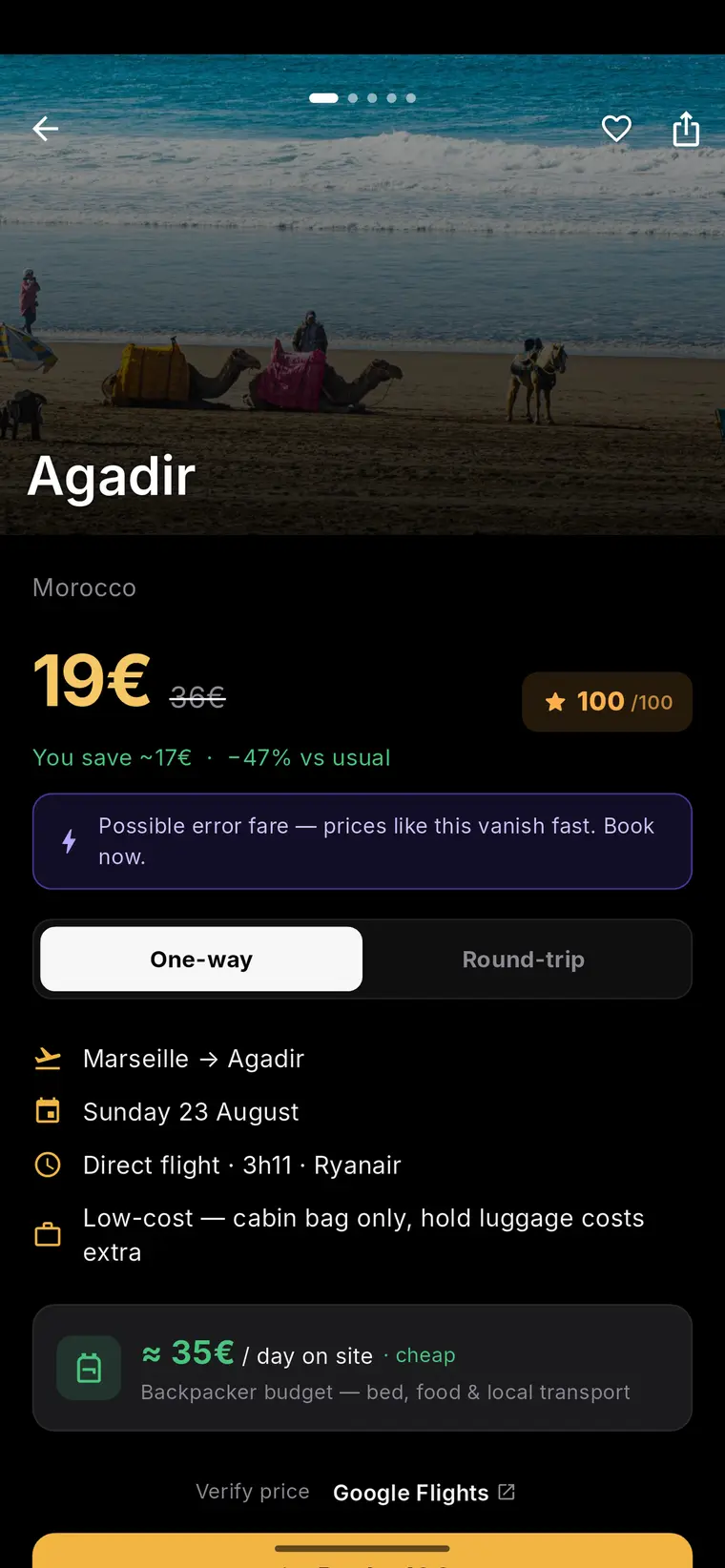
Move from a current fare signal to a photographed destination page, then use Flare guides to evaluate the complete trip.



Frequently asked questions
Do flight deal alert apps guarantee the lowest price?
No. Flight deal alert apps compare current fares against a reference price and notify you when something looks unusually low. Fares and availability can change before you book, so the final price is only confirmed on the airline or booking provider's site at checkout.
Should I use route tracking or a deal discovery app?
Route tracking suits travellers with a fixed destination who want to know when that route gets cheaper. Deal discovery suits travellers with flexible destinations who start from their departure city and want to see unusually low fares. Many flexible travellers use discovery to find ideas and then track a chosen route.
What should I check before booking a fare from a deal alert?
Confirm the price and dates directly with the booking provider, add baggage and other fees, check arrival times and transfer costs, price accommodation for those dates, and verify passport, visa, entry and health requirements on current official sources for your nationality and destination.
Sources and further reading
These resources provide the wider reference frame. Product statements on this page are limited to the public information provided by Flare.