
What error fare search actually means
An error fare is a flight price published by mistake, such as a currency slip, a missing surcharge or a mistyped amount. Error fare search means looking for those prices before they are corrected. It is not the same as a sale or a route that is simply cheap that week. A sale is intentional and an error is not, and that difference shapes what can happen after you pay.
For flexible travellers, the reward and the risk come from the same place. The price is low because something went wrong, and whoever made the mistake may try to undo it. Treat any suspected error fare as an unconfirmed opportunity, not a bargain you already have.
Why a low price is not yet a confirmed ticket
There are several steps between seeing a fare and holding a ticket you can use: the price a search tool displays, the price the booking provider charges, the ticket the airline issues, and the flight itself. A mistake can be caught at any of these steps. Displayed prices can also change between search and checkout as seats sell, whether or not an error is involved.
Whether a mispriced ticket is honoured, cancelled or repriced depends on the airline, the booking provider and the terms of your booking. Nobody can promise how a specific case will end, and this article is not legal advice. What you can control is how much else you commit before the ticket is confirmed.
How to run an error fare search without over-committing
Unusually low fares often turn up on routes you were not watching, so open-ended discovery helps more than tracking one route. Google's help page on finding plane tickets with Google Flights describes entering a departure city or airport, then finding destinations through a list of popular destinations or a world map, and using the calendar to look at different travel dates. That approach suits anyone who can be flexible about where and when they go.
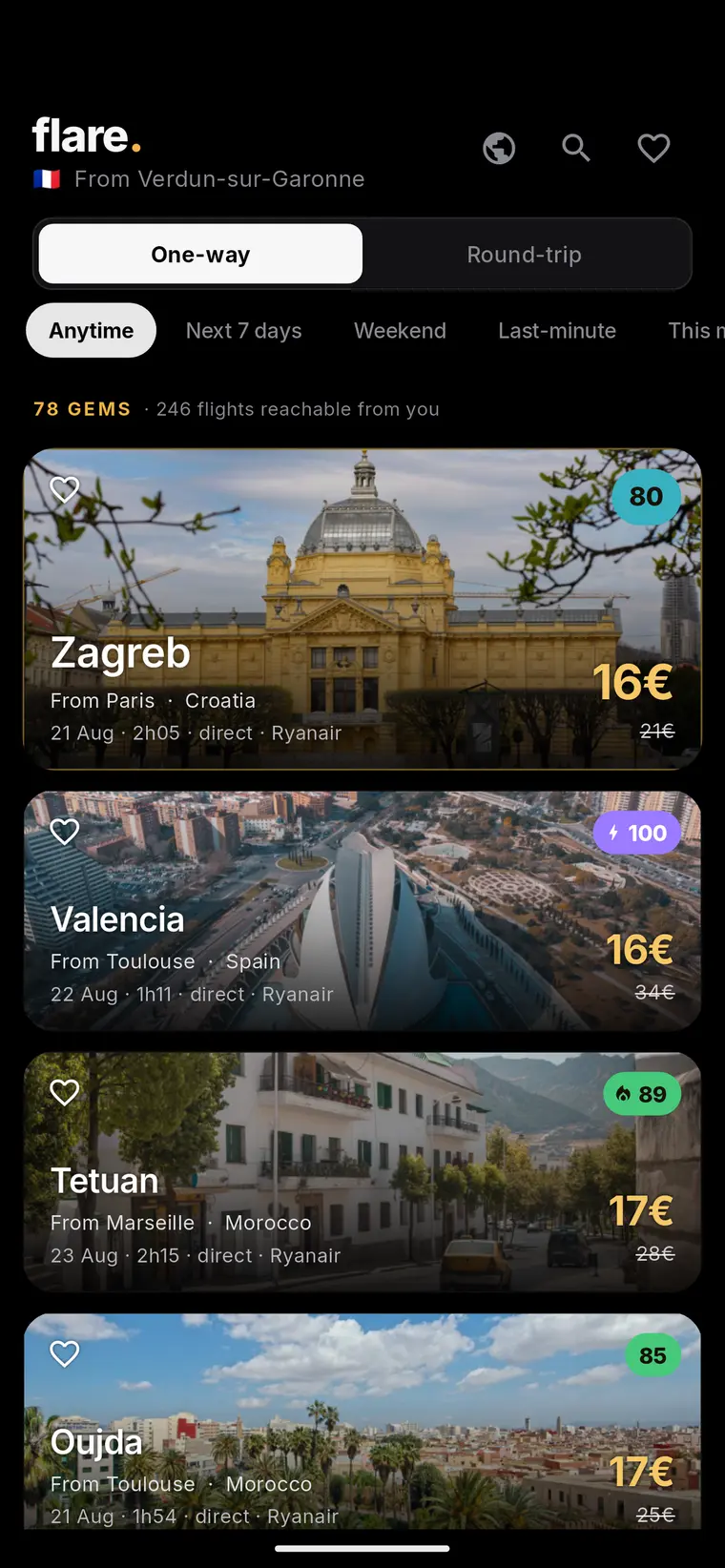
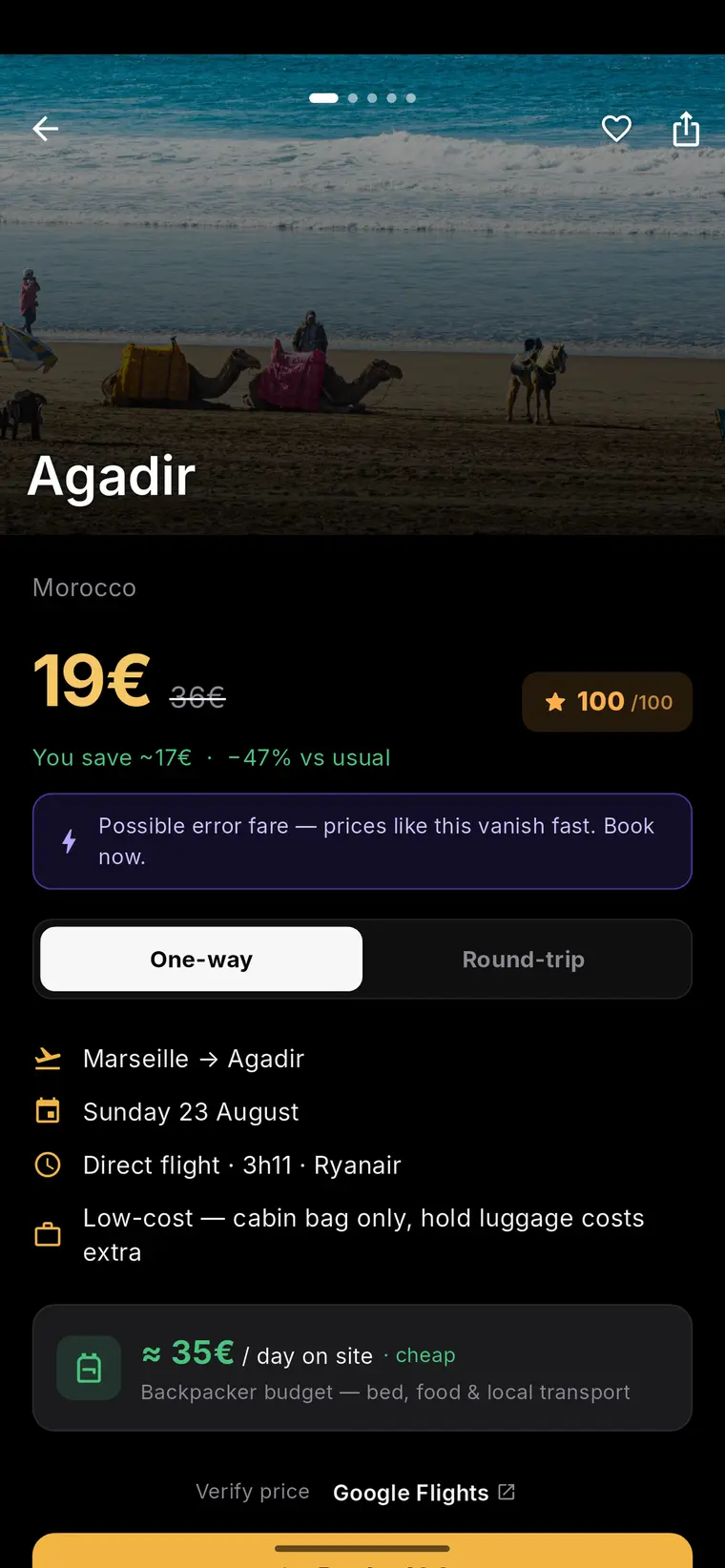
Flare follows a similar departure-city approach. Its methodology page explains that a deal only appears when the fare is at least 30% below the reference price its monitoring uses for that route. That threshold tells you a price is unusually low. It does not tell you why, so a Flare deal should not be read as a confirmed error fare or as a promise that the fare is still available.
Whichever tool you use, treat the displayed price as a starting point. Confirm the fare, the conditions and the availability with the provider that will actually issue your ticket.
Error fare search checklist before you pay
The aim is to pay for the flight only after checking what it really includes, and to keep everything else reversible until the ticket is confirmed. Go through these points in order.
Look at the cost of the whole trip, not just the fare. A very cheap long-haul ticket can still be poor value once bags, airport transfers, accommodation and travel documents are added.
- Book with the airline or a provider you can identify and contact, and read who issues the ticket.
- Check the fare conditions: baggage, seat rules, changes and refunds.
- Check names, dates, airports and connection times before paying.
- Do not book nonrefundable hotels, tours or connecting flights until the airline shows the booking with a ticket number.
- Check passport validity and current visa, entry and health requirements on official government sources.
- Save a copy of the price and conditions shown at checkout.
- Decide in advance what you would do if the ticket were cancelled.
Worked example: weighing a suspected error fare
Example (hypothetical, for illustration only): a traveller in a regional European city sees a long-haul return fare of 280 in their currency to a city where they usually see fares around 750. They can travel on flexible dates and have no fixed plans. The figures are invented to show the reasoning and are not real market data.
First, they open the booking page and check that the price still appears at checkout and that the ticket is issued by a provider they can contact. Next, they add up the full trip: two checked bags each way, a train to the departure airport, and a refundable hotel. The trip now costs noticeably more than 280, but still less than their usual budget. They also check the official government site for the destination, because an electronic travel authorisation or visa may apply depending on nationality.
They book the flight and hold the hotel on a refundable rate. They wait until the airline shows the booking with a ticket number, and until close to departure, before paying for anything nonrefundable. If the fare were cancelled, their loss would be limited to time and a refundable reservation, not a stack of unusable bookings.
Limits that apply to any error fare search
Travel documents can undo a cheap fare. Entry, passport, visa and health rules depend on who is travelling and where they are going. A ticket you cannot use is not a saving. Check official sources before you book and again before you leave, because rules can change in between.
No search tool can predict whether an airline will honour a particular price. Flare's role is fare discovery. It points travellers to unusually low prices from their departure city, with the reminder that prices and seats can change before booking. The judgement about what to book, and when, stays with the traveller.
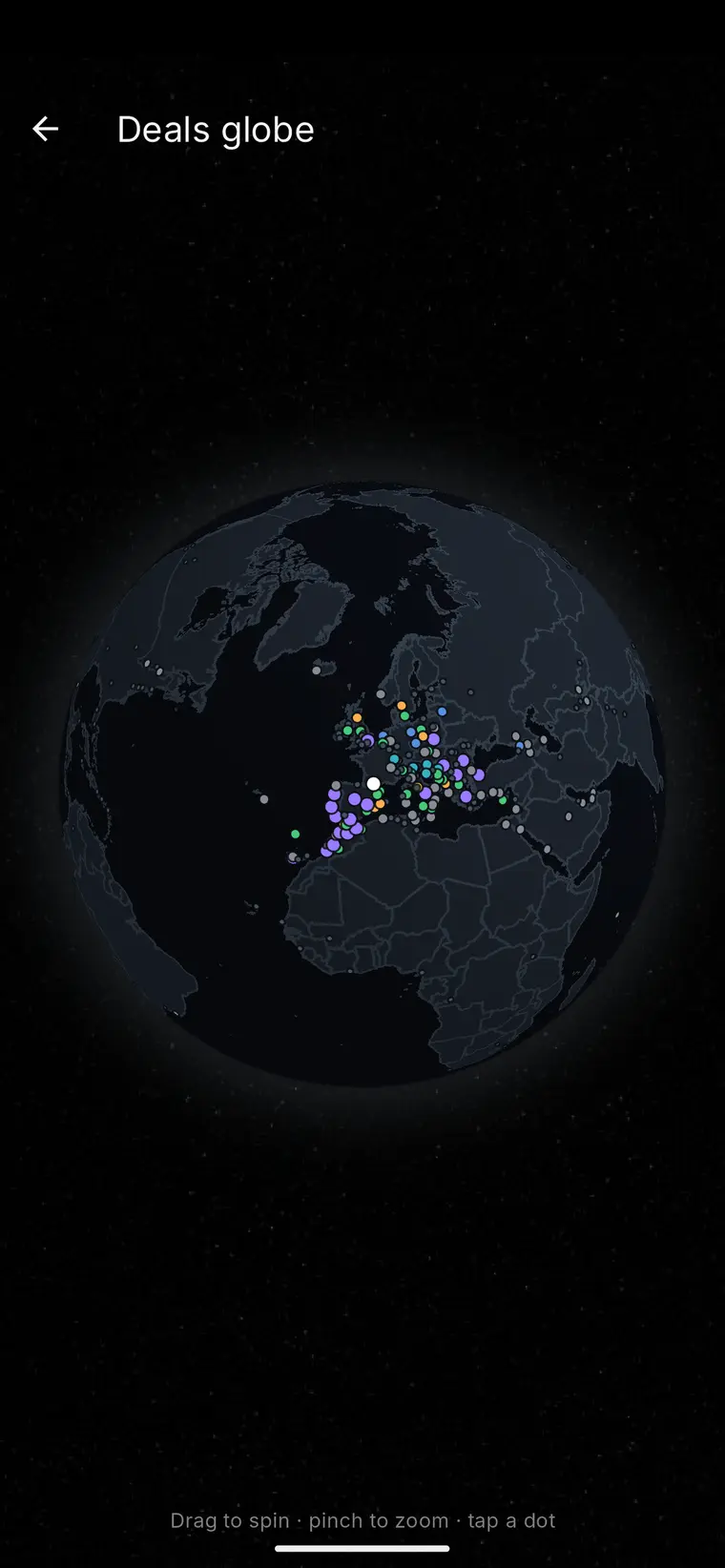
Live destination map
Fare data meets travel intelligence
Move from a current fare signal to a photographed destination page, then use Flare guides to evaluate the complete trip.



Frequently asked questions
What is an error fare?
An error fare is a flight price published by mistake, for example through a currency conversion slip, a missing surcharge or a mistyped amount. It differs from a sale because the low price was not intended, so the airline or booking provider may cancel or reprice the ticket depending on its terms.
Will an airline honour an error fare I booked?
It depends on the airline, the booking provider and the terms of the booking, and no one can guarantee the outcome. A sensible precaution is to avoid nonrefundable hotels, tours or connecting flights until the airline shows the booking with a ticket number. This is general information, not legal advice.
Does a fare far below the usual price mean it is an error fare?
No. A fare can be very low because of a sale, low demand or seasonal pricing, not just a mistake. Tools such as Flare flag fares at least 30% below a route reference price, as described in its methodology, but that only shows the price is unusual, not why. Always confirm the fare and conditions with the booking provider.
Sources and further reading
These resources provide the wider reference frame. Product statements on this page are limited to the public information provided by Flare.