

What an error fare scanner actually does
People who search for an error fare scanner usually want one thing: a tool that spots airline pricing mistakes before everyone else does. In practice, any scanner can only see prices. It compares what is being offered now against some idea of what that route normally costs, then flags the gap. It does not know why the gap exists, and it cannot tell you whether the airline will honour the ticket.
That distinction shapes everything that follows. A scanner is a filter that narrows thousands of fares down to a few unusual ones worth a closer look. It is not a verdict. The useful question is not whether a tool is clever enough to find mistakes, but what you should do with an unusually low number once it appears on your screen.
Why a low price alone does not prove a mistake
A fare can look far below normal for several ordinary reasons: a sale timed to fill seats, a new route launch, a quiet travel window, or a competitor matching a rival. A genuine error, such as a missing currency conversion or a dropped fuel surcharge, is only one possible cause, and from the outside the two can look identical.
Flare's guide on mistake fares versus fare drops treats these as separate situations for exactly this reason. The practical consequence is that you should plan as if most dramatic prices are legitimate but short-lived, and treat the rare true mistake as a bonus rather than the default. That mindset protects you from over-committing to a ticket that may later be cancelled, and from passing on a perfectly valid deal because it did not seem strange enough.
Labels matter less than durability. Whatever the cause, the questions are the same: is the fare still bookable, what does it actually include, and what happens if it disappears or is reversed?
How Flare frames unusually low fares
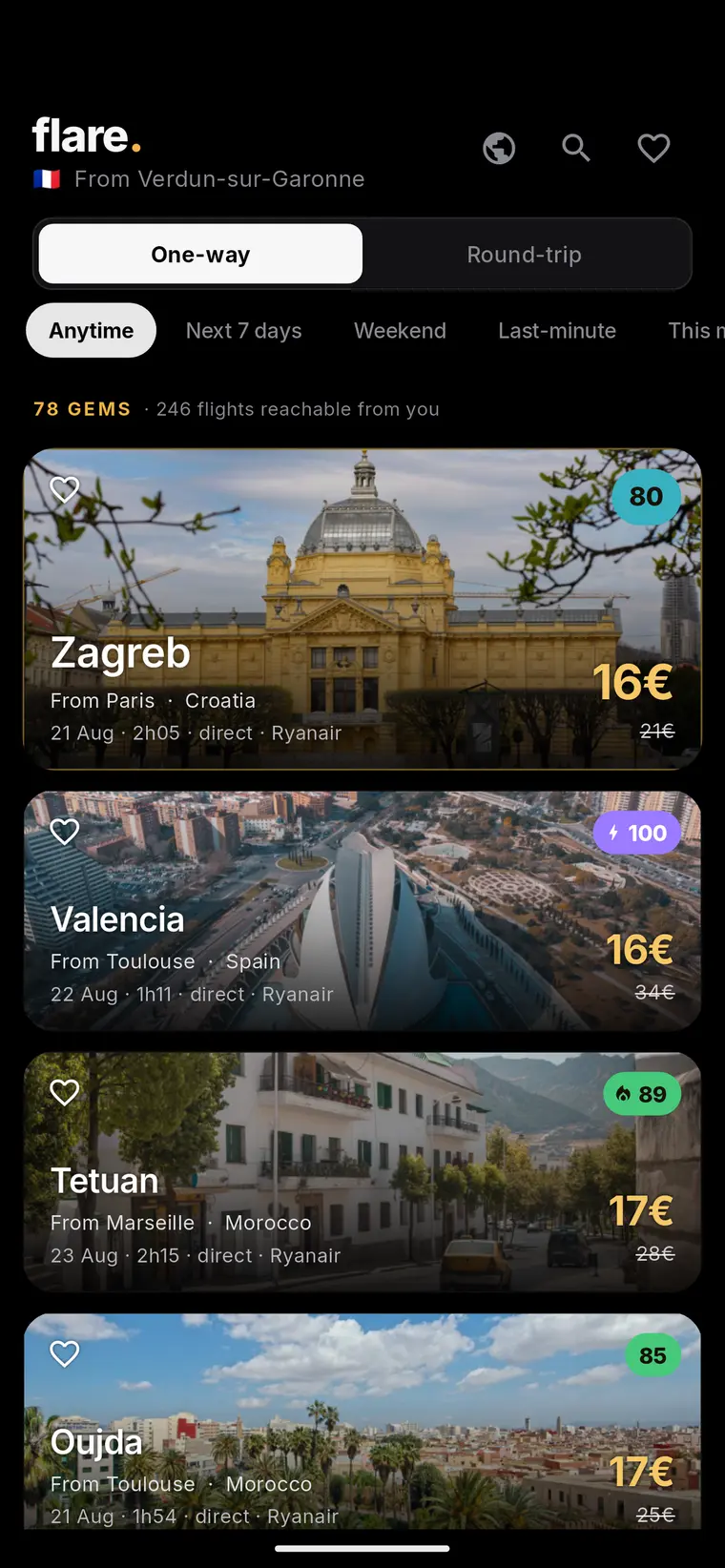
Flare publishes flight-deal discovery pages organised around the city you depart from, so the starting point is a route you could realistically take. Its methodology explains that a deal only surfaces when the price sits at least 30% beneath the reference price its monitoring uses for that route. That threshold describes how far a fare has moved from a baseline; it does not claim the fare is an airline error.
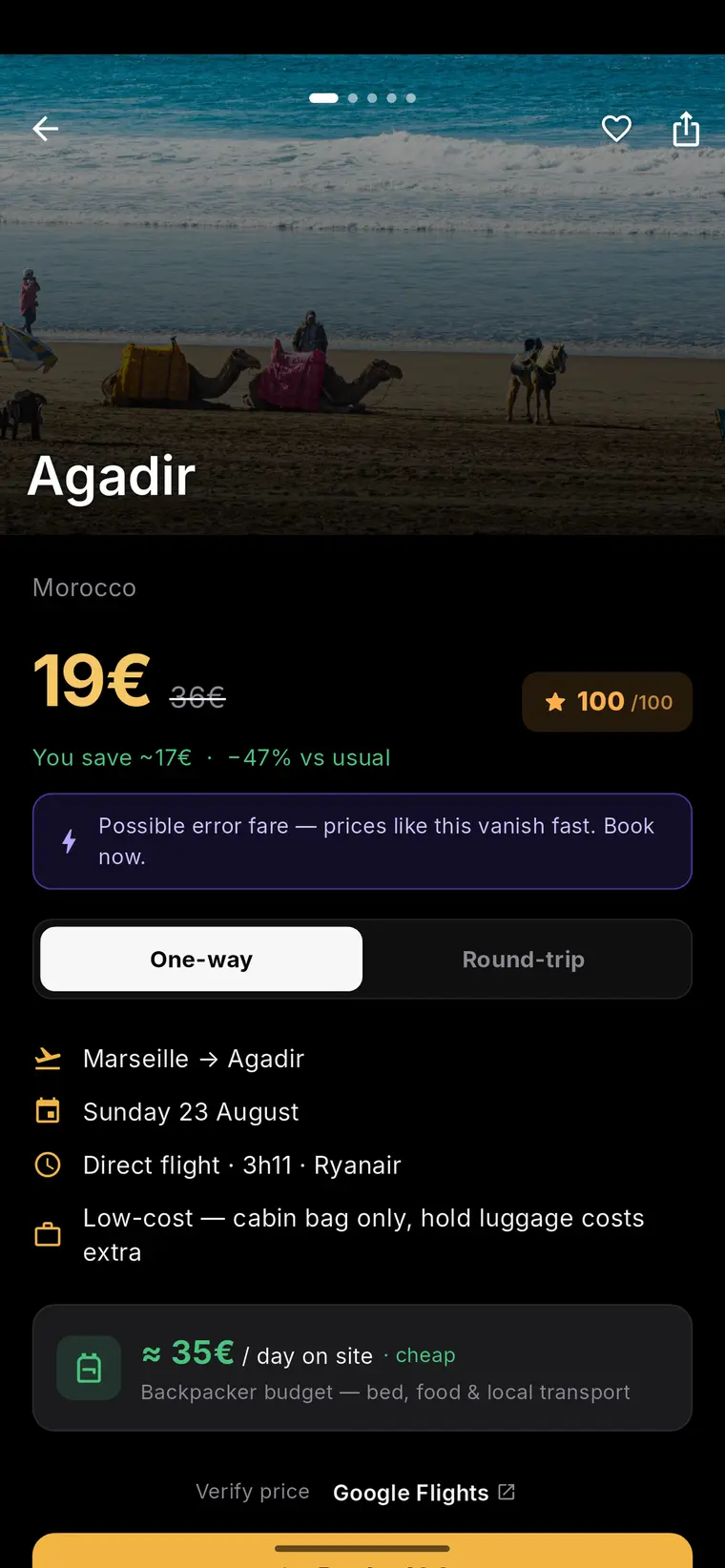
This is why the advice in this article is bounded the way it is. A threshold-based alert tells you a price is worth investigating, not that it is guaranteed, final, or still available. Any figure shown can shift or vanish before checkout, so the booking provider's own page is the only place to confirm what you are buying.
Look at the total trip, not just the headline fare
A fare that is dramatically below normal can still produce an ordinary or expensive trip. Baggage fees, seat selection, awkward connection times, distant airports, and the cost of getting to and from them all sit outside the headline number. Comparing two options fairly means pricing the whole journey you would actually take.
Flexibility is the other half of the picture. Many of the strongest-looking fares appear on specific dates or unusual routings. If you can shift your dates, accept a connection, or start from a nearby city, you widen the set of fares worth comparing. If you cannot, a deal that only works on one fixed Tuesday may not be a deal for you at all.
Then there is the destination itself. Entry rules, passport validity, visas and health requirements vary with your nationality and where you are going. A cheap ticket to somewhere you cannot easily enter is not cheap. Check the current official requirements for your own situation before you book, and again before you leave.
Worked example: deciding on a fare that looks too low
Example only, with hypothetical numbers. Suppose a round trip that usually sits around 600 appears at 240. That is well past a 30% gap, so a threshold-based alert would surface it. Before celebrating, the traveller prices bags and seats, adding 90, and notes a long overnight layover that would require a hotel at roughly 80. The real comparison is now about 410 against 600: still attractive, but no longer extraordinary.
Next, they check whether the fare is still bookable on the provider's site, read the fare rules, and confirm the passport and visa situation for the destination. Only then do they decide whether the remaining saving justifies the inconvenience. The checklist below captures that sequence.
- Confirm the price and availability directly on the booking provider's page.
- Add bags, seats, transfers and any overnight costs to get a true total.
- Compare that total with a normal fare on dates you could genuinely travel.
- Read change, refund and cancellation terms before paying.
- Verify current official entry, passport, visa and health requirements for your situation.
- Avoid non-refundable extras, such as hotels or tours, until the ticket is confirmed and stable.
Limits to keep in mind before you act
No scanner, Flare included, can promise that a fare will hold, that a suspected error will be honoured, or that a price shown a minute ago is still there. Airlines and booking sites set their own terms, and what they do after a pricing mistake is their decision, not something an alert can predict. If a dispute arises, the provider's published terms and any applicable consumer rules are where answers lie, not the alert that led you there.
The calm approach is to use a scanner to save time on discovery, then slow down at the booking step. Treat the alert as an invitation to check, price the full trip, keep plans flexible until the ticket is confirmed, and do your official entry checks yourself. That way a good fare stays a good outcome, whether or not it turns out to be a mistake.
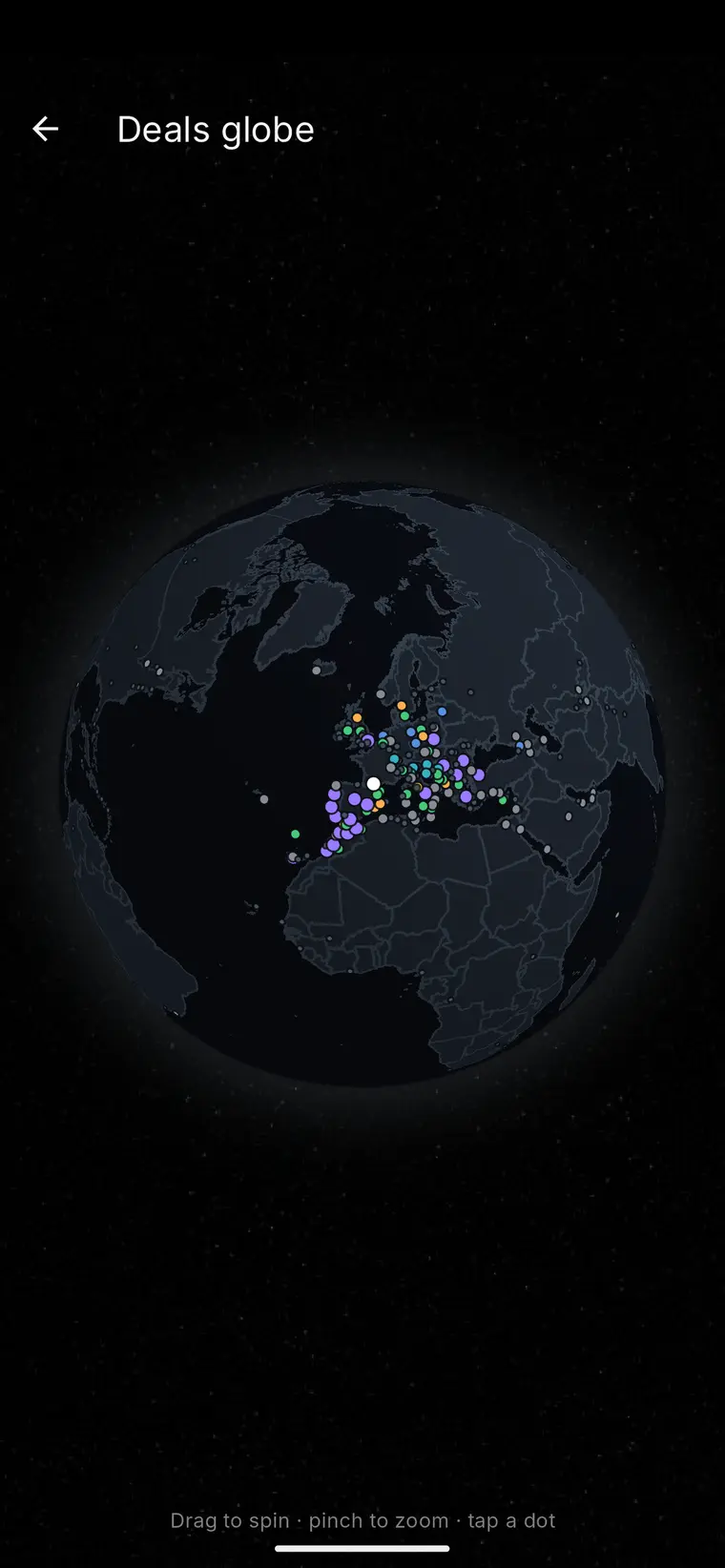
Live destination map
Fare data meets travel intelligence
Move from a current fare signal to a photographed destination page, then use Flare guides to evaluate the complete trip.



Frequently asked questions
Can an error fare scanner tell whether a cheap flight is an airline mistake?
Not reliably. A scanner compares current prices with a reference for the route and flags large gaps, but it cannot see why a fare is low. A sale and a pricing error can look the same from the outside, so any flagged fare should be confirmed with the booking provider before you rely on it.
What does a 30% below reference price threshold mean for a flight deal?
It means the fare was flagged because it sits well under the baseline price a monitoring tool uses for that route. It signals that the price is unusual and worth checking, not that it is an error, guaranteed, or still available. Prices can change before booking, so always confirm on the provider's site.
What should I check before booking a fare that looks too good to be true?
Confirm the price and availability on the booking provider's page, add baggage, seats and transfer costs to find the real total, read the change and refund rules, and verify current official entry, passport, visa and health requirements for your situation. Hold off on non-refundable hotels or tours until the ticket is confirmed.
Sources and further reading
These resources provide the wider reference frame. Product statements on this page are limited to the public information provided by Flare.