
What an error fare monitor actually watches
An error fare monitor is any tool or habit that scans published airfares and flags prices that look far out of line with what a route usually costs. The appeal is obvious: a fare at a fraction of the normal price can make a trip possible that otherwise would not be. The useful question is not whether such fares exist, but what a monitor can honestly tell you when it raises an alert.
A monitor sees prices, not intentions. It can tell you that a fare is unusually low compared with a reference point. It cannot tell you why the fare is low, whether the airline will honour it, or whether it will still be there when you click through. That gap between detection and confirmation is where most of the practical risk sits.
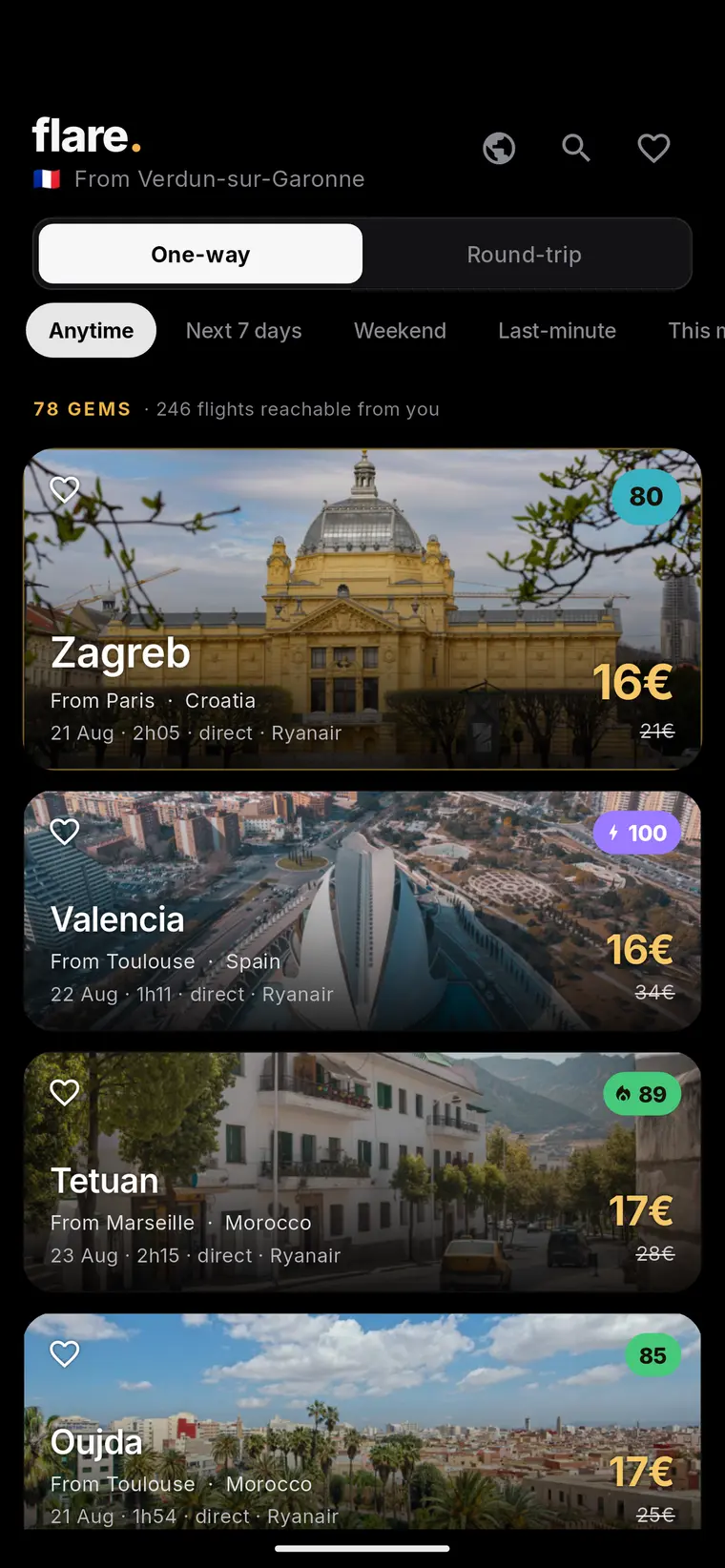
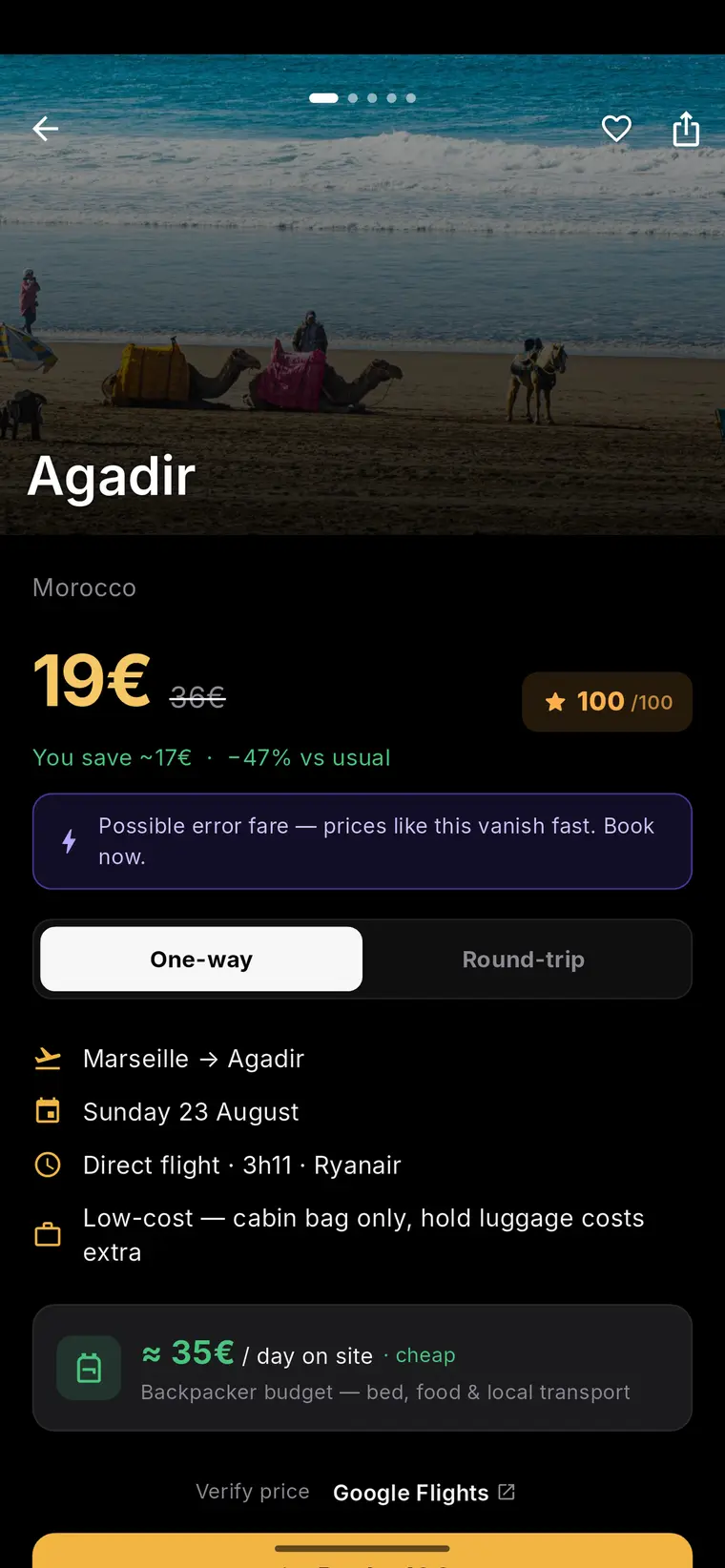
Flare works on the discovery side: it publishes flight-deal pages built around the city you would fly from, and its methodology explains that a deal only surfaces when its price sits at least 30% under the reference price its monitoring uses for that route. That threshold measures how unusual a price is. Flare does not confirm that any fare is an airline error, and it does not sell or reserve the ticket; booking happens with the provider.
Why a steep drop is never proof of an error
It is tempting to read a very low price as a pricing mistake, but Flare's guide on mistake fares versus fare drops is clear that a steep drop is never proof of an error. A low fare can reflect a currency difference, a promotion, a departure from another airport or other ordinary causes, and these can look identical to a genuine mistake on a results page.
The guide also notes that the cause of a low fare is known only when the seller or a reliable source confirms it. That means the most honest stance for a traveller is not to diagnose the fare, but to separate what can be checked from what cannot, and to plan around the uncertainty rather than guess it away.
- What you can verify yourself: the price, dates, airports, cabin and fare rules shown by the booking provider.
- What you usually cannot verify: why the fare is priced that way, unless the seller or a reliable source says so.
- What counts in the end: the final price and terms confirmed at checkout.
The limits that apply before you act
The first limit is time. Any fare in an alert reflects a moment that has already passed. Seats sell, prices are refiled, and a deal may disappear or change between the alert and checkout. Treat every displayed price as provisional until the booking provider confirms it at payment.
The second limit is whether the ticket stands. Airlines are not automatically required to honour mistake fares. The guide cites a US Department of Transportation notice dated 8 May 2015 under which an airline that demonstrates a mistake may cancel the ticket, provided it refunds it and reimburses reasonable, verifiable expenses. The guide notes that this notice was temporary and that its current status should be checked; outside that context, the seller's conditions and the rules that apply to your booking decide what happens.
The third limit is the trip itself and your eligibility. Baggage, seat selection, transfers, lodging and reaching the departure airport can erase much of a saving. Passport validity, visas, transit rules and health requirements vary with the traveller and destination, so official sources need checking before you book and again before you travel.
A decision checklist for error fare monitor alerts
Because an unusual fare can change before you finish deciding, it helps to have a fixed sequence ready rather than improvising under pressure. The aim is to settle the flight decision on confirmed information while committing as little as possible to everything else until the ticket is clearly secure.
Use the list below as a working order. It is deliberately conservative, favouring flexibility and confirmation over speed on anything that costs extra money.
- Confirm the price and fare rules on the booking provider's own page, not only in the alert.
- Check that dates, airports and cabin match what you expected, including connections.
- Read the cancellation and change terms before paying.
- Verify passport, visa, transit and health requirements on official government sources.
- Estimate the full trip cost: bags, transfers, lodging and getting to the departure airport.
- Hold off on non-refundable hotels, tours or extra flights until the ticket is confirmed and ticketed.
- Keep confirmations and screenshots of the price and terms you accepted.
Worked example: weighing a suspiciously cheap fare
Example only, with invented figures: imagine a traveller who usually sees a long-haul return from their city priced around 800 in their currency. An alert shows the same route for 300 on two dates in late winter. The traveller cannot tell from the price alone whether this is a promotion, a currency effect or a mistake, so they do not try to.
Working through the checklist, they confirm the 300 price on the booking provider's page, notice that bags are not included and add an estimated 120 for luggage. Their passport would have less validity remaining than the destination may require, so they check the official entry rules before paying. Satisfied on entry, they book the flight and wait for ticketing before reserving refundable accommodation only.
The outcome in this hypothetical remains uncertain: if the fare turned out to be an error, the airline might cancel it under whatever rules apply. But the traveller has limited their exposure to the flight itself, compared a real trip cost of roughly 420 plus lodging against the usual 800, and avoided locking in anything that would be lost if the booking were cancelled.
Using discovery tools with the right expectations
Flexible travellers get the most from fare monitoring when they treat it as a way to widen their options rather than a shortcut to a guaranteed bargain. Being open on dates, destinations or departure airports gives an alert more chances to be useful, and comparing several ideas side by side keeps any single unusual fare in proportion.
Alert timing also varies by service. On Flare, rare-fare alerts on the free plan arrive with a delay of about 40 minutes that Flare Plus removes, depending on your settings and on qualifying fares being available. Either way, the booking, the fare rules and your travel eligibility remain matters to settle with the provider and official sources, which is what lets you act on a good lead without being caught out when a price changes or a rule applies to you.
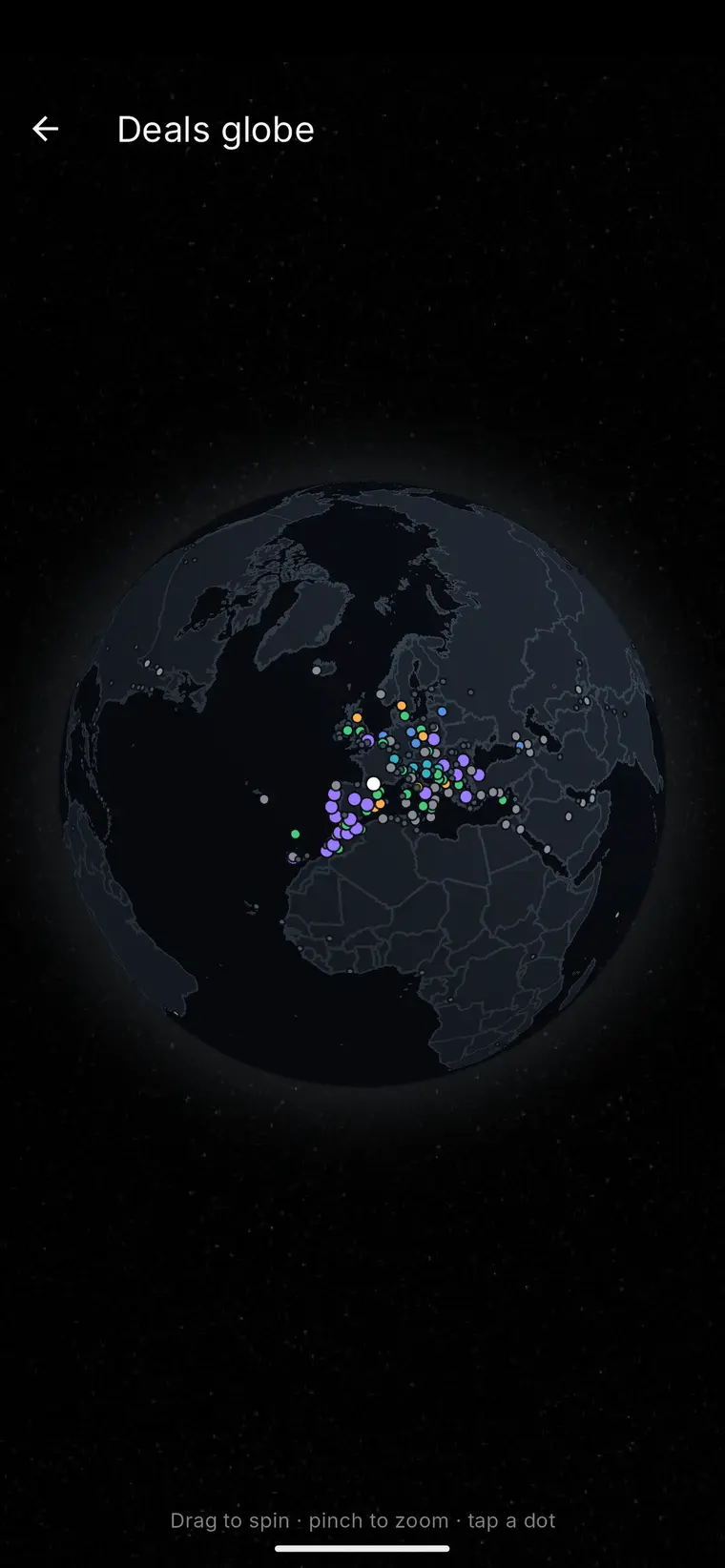
Live destination map
Fare data meets travel intelligence
Move from a current fare signal to a photographed destination page, then use Flare guides to evaluate the complete trip.



Frequently asked questions
Does an error fare monitor confirm that a cheap flight is a genuine mistake fare?
No. A fare monitor can only show that a price looks unusually low compared with a reference point. A steep drop can come from a promotion, a currency difference or another airport, and the cause is known only when the seller or a reliable source confirms it. The booking provider's confirmed price and terms determine the actual deal.
Do airlines have to honour mistake fares?
Not automatically. A US Department of Transportation notice dated 8 May 2015 allowed an airline that demonstrates a mistake to cancel the ticket if it refunds it and reimburses reasonable, verifiable expenses. That notice was temporary, so its current status should be checked, and elsewhere the seller's conditions and applicable rules decide the outcome.
What should I check besides the price before booking a very cheap flight?
Check the fare rules and cancellation terms, the full trip cost including bags and transfers, and the current official passport, visa, transit and health requirements for you and your destination. Requirements depend on the traveller and can change, so verify them before booking and again before departure, and keep other bookings refundable until the ticket is issued.
Sources and further reading
These resources provide the wider reference frame. Product statements on this page are limited to the public information provided by Flare.