



What travel fare alerts actually tell you
Travel fare alerts are notifications that a price for a route has changed, usually downward, compared with some earlier or typical level. They are useful because they replace repeated manual searching with a signal that something may be worth a closer look. The important word is 'may': an alert is a prompt to investigate, not a confirmed offer.
Before acting on an alert, it helps to separate three things it can't settle on its own: whether the fare is still bookable at that price, whether the trip as a whole is good value once extras are added, and whether you can actually make the journey given entry and documentation rules. Treating the alert as the start of a short checking process, rather than the end of one, avoids most disappointments.
How fare alerts decide a price is worth flagging
Every alert compares a current price with something. Some tools track a specific route and set of dates you choose and notify you when that price moves. Google's help page on tracking flights and prices describes this kind of route and date tracking in Google Travel; the exact options it offers can change over time, so the current help page is the place to confirm how it works today.
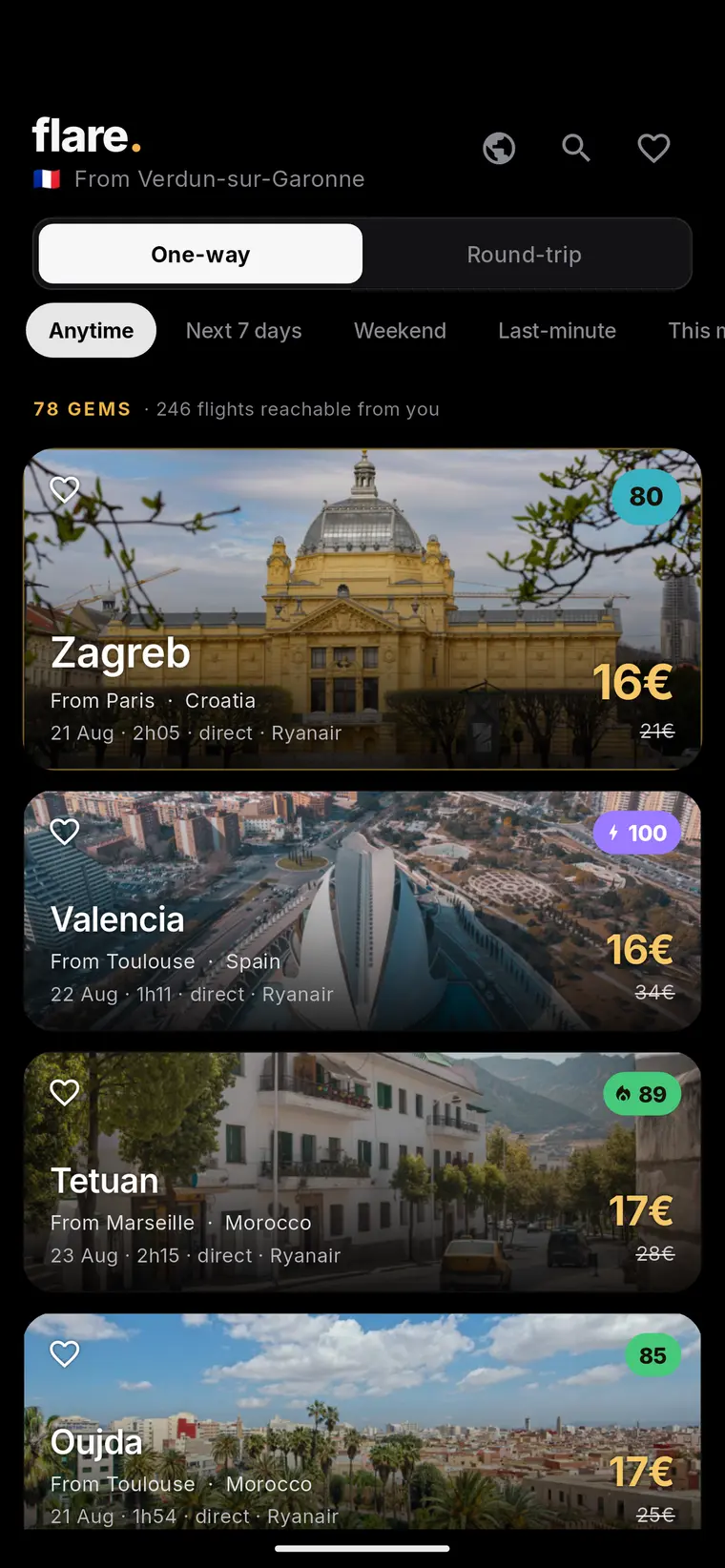
Other services flag a fare when it falls well below a reference level for that route. Flare works this way: its methodology page explains that a fare is only surfaced as a deal when it sits at least 30% under the reference price its monitoring uses for that route. That threshold tells you how the deal was selected, not that the fare will still be there when you search, nor that it is the lowest price anywhere.
The practical lesson is to know which comparison your alert uses. A drop from yesterday's price, a drop against a route reference, and a drop against your own target are three different signals. Reading a methodology page, where one exists, tells you what a 'deal' label actually means.
Why the alerted fare may not be the fare you pay
Fares and seat availability shift constantly, and the price shown in an alert reflects a moment that has already passed. By the time you open the link, the cheapest seats may be gone or the price may have been recalculated. The only price that counts is the one the booking provider confirms at checkout.
Even when the base fare holds, the total trip cost can look very different. Checked bags, seat selection, payment fees, and transfers to and from airports all sit outside the headline number. A fare that is far below a route's usual price can still be a poor deal if it lands at a distant airport late at night or requires an extra hotel stay.
Entry rules and conditions an alert cannot check
No price alert knows who you are. Passport validity, visa needs, and health requirements depend on your nationality, your circumstances, and your destination, and they can change. A cheap fare to a country you cannot easily enter, or where processing a visa takes longer than the time before departure, is not a usable fare.
Before booking, and again before you travel, check the current official sources for your destination and any transit points. Government and official travel advice pages are the reference here, not deal pages or forum posts. This step matters most with alert-driven bookings, because the short window between seeing an alert and paying can tempt you to skip it.
A decision checklist before acting on a travel fare alert
The checklist below turns an alert into a decision. It is deliberately short so you can run through it before a fare disappears, while still covering the conditions that most often change whether a trip makes sense.
Example (hypothetical): an alert shows a return fare of 180 for a city you usually see priced around 300. You open the booking provider and the fare is now 195. Adding one checked bag each way brings it to 255, and the arrival time means a 40 taxi instead of a train. Your real comparison is roughly 295 against your usual trip cost, not 180 against 300. It may still be worth it, especially if the dates suit you, but the saving is smaller than the alert implied. These figures are illustrative only and do not describe any real route.
- Confirm the live price and seats on the booking provider's own page.
- Add bags, seats, payment fees, and ground transport to get a total trip cost.
- Check arrival and departure airports and times against your plans.
- Verify passport, visa, and health requirements on current official sources.
- Review change and cancellation conditions for the specific fare.
- Compare the total with what you would normally expect to pay, not only the headline fare.
Using fare alerts flexibly without overcommitting
Alerts work best for travellers with some flexibility. If you can shift dates, consider nearby airports, or choose between several destinations, you are far more likely to find an alerted fare that fits. Setting alerts on a few routes from your departure city, rather than one fixed itinerary, widens the chances that a genuinely useful price appears.
Flare's pages are built around this kind of discovery, starting from a departure city and showing destinations where fares have dropped. That makes them a source of ideas rather than a booking system, so every fare still needs confirming with the provider and every trip still needs the official checks described above.
Finally, decide your limits in advance: a total budget, acceptable dates, and the destinations you could realistically enter. With those settled, an alert becomes a quick yes-or-no question rather than a pressured decision, and you can let most alerts pass without regret.
Live destination map
Fare data meets travel intelligence
Move from a current fare signal to a photographed destination page, then use Flare guides to evaluate the complete trip.



Frequently asked questions
Does a travel fare alert guarantee I can book that price?
No. A fare alert reports a price observed at a particular moment, and fares and seat availability can change quickly. The only reliable price is the one the airline or booking provider confirms during checkout, so always check there before relying on an alerted fare.
How do fare alert services decide that a price counts as a deal?
It depends on the service. Some notify you when a tracked route and date changes in price, while others compare fares against a reference level for the route and flag ones that fall well below it. Reading the service's methodology or help page explains which comparison it uses and what its deal label really means.
What should I check besides the price before booking a flight from a fare alert?
Work out the total trip cost including bags, seats, fees, and airport transport, check the airports and flight times, review the fare's change and cancellation conditions, and confirm current passport, visa, and health requirements for your nationality and destination using official government sources.
Sources and further reading
These resources provide the wider reference frame. Product statements on this page are limited to the public information provided by Flare.