


What error fare booking actually involves
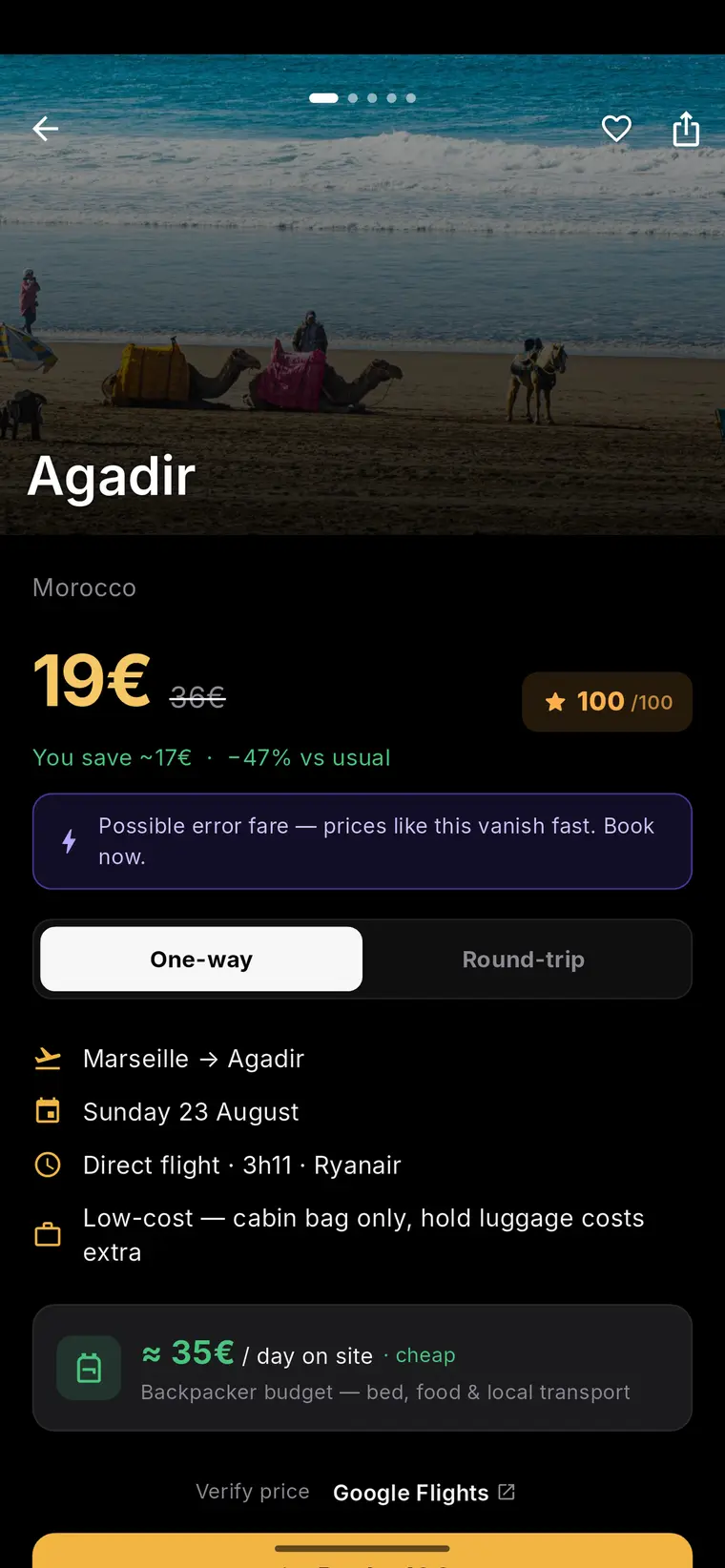
Error fare booking refers to purchasing a flight that has been priced incorrectly by an airline or a distribution system, typically due to a currency conversion mistake, a missing fuel surcharge, or a data entry error. These fares are distinct from ordinary discounts because the price gap is usually large and unexplained by normal seasonal or promotional patterns.
The term gets used loosely online, and it's worth separating true pricing errors from steep but legitimate fare drops caused by route competition, off-peak demand, or a carrier testing a new price point. Confusing the two can lead a traveller to expect an error-fare outcome (cancellation risk, slow confirmation) when they've actually found a normal discounted fare that will book and ticket like any other.
- Unusual currency or unit conversion issues
- Missing taxes, fuel surcharges, or fare basis components
- Fare-loading mistakes during a schedule or system update
Why the distinction between mistake fares and fare drops matters
According to Flare's guide on mistake fares versus fare drops, the practical difference lies in how the fare behaves after purchase. A genuine fare drop is a real, sellable price the airline intends to honor, even if it's temporary. A mistake fare carries a meaningfully higher chance of later cancellation or price correction, because airlines are generally not obligated to honor a fare that resulted from a technical error, and policies on this vary by jurisdiction and carrier.
This is why the label attached to a deal matters less than how a traveller treats it operationally. Whether a fare is an intentional flash sale or an unintended error, the same practical steps apply: confirm the price is still live, understand that ticketing (not just booking) is the point at which a fare is typically locked in, and avoid making irreversible plans - like non-refundable hotel bookings or time-off requests - until the airline has issued the ticket and, ideally, charged the card without a subsequent cancellation notice.
How fare discovery pages fit into error fare booking
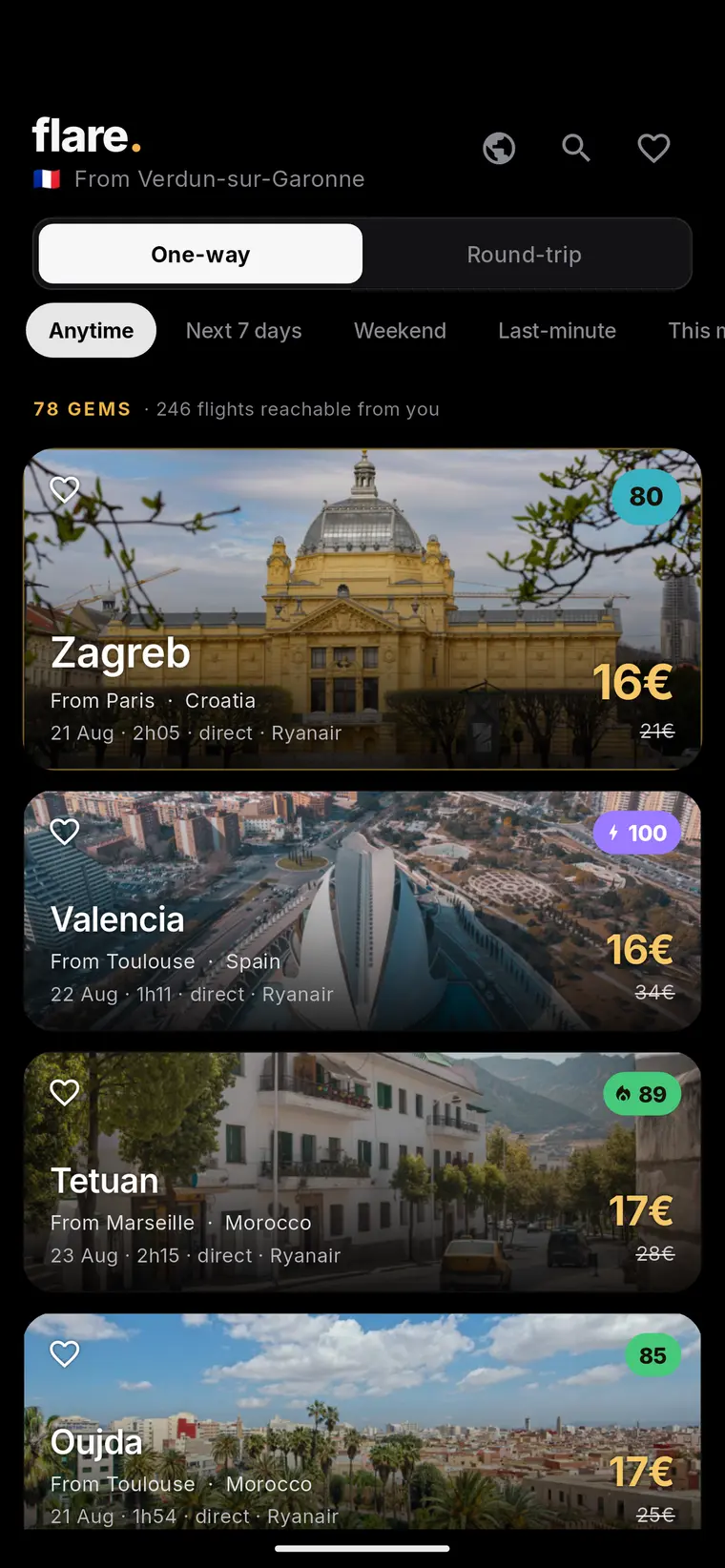
Flare publishes flight-deal discovery pages organized by a traveller's departure city, which is where many people first encounter fares that look unusually low. Flare's public methodology states that surfaced deals are detected at least 30% below the route reference price used by its monitoring, but that threshold describes how a deal is identified as noteworthy relative to a historical baseline - it does not classify the fare as a mistake, nor does it guarantee the fare will remain available or ticket successfully.
In practice, this means a fare appearing on a discovery page could be a well-priced but entirely intentional fare, a limited-inventory promotional fare, or, less commonly, a fare affected by an error. Flare's own pages state clearly that displayed fares and availability can change and must be confirmed with the booking provider, which is the operative caveat for anyone treating a low fare as an opportunity worth acting on quickly.
A worked example: evaluating a fare before booking
Consider a hypothetical traveller, flexible on travel dates, who sees a fare from their home city to a destination they've been considering, priced well below what they'd normally expect for that route. This example illustrates a reasonable evaluation sequence, not a guarantee of outcome.
First, they'd check the airline's own booking page or a reputable travel agent site directly, rather than relying solely on the discovery page, since prices and seat availability shift independently of when a deal was surfaced. Second, they'd look at the total trip cost - baggage fees, seat selection, connection times, and whether the return leg or onward travel is realistically workable - rather than judging the deal on the outbound fare alone. Third, if the price still looks unusual after checking directly with the airline, they'd treat that as a signal to book cautiously: use a card that offers reasonable purchase protection, avoid booking non-refundable add-ons immediately, and wait for a ticket confirmation before finalizing other travel plans.
Finally, they'd revisit official entry, passport, and visa requirements for the destination, since those depend entirely on the traveller's nationality and the destination's current rules and are unrelated to whether the fare itself is a bargain or an error.
A practical checklist for evaluating a suspected error fare
The following checklist reflects the general principles discussed above and can be applied to any fare that looks unusually low, whether encountered through a discovery page, a search engine, or a forum post.
- Confirm the price directly with the airline or a licensed booking provider before assuming it's accurate
- Check whether the fare has actually ticketed (not just booked) before treating the trip as confirmed
- Hold off on non-refundable hotels, tours, or time-off requests until ticketing is confirmed
- Review total trip cost, including baggage and connections, not just the headline fare
- Verify current passport, visa, and entry requirements for your specific nationality and destination
- Use a payment method with reasonable dispute protections in case a booking is later cancelled
Staying flexible without overcommitting
The most durable approach to error fare booking is treating flexibility as a tool rather than a strategy. Being open to alternative dates, nearby airports, or different destinations increases the chance of finding a genuinely good fare, but it doesn't change the fact that any single low fare - error or not - needs to be verified before it becomes the anchor of a trip.
Flare's role in this process is limited to surfacing candidate deals from a traveller's departure city based on its published methodology; it does not adjudicate whether a given fare is an error, nor does it monitor a fare's status after it's surfaced. That verification step, and the judgment about how much risk to take on before a ticket is confirmed, remains with the traveller and the booking provider.
Live destination map
Fare data meets travel intelligence
Move from a current fare signal to a photographed destination page, then use Flare guides to evaluate the complete trip.



Frequently asked questions
How can I tell if a fare is a genuine error rather than just a good deal?
There's no foolproof way to tell from the price alone. A large, unexplained drop relative to typical pricing for that route is a common indicator, but the more reliable check is confirming the fare directly on the airline's own site and watching whether it survives the ticketing step, since airlines are generally not obligated to honor fares resulting from technical errors.
Should I book non-refundable hotels or take time off work as soon as I find a low fare?
It's generally safer to wait until the flight ticket is fully confirmed, since bookings can be cancelled or corrected before ticketing completes. Holding off on other non-refundable commitments reduces the risk of financial loss if the fare doesn't hold.
Do low fares change what visa or entry requirements apply to my trip?
No. Entry, passport, visa, and health requirements depend on the traveller's nationality and the specific destination, not on how the fare was priced or discovered. These should always be checked against current official sources before booking or departure.
Sources and further reading
These resources provide the wider reference frame. Product statements on this page are limited to the public information provided by Flare.