


What date should I book my flight? The honest short answer
If you are asking what date should I book my flight, the most reliable answer is less exciting than a rule of thumb: there is no single calendar day that guarantees the lowest fare on every route. A price you see is a snapshot taken at one moment, and the same search can return a different amount or no seat at all a few hours later.
A more useful question is this: when does a fare that suits your trip meet your own conditions for booking? That shifts the decision away from guessing a magic date and towards things you can control, such as how flexible your travel dates are, what the whole trip will cost, and whether you are actually allowed to travel on the dates you choose.
Why a fare is an observation, not a forecast
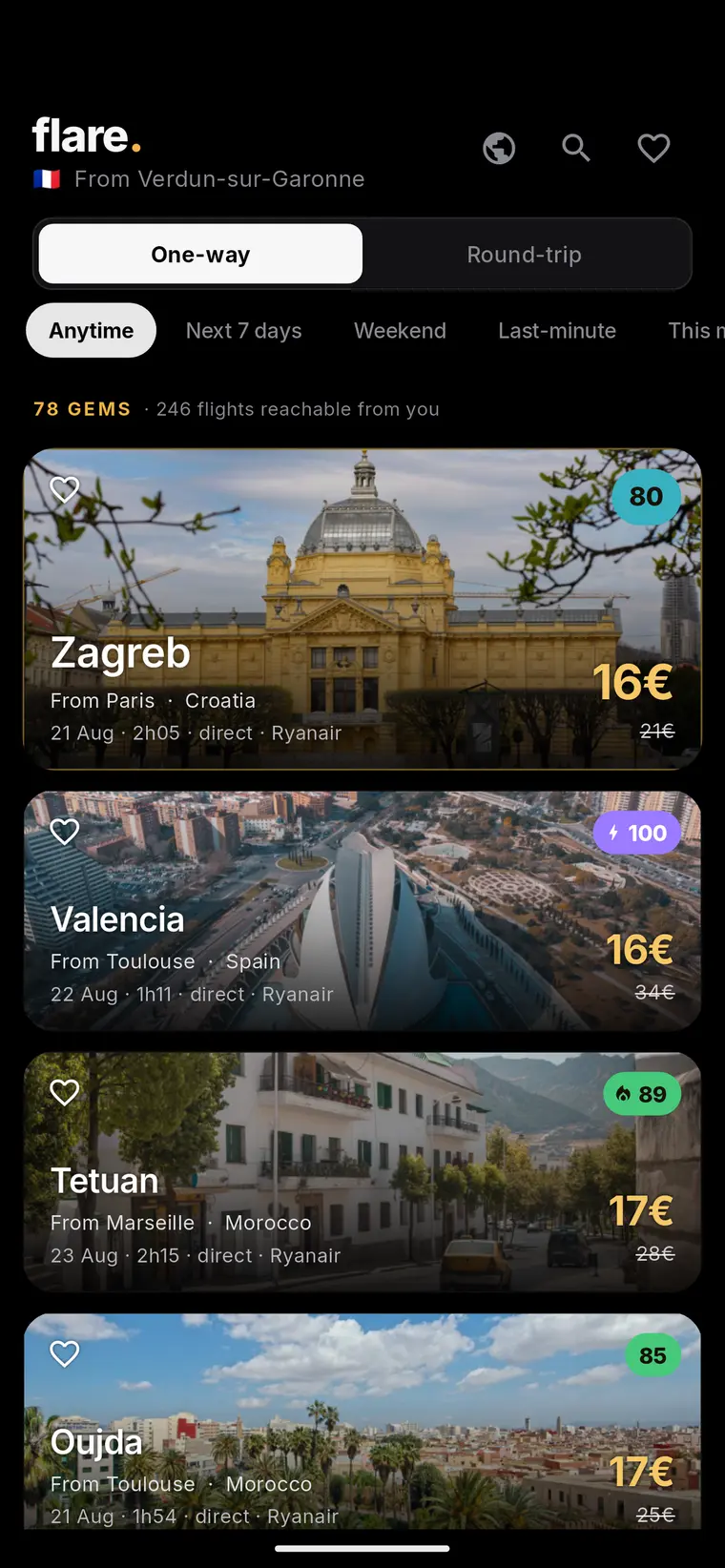
Flare, the flight-deal discovery service from Ivryn, publishes pages built from a traveller's departure city. Its methodology describes each public row as a timestamped observation from a recent scan, not a booking quote. A fare only appears when it sits at least 30% under the reference Flare uses for that route. Where enough route history exists, and only once a minimum amount of history has been collected, that reference is a median of observed baseline prices with the outer 10% trimmed away. For some long-haul routes without that history, a conservative fallback reference is used instead, so the comparison is not built the same way on every route.
That design tells you something important about timing. A low fare shows that a gap existed between a price and a benchmark at a specific time. It does not predict whether the price will rise or fall tomorrow, and it does not explain why the price exists. Flare's methodology also notes that its internal Deal Score is a way to prioritise candidates, not an outside rating or a verification stamp.
So treat any 'book now' moment, from any source, as a prompt to check rather than proof. The value of watching fares is that you notice unusual gaps; the decision still depends on what the live booking page shows when you are ready to pay.
Separate the day you book from the days you fly
Many travellers mix two different dates: the day they purchase and the days they travel. These are separate decisions. On the travel side, the logic is simple: widening a departure window gives you more combinations of outbound and return days to compare. Someone who can leave any day within a fortnight has more options to look at than someone locked to one Friday.
Flexible comparison works best when you decide your limits in advance. Write down the earliest and latest acceptable departure, the longest trip you can take, and whether you would accept a stop to save money. With those limits set, you can recognise a suitable option quickly instead of waiting indefinitely for an ideal date that may never appear.
- Set a departure window rather than a single date where possible.
- Decide in advance whether stops or longer journey times are acceptable.
- Note the maximum total budget, not just the ticket price you hope for.
Price the whole trip, not only the ticket
A cheap fare on an awkward date can cost more overall. Arriving late at night may mean an extra hotel night or a taxi instead of public transport. A low outbound flight paired with an expensive return can erase the saving. Baggage, seat selection and airport transfers all belong in the comparison.
Before deciding when to book, compare complete trip costs for two or three candidate date pairs. The cheapest ticket is a starting point, not the answer. This total-trip view also helps when a price moves: if the overall cost still fits your budget, a small change in the fare may not matter.
Official checks that decide whether a date works at all
Price is irrelevant if you cannot board. Entry, passport, visa and health requirements depend on who you are and where you are going. Some documents take time to obtain, which can rule out departure dates that look attractive on a fare search.
Check the current official requirements before you book, and again before you leave, because rules can be updated. Flare's public guidance points travellers to the relevant official authorities for these checks, and nothing in this article is legal or medical advice; government and official destination sources are the place to confirm what applies to you.
Example: a booking-date checklist in practice
Example only, a hypothetical traveller: Sam lives near one airport and wants a week abroad sometime in a five-week window. They notice a fare on a discovery page that appears well below the route reference. Rather than paying instantly, Sam repeats the exact search with the booking provider, compares the total trip cost against two alternative weeks, and confirms passport validity and visa rules for the destination.
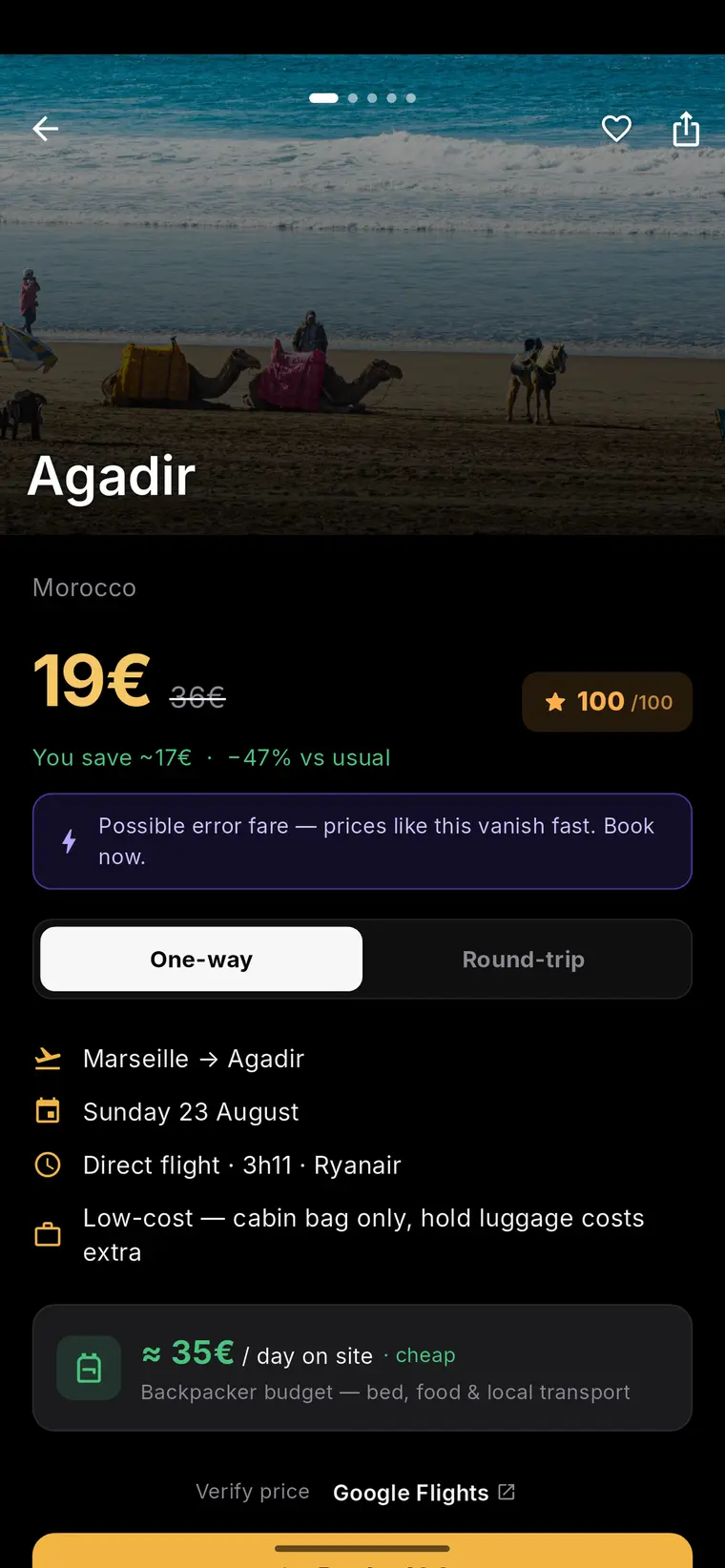
If the provider price matches and the whole trip fits the budget, that is a reasonable moment to book. If the price looks implausibly low, Flare's guide on mistake fares points out that a seller may later cancel a ticket it did not intend to sell, so Sam would hold off on non-refundable hotels or extras until the ticket is properly confirmed.
- Confirm the exact fare and availability directly with the booking provider.
- Compare the total cost of at least two date options.
- Check entry, passport, visa and health rules from official sources.
- Delay non-refundable add-ons if the fare might be an error.
- Read the fare conditions for changes and refunds before paying.
Live destination map
Fare data meets travel intelligence
Move from a current fare signal to a photographed destination page, then use Flare guides to evaluate the complete trip.



Frequently asked questions
Is there a best day of the week to book a flight?
No booking day can be relied on to guarantee a lower price. Fares and seat availability are volatile, and a price shown on a deal page can change between the moment the page was last refreshed and the moment you run your own search. The practical approach is to compare several travel dates, check the total trip cost, and confirm the live price with the booking provider before paying.
Should I book immediately when I see an unusually cheap flight?
First repeat the exact search with the airline or booking provider, because displayed fares can change or sell out. If the price looks like a possible mistake fare, the seller may cancel the ticket later, so it is sensible to wait for confirmation before buying non-refundable hotels or extras.
What should I check besides price before choosing travel dates?
Check entry, passport, visa and health requirements for your situation and destination using current official sources, as these can affect which dates are realistic. Also compare the whole trip cost, including baggage, transfers and any accommodation created by arrival times.
Sources and further reading
These resources provide the wider reference frame. Product statements on this page are limited to the public information provided by Flare.