

When to book airfare: why there is no single right moment
People asking when to book airfare usually want a date or a number of weeks to wait. The approved sources behind this article do not establish a fixed booking window. What they do show is that observed fares are snapshots: a price and its availability can change between one search and the next, so a calendar rule cannot tell you whether the fare in front of you is a good one.
A better question is whether the price in front of you is good for that particular route, and whether you can act on it safely. That shifts the decision from the calendar to the evidence: what the fare is compared with, how much it could change, and what else the trip will cost.
Judge the price against a reference, not the calendar
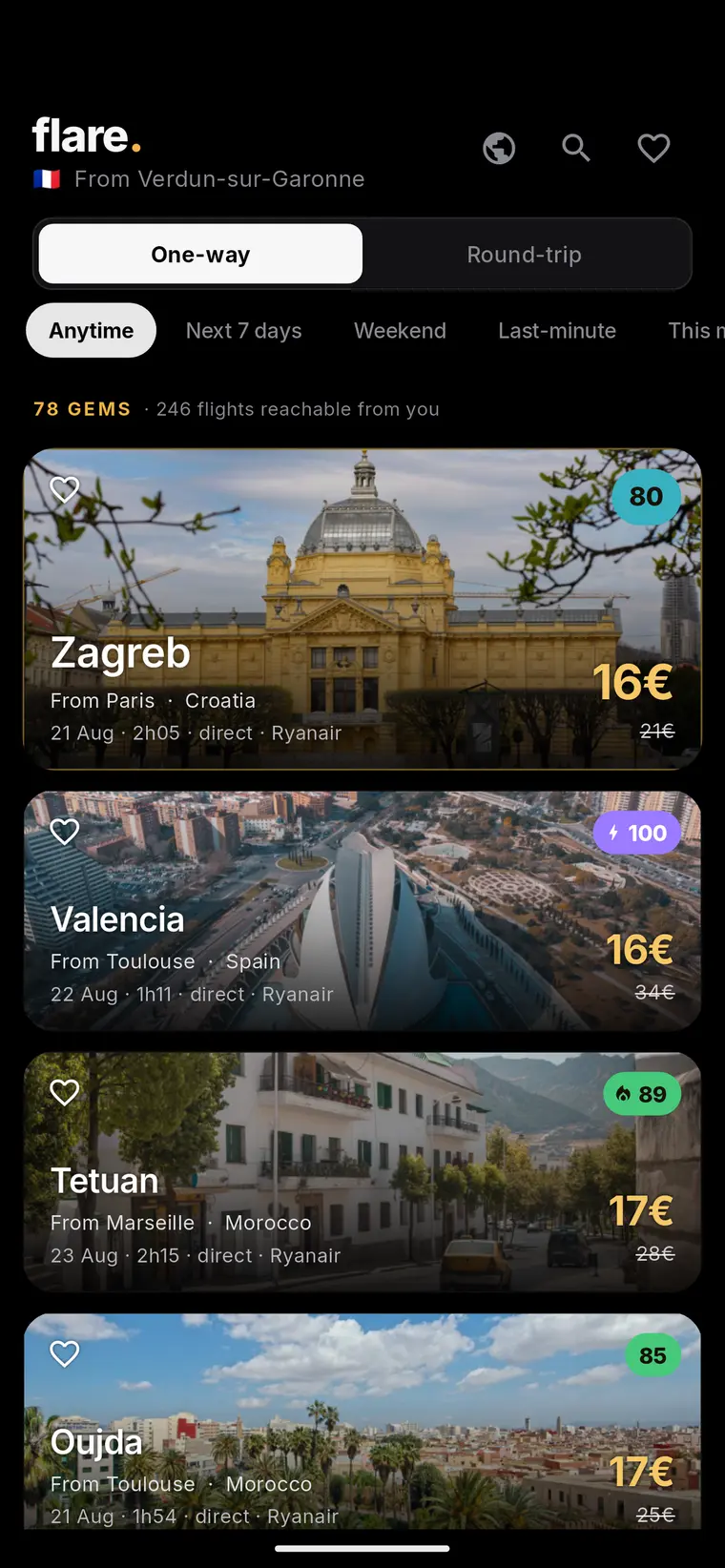
A fare only looks cheap or expensive relative to something. Flare, which builds flight-deal discovery pages from a traveller's departure city, explains in its methodology that it compares a current fare with a route reference. Where enough history exists, that reference is a median of observed baseline prices after trimming the outer 10% of observations, and a minimum history is required before the comparison can imply a large drop. For some long-haul routes with limited history, the reference can instead be a lower-confidence, distance-calibrated fallback rather than a route median. A deal only appears publicly when the measured drop reaches at least 30% and an internal priority score clears a threshold.
Flare's role is therefore specific: it surfaces fares from a departure city that sit at least 30% below its route reference, and that reference is an internal product measurement, not a market average. For your own decision, ask what a normal price on this route looks like, based on more than one search. A fare well below that typical level is a reason to look closely. A fare that merely matches last week's price is not a signal to rush. Flare's own guide also stresses that a low price does not reveal why it exists.
Flexible comparison widens the good moments
Timing pressure shrinks when you are flexible. If you can shift departure by a few days, accept a different return date or consider several destinations from your city, you are not waiting for one route to become cheap. You are watching many options and acting when one of them falls well below its usual level.
Flexibility has limits. Every stop, longer journey or awkward departure time has a cost in time and comfort. Flare's methodology notes that its prioritisation weighs stops, duration and trip shape alongside the size of the price gap, which is a reasonable habit to copy: a cheaper fare with two connections may not be the better trip.
Count the total trip, not just the headline fare
A ticket price is one line in a larger budget. Baggage, seat selection, transfers to a distant airport, an extra hotel night caused by an early departure and change fees can all erase a fare advantage. Comparing totals rather than headlines often changes which option is genuinely cheaper.
The terms matter as much as the amount. A non-refundable fare booked early locks in both the price and the risk if plans shift. A slightly higher fare with change flexibility can be the more sensible choice when dates are uncertain, especially for longer trips.
Before you pay: confirm the fare and the official requirements
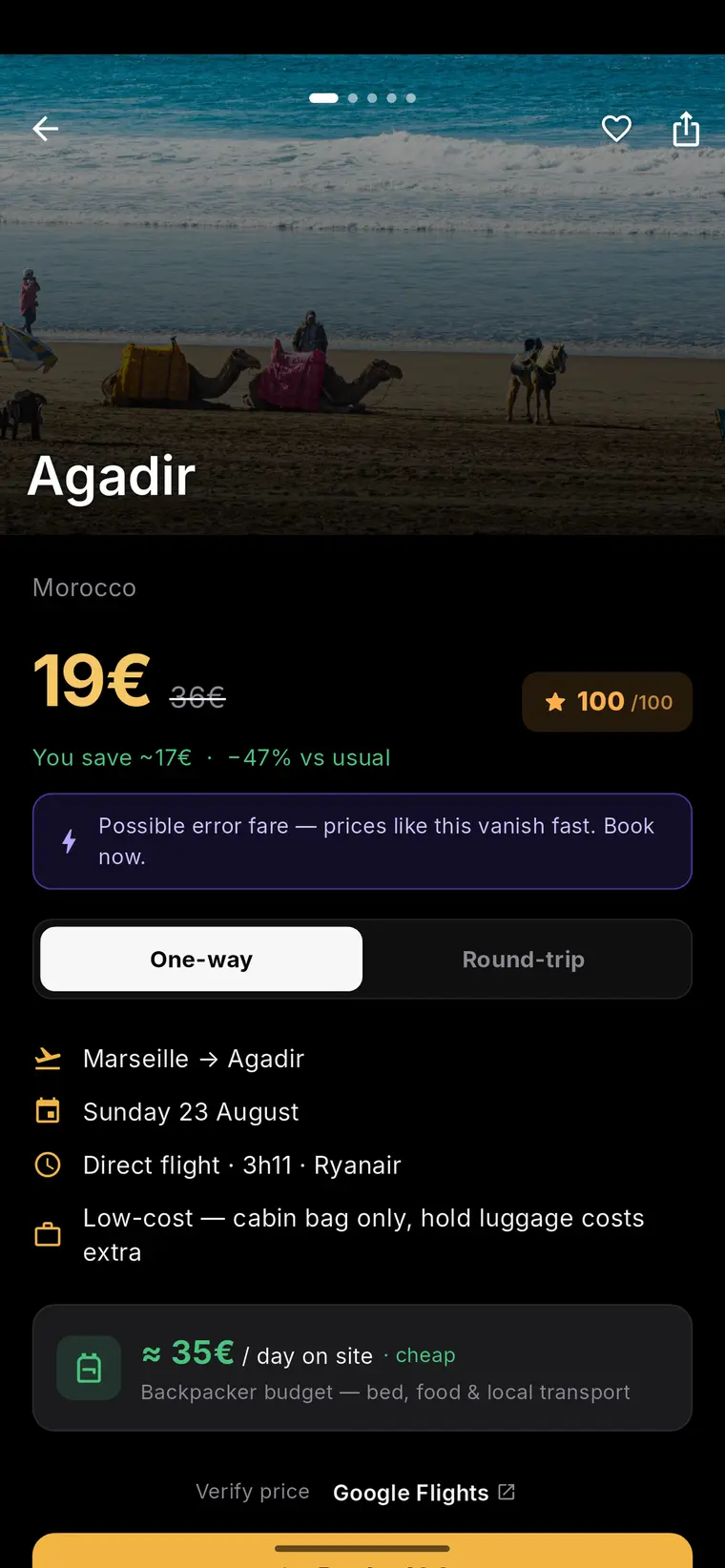
Any fare you see on a discovery or comparison page is a snapshot taken at a point in time. Flare describes its public pages as timestamped observations, not a booking engine or a guarantee that a seat is still available. Prices and availability can move between the moment a fare is spotted and the moment you reach checkout, so the booking provider's screen is the only one that counts.
Unusually low prices need extra care. Flare's guide distinguishes a measured price drop from a mistake fare, which concerns the seller's intent and may later be cancelled by the airline or agency. For anything that looks like an error, waiting for confirmation before committing to non-refundable hotels or tours is prudent.
- Repeat the exact search with the booking provider and confirm the final price.
- Check what the fare includes: baggage, seats, changes and refunds.
- Add ground transport and accommodation to compare full trip costs.
- Verify passport validity, visa, entry and health rules for your nationality using current official sources.
- Avoid non-refundable side bookings until the ticket is issued.
Worked example: deciding whether to book now (hypothetical)
Example only, with invented figures. A traveller with flexible dates sees a return fare to a European city for 180 in their currency. Over several searches, comparable dates usually showed around 300. That is a gap of about 40%, large enough to justify a closer look rather than an automatic purchase.
They rerun the search with the airline and the price holds. The fare excludes checked baggage, which adds 50, and the arrival airport is far from the centre, adding 30 in transfers. The real comparison is roughly 260 against a usual total that also needs adjusting for bags. The deal is still good but smaller than it looked. After confirming that their passport and entry requirements are in order, they book. Had the price disappeared on the airline's site, the right response would have been to treat the earlier figure as history, not as a missed promise.
Live destination map
Fare data meets travel intelligence
Move from a current fare signal to a photographed destination page, then use Flare guides to evaluate the complete trip.



Frequently asked questions
Is there a best number of weeks before departure to book a flight?
No fixed booking window is established by the sources behind this answer, and fares on a route can change at any time. A more dependable approach is to learn what a typical price looks like for your route through repeated searches and to book when a fare is clearly below that level and the total trip cost still makes sense.
Why did a flight price change between a deal page and the booking site?
Deal and comparison pages usually show a fare observed at a specific time. The amount or availability can change before you reach checkout, so a figure seen earlier is not a guarantee. Always treat the booking provider's final screen as the real price and repeat the exact search there before paying.
Should I book a suspected mistake fare straight away?
A very low price is not proof of a mistake fare, and genuine mistake fares can be cancelled by the airline or agency. If you book one, avoid committing to non-refundable hotels or activities until the ticket is confirmed and issued, and check entry and passport requirements before relying on the trip.
Sources and further reading
These resources provide the wider reference frame. Product statements on this page are limited to the public information provided by Flare.