
What a flight deal notifications website actually tells you
A flight deal notifications website watches fares across many routes and tells you when one looks unusually low. That helps flexible travellers, because few people can check dozens of routes every day. The alert itself is only a signal. It says a price was seen at a certain moment and compared well against a benchmark. It does not say the seat is still there, that the whole trip will be cheap, or that your documents allow you to travel on those dates.
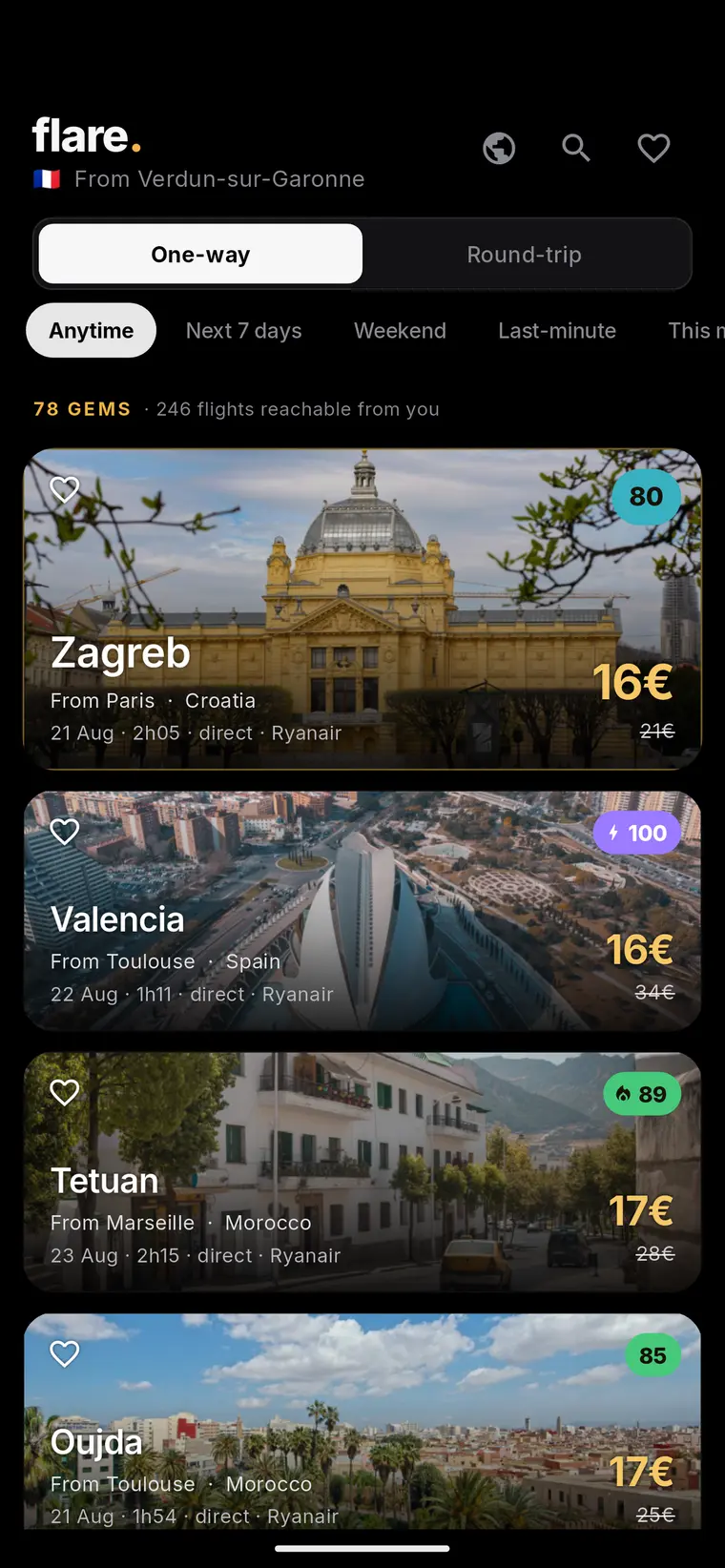
Flare shows how the roles can be split. Its website hosts the public deal pages, while alerts reach you through the Flare app on iPhone and Android. On the free plan, eligible rare-fare alerts arrive with a delay of about 40 minutes, which Flare Plus removes. In either case, an alert depends on your settings and on a qualifying fare being available, and the booking provider confirms the final fare. Before acting on any alert, ask three questions: low compared with what, seen when, and what does the trip cost once bags, connections and entry rules are added?
Low compared with what: reference prices and thresholds
Every deal alert depends on a comparison value. Some services compare against a recent average, others against a typical seasonal fare, and some never explain their benchmark. When the benchmark is hidden, a claimed saving is hard to interpret. An always-expensive route can show a large percentage drop that is still a high price, while a cheap route can show a small percentage that is genuinely rare.
Flare documents its approach on its methodology page. Where enough route history exists, the reference is a median of observed baseline prices, taken after trimming the outer tenth of observations. Some long-haul routes use a conservative fallback instead, and that fallback carries lower confidence. Either way, the reference is a product measurement, not a universal market average. A fare reaches Flare's public deal pages only if it sits at least 30% below that reference and clears a minimum internal Deal Score of 55. The score ranks candidates by weighing the size and confidence of the drop with itinerary factors such as stops and duration; it is not an external rating and does not make a fare verified.
The lesson applies to any notifications site: look for a published explanation of the benchmark and the threshold. If you cannot find one, treat the advertised saving as a marketing figure rather than a measurement.
Seen when: freshness limits behind every alert
An alert describes the past. Minutes after a fare was observed, the seller may have changed the price, sold the remaining seats in that fare class or adjusted taxes. Flare's methodology says its public pages show timestamped observations and are not a booking engine, an agency quote or a promise of availability.
Freshness is also bounded by schedule. Flare's public deal collection is scheduled to rebuild every three hours, and each page prints its own UTC snapshot time, so check that time before reading anything into a figure. Live rechecks happen for some candidates only, which means public rows do not share a uniform verification status. A row on the page and a row you can still book are not the same thing.
The useful response is to repeat the exact search with the airline or booking provider: same airports, dates, passenger count and cabin. If the result differs, the provider's price is the one that counts. A gap between the alert and the live result is normal, not proof the alert was wrong.
Mistake fare or ordinary price drop?
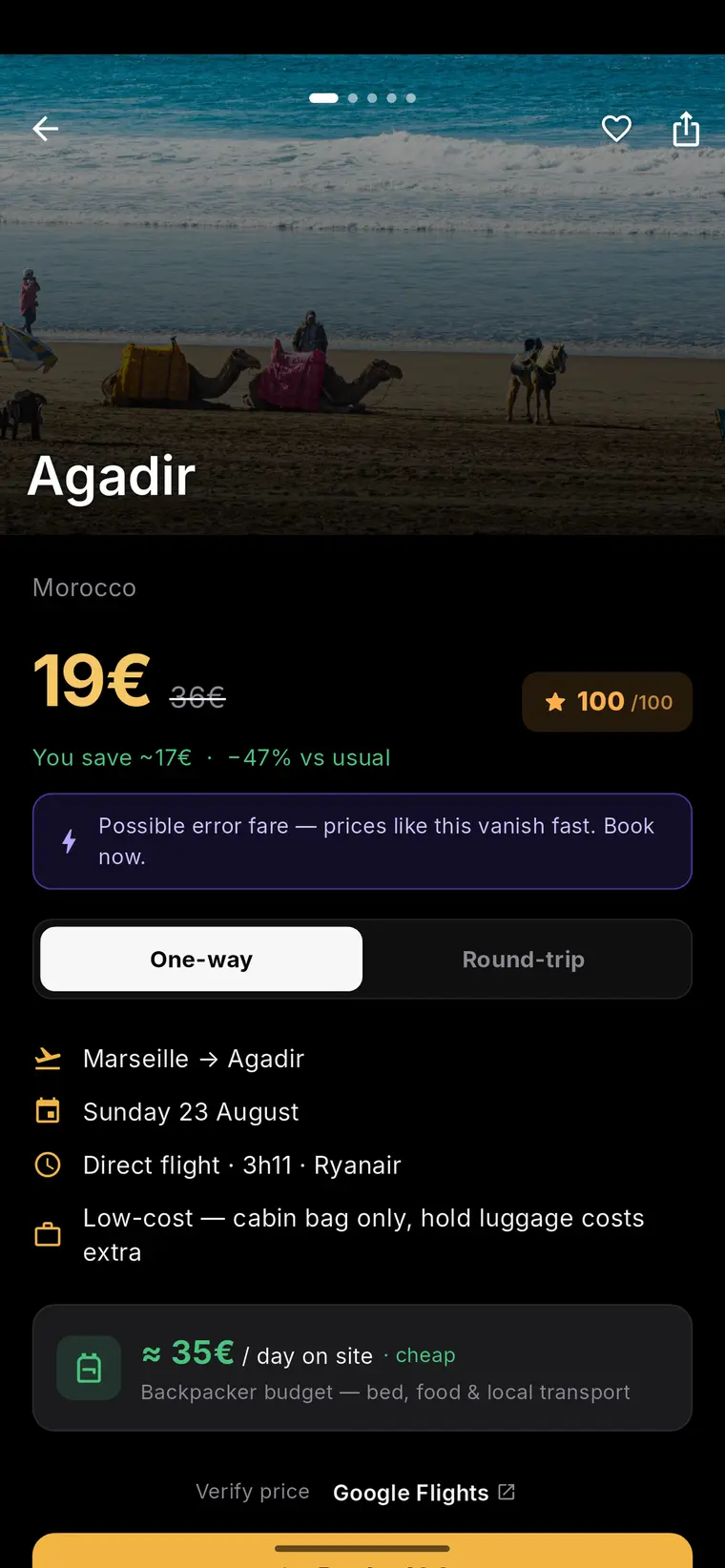
Many notification sites label very cheap fares as mistake fares. The term properly means a ticket sold far below the intended price because of a human or technical error, a currency problem or missing charges. That is a statement about the seller's intent, which a price feed cannot see. Flare's guide on the topic draws this line: its data can confirm an amount, route, time and difference from a reference, but not why the price exists unless the seller or a reliable source confirms it.
The risks differ. With an ordinary drop, the main risk is that the price has already moved. With a genuine pricing error, the main risk is that the ticket is cancelled or never issued after the seller corrects it. Airlines sometimes honour such fares, but never automatically. If an alert hints at an error, avoid committing to non-refundable hotels, tours or connecting flights until the ticket is issued.
A decision checklist before you book from an alert
The checklist below turns an alert into a decision. It is deliberately conservative, because a cancelled or unusable ticket usually costs more than the saving that made the alert attractive.
Example (hypothetical): an alert shows a return fare from your city to a long-haul destination well under the usual price. You repeat the search and find it still bookable, but only with a long overnight connection and no checked bag. Adding a bag, an airport hotel and transfers removes much of the saving, and the destination requires a visa you do not hold. Here the sensible choice is to note the route as a candidate, check visa timelines and set a personal maximum total budget rather than booking on the spot.
- Check the snapshot time, then repeat the exact search with the airline or booking provider and treat that price as final.
- Review stops, connection times, overnight layovers and arrival times.
- Add baggage, seat, payment and transfer costs for a total-trip figure.
- Confirm passport validity, visa, entry and health requirements with official sources for your nationality and destination.
- Read change and cancellation rules before paying.
- Delay non-refundable extras until the ticket is issued, especially if the fare might be an error.
Using flight deal notifications with flexibility
Deal alerts reward travellers who can adapt. If you are open on destination, dates or departure airport, an alert becomes a prompt to compare options rather than a single take-it-or-leave-it offer. Flare publishes discovery pages starting from a departure city, alongside destination pages, which gives a flexible reader several ideas to weigh side by side.
Whichever service you use, keep the boundaries in view. The alert identifies a possible opportunity; the booking provider confirms the price; official sources confirm whether you can travel. Keeping those three roles separate is the most reliable way to benefit from notifications without being caught by changes you could have checked.
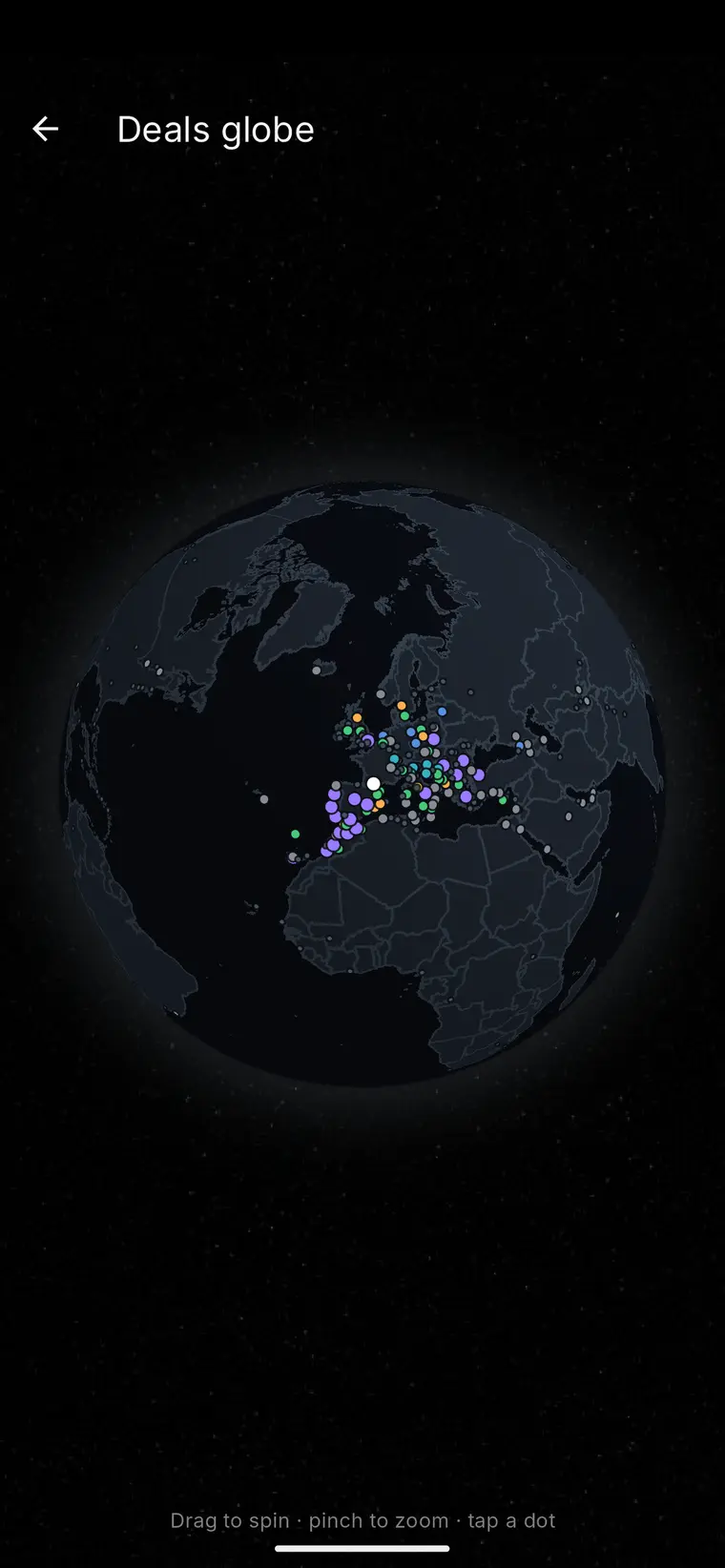
Live destination map
Fare data meets travel intelligence
Move from a current fare signal to a photographed destination page, then use Flare guides to evaluate the complete trip.



Frequently asked questions
Does a flight deal alert guarantee the price shown?
No. A flight deal alert reports a fare observed at a particular time. Prices and seat availability can change before you book, so the airline or booking provider's live price is the one that applies. Always repeat the exact search before paying.
How can I tell whether a cheap fare is a mistake fare?
A low price alone does not prove a mistake fare, because the term describes a price the seller did not intend to publish. Only the seller or a reliable source can confirm that. If a fare might be an error, wait until the ticket is issued before booking non-refundable hotels or other travel.
What should I check before booking a fare from a deal notification?
Note when the fare was observed, repeat the search with the booking provider, review stops and connection times, add baggage and transfer costs to estimate the total trip, read the change and refund rules, and verify passport, visa, entry and health requirements with official sources for your nationality and destination.
Sources and further reading
These resources provide the wider reference frame. Product statements on this page are limited to the public information provided by Flare.