

What a mistake fare hunter is really looking for
A mistake fare hunter is a traveller who watches for flight prices that look far too low for the route, the kind of fare that might come from a pricing or publishing error rather than a deliberate sale. The appeal is obvious: a long-haul trip at a fraction of its usual cost. The hard part is acting quickly without acting carelessly, because a price that looks like an error is, by definition, one nobody has fully confirmed.
It helps to treat the activity as a filtering exercise rather than a jackpot search. An unusually cheap fare is not automatically an error. Flare's guide on the topic points out that a dramatic discount can come from a promotion, a different trip shape, another airport, a currency effect or limited inventory. A sensible hunter first asks what kind of low price is on screen, and what still needs checking, before deciding whether it is worth pursuing.
Mistake fare or price drop: why the label matters
A suspected mistake fare is a price that may result from an error in how a fare was calculated or published. A price drop, in the sense Flare uses, is something narrower: an amount measured below a product reference price. That measurement tells you how far under the benchmark a fare sits. It does not diagnose why the price exists, and it says nothing about whether the seller meant to offer it.
The price alone therefore cannot tell you which situation you are in. The same headline discount could reflect an error or one of the ordinary causes listed above. That uncertainty is the reason to keep your other commitments flexible until the booking provider has actually issued the ticket, rather than assuming the label you guessed is correct.
Flare's methodology describes its threshold in measurable terms: a deal it surfaces sits at least 30% under the reference price its monitoring uses for that route. That tells you a fare is unusually low against a benchmark. It should not be read as proof of an error, nor as a sign that the fare is safer or riskier than any other.
The limits that apply before and after you act
The first limit is price stability. Any fare you spot, from any source, can change or disappear before checkout, and the figure only counts once the booking provider confirms it. The price you saw in a search is a lead, not a reservation.
The second limit is that paying does not settle the matter. As Flare's guide explains, an airline or agency may cancel a mistake fare or refuse to issue the ticket even after purchase. Honouring it is never automatic; it depends on the seller's conditions and on the consumer law that applies to your purchase. The guide also refers to a US Department of Transportation notice dated 8 May 2015, which it describes as temporary, so check its current status with official sources rather than relying on it. This is general information, not legal advice.
The third limit is personal eligibility. Entry, passport, visa and health rules vary with your nationality, your situation and the destination, so another traveller's experience is not a safe guide for yours. Check current official requirements before booking and again shortly before departure.
Total-trip context: the fare is only one line
A low airfare can be offset by everything around it. Baggage, seat selection, airport transfers, accommodation and the cost of reaching a distant departure airport can each erase part of the saving. Comparing the full trip cost against a normal itinerary gives a truer picture than comparing ticket prices alone.
Flexibility is the other half of total-trip thinking. Because a low price may depend on a particular trip shape or departure airport, a traveller who can compare several destinations, date windows and airports has more options to work with, whether or not any given deal turns out to be an error.
Decide in advance how much non-refundable spending you will commit while a booking is uncertain. Since a mistake fare can be cancelled even after payment, holding back on hotels and connecting transport keeps one cancelled ticket from becoming a chain of losses.
Mistake fare hunter checklist with a worked example
Example (hypothetical, for illustration only): a traveller in Lyon sees a return fare to a long-haul city well under what that route usually costs. Before booking, they confirm the price on the provider's own checkout page, check passport validity and entry rules on official government sites, and add up baggage, a train to the departure airport and two nights' accommodation. The overall picture still looks good, so they book. They do not treat the booking as proof the fare is valid: they wait until the ticket is issued and a confirmation with a ticket number arrives before paying for anything non-refundable, and they remember the seller's conditions still apply.
The same traveller might reach the opposite conclusion on a different deal. If the destination required a visa they could not obtain in time, or if transfers and baggage closed most of the gap, walking away would be the sound decision. The example is not about one route; it shows an order of checks that keeps a fast decision from becoming a careless one.
- Confirm the fare on the booking provider's own page, not only in a search result.
- Check passport validity, visa needs and health requirements for your situation on official sources.
- Add baggage, seats, transfers and accommodation to compare the whole trip.
- Ask whether your dates and airports are flexible enough to use the fare.
- Wait for ticket issuance and a ticket number before non-refundable spending.
- Read the seller's conditions, since a mistake fare may still be cancelled.
- Re-check official requirements close to departure.
Where Flare fits for a mistake fare hunter
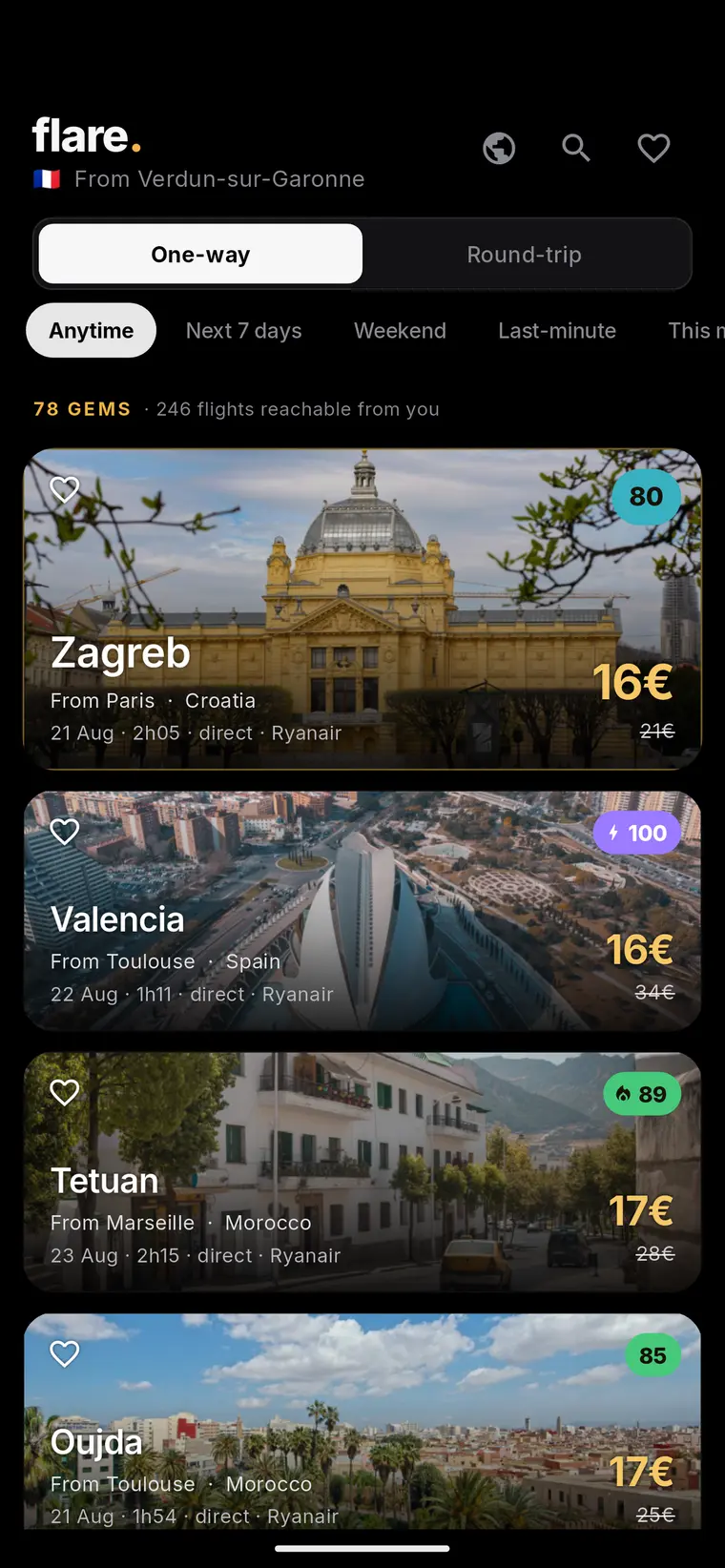
Flare publishes flight-deal discovery pages built around a traveller's departure city, which suits people who start from where they live and stay open about where to go. Its methodology explains the benchmark behind the deals it shows, so you can see why a fare was flagged as unusually low rather than taking the label on trust.
That context also sets the boundary of this advice. Flare helps you spot fares that are low against a route reference price; it does not establish whether a fare is an error, ensure a seller will honour it, or check your eligibility to travel. Those steps stay with you, the booking provider and official sources.
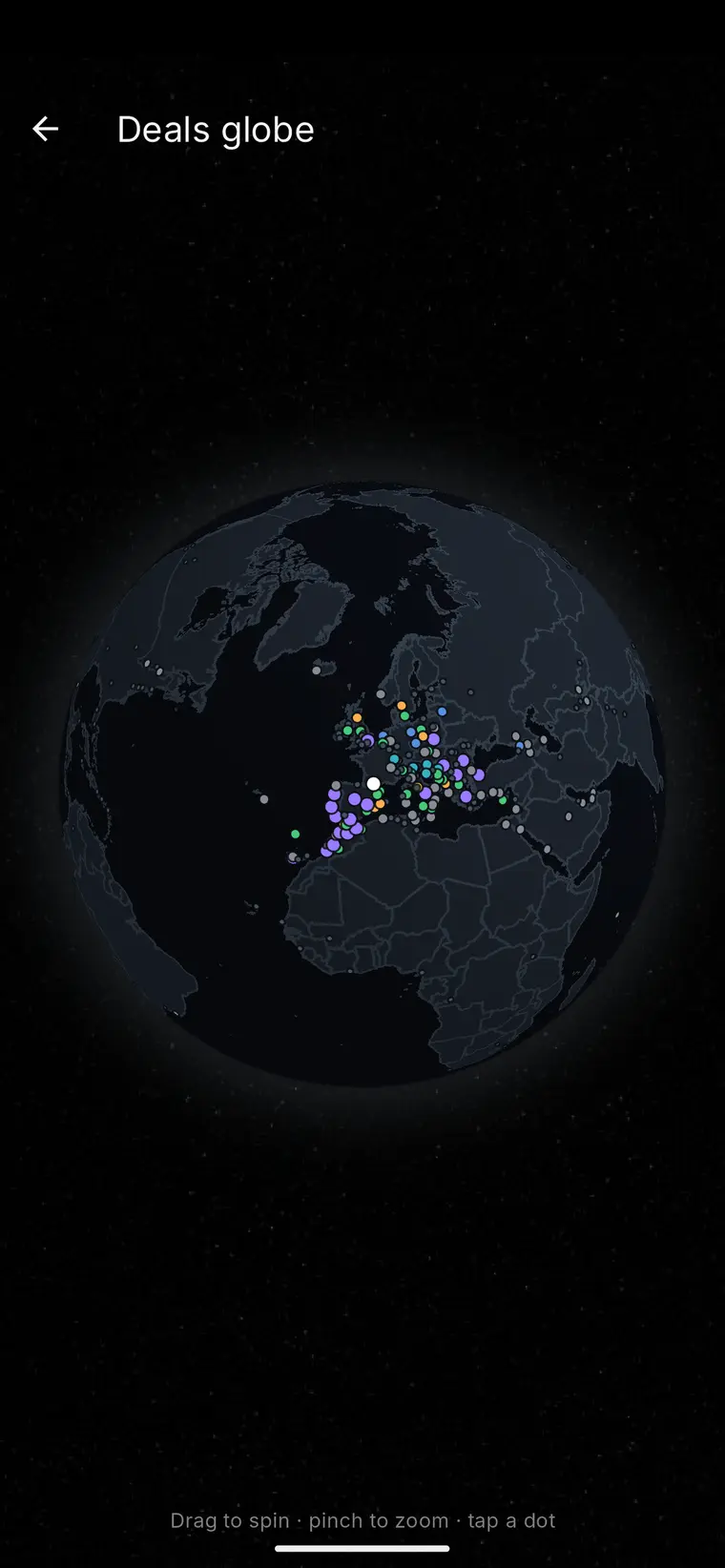
Live destination map
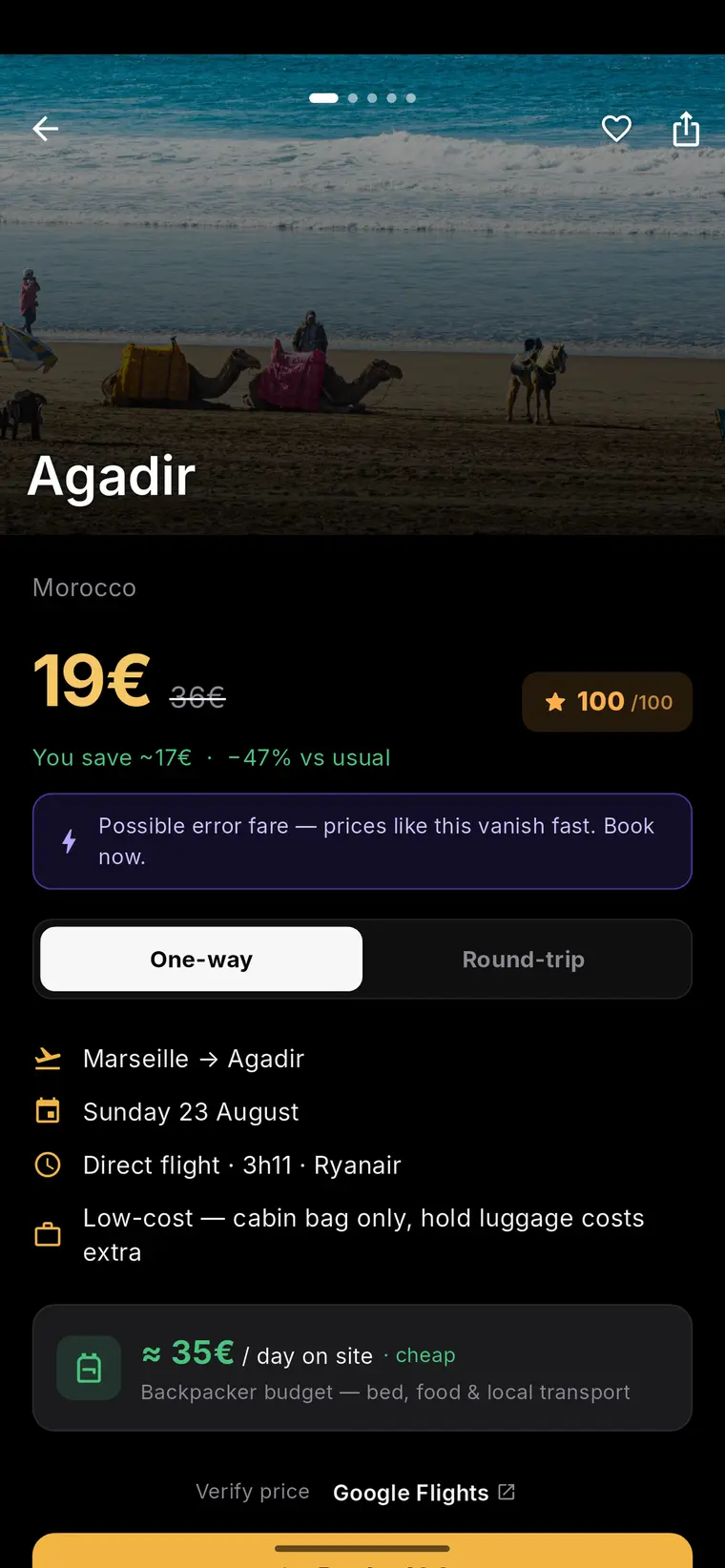
Fare data meets travel intelligence
Move from a current fare signal to a photographed destination page, then use Flare guides to evaluate the complete trip.



Frequently asked questions
What is a mistake fare hunter?
A mistake fare hunter is a traveller who looks for flight prices that appear far below normal for a route, possibly because of a pricing or publishing error. A careful hunter verifies the price with the booking provider, checks entry and visa rules for their own situation, compares the full trip cost, and avoids non-refundable spending until the ticket is issued.
How is a mistake fare different from a price drop?
A mistake fare is a price that may come from an error in how a fare was calculated or published. A price drop, as Flare uses the term, is simply an amount measured below a reference price; it does not explain why the price exists. The price alone rarely shows which one you are seeing, and an airline or agency may cancel a mistake fare or refuse to issue it even after purchase, depending on its conditions and applicable consumer law.
Does a deal shown at least 30% below a reference price mean it is a mistake fare?
No. A fare at least 30% under a route reference price, as described in Flare's methodology, is unusually low against that benchmark, but the measurement does not show whether the low price was intentional. It may reflect a promotion, a different trip shape, another airport, currency or limited inventory. Confirm it with the booking provider and check current official travel requirements.
Sources and further reading
These resources provide the wider reference frame. Product statements on this page are limited to the public information provided by Flare.