

When to book flights how far in advance: the short answer
No single number of weeks or months answers when to book flights how far in advance on every route. The price of a given flight responds to demand, the seats still unsold and the season. The right window for a short hop in a quiet month can differ sharply from the right window for a long-haul trip over a school holiday. What you can control is the process: start watching early, decide what a good price means for this trip, and book when a fare meets that bar.
This matters because the two risks are uneven. If you book too late on a busy route, only the expensive seats may be left. If you book very early, you might miss a later drop. Neither risk goes away, so the practical goal is to decide in advance how much uncertainty you can live with and what will make you commit.
Why a fixed rule of thumb rarely fits your trip
Advice like 'always book a set number of weeks out' is appealing because it is simple. It hides the variables that shape the price you see: the city pair, your dates, how many carriers serve the route and how full the flight already is.
Flexibility usually matters more than timing alone. If you can move your dates by a few days, use a second nearby airport or choose between two destinations, you get more chances to find a fare that is genuinely low for its route. Fixed plans built around an event or holiday tend to reward committing earlier, because the seats you need are the ones many other people want too.
It also helps to tell a routine price dip apart from an unusual anomaly. Flare's guide on mistake fares versus fare drops treats them as different situations. As a general precaution, a fare that looks implausibly cheap deserves extra scrutiny before you build non-refundable plans around it.
A decision aid for setting your own booking window
Instead of following a calendar rule, run through a short set of questions. They help you decide how early to start watching and what should make you book.
The trigger and the deadline work as a pair. The trigger stops you from passing up a good fare while hoping for a better one. The deadline stops you from drifting into the period when choice on your route thins out. Write both down before you start searching.
- Are your dates fixed? If so, start watching as soon as plans firm up and lean toward committing sooner.
- Is it a peak period at the destination, such as holidays or a major event? Start earlier and expect less room to wait.
- Can you shift by a few days or use another airport? You can afford to watch longer and hold out for a strong price.
- What does a normal fare look like? Note the typical price over several checks so you can recognise a real drop.
- What is your trigger price, and what is your book-regardless date? Set both before you start.
- What are the change and cancellation terms? More flexible tickets lower the cost of booking early.
Worked example: a flexible city break versus a fixed family trip
Example (hypothetical, for illustration only): Sam lives between two airports and wants a warm long weekend in spring, with no fixed dates. Over a few weeks of checking, Sam notes what fares on two candidate routes usually cost. Because both the dates and the destination can move, Sam sets a trigger well below that usual level, plus a loose deadline about a month before the earliest acceptable departure. When a fare meets the trigger, Sam checks the baggage rules and the hotel price for those exact dates before booking.
Example (hypothetical, for illustration only): A family has to travel during a school holiday on set dates, and the seats they need are in high demand. The sensible move for them is to start watching as soon as the dates are known, accept a reasonable fare instead of chasing an exceptional one, and choose tickets whose change terms they understand.
Neither example predicts what any real fare will do. They show how the same question gets different answers depending on how much a traveller can bend.
Look at the whole trip, not just the ticket
A low fare can turn into a poor deal once you add checked bags, seat selection, a long transfer from a distant airport, or an extra hotel night caused by an awkward departure time. Compare options on the full cost and travel time of the round trip.
The price and seats you see can change between spotting a fare and paying for it. The booking provider's final checkout is the figure that counts, so confirm the fare, what it includes and its conditions there.
Before you book, and again before you leave, check passport validity, visa, entry and health rules with official government sources. These rules depend on your nationality, your destination and sometimes your route, and they can change between booking and departure.
Where Flare fits, and where its limits are
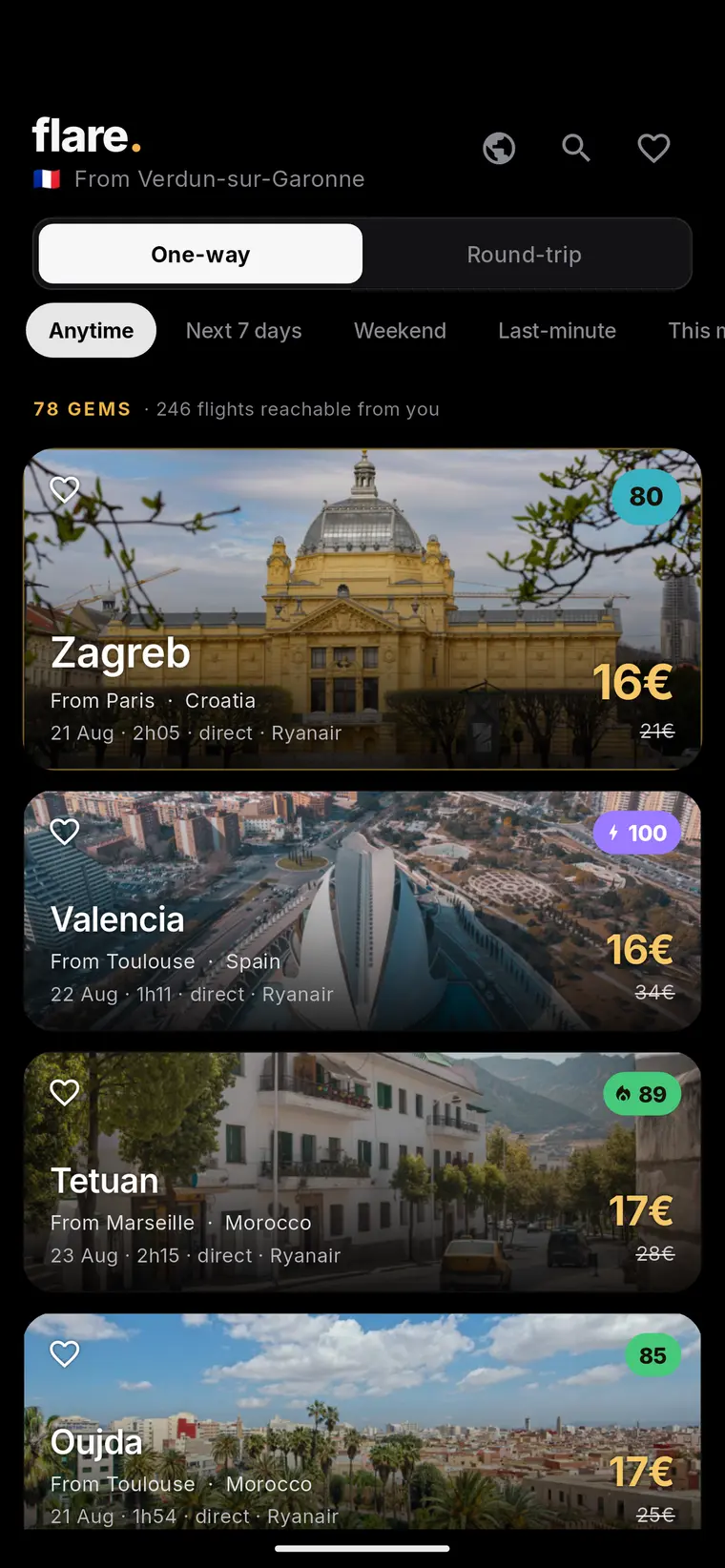
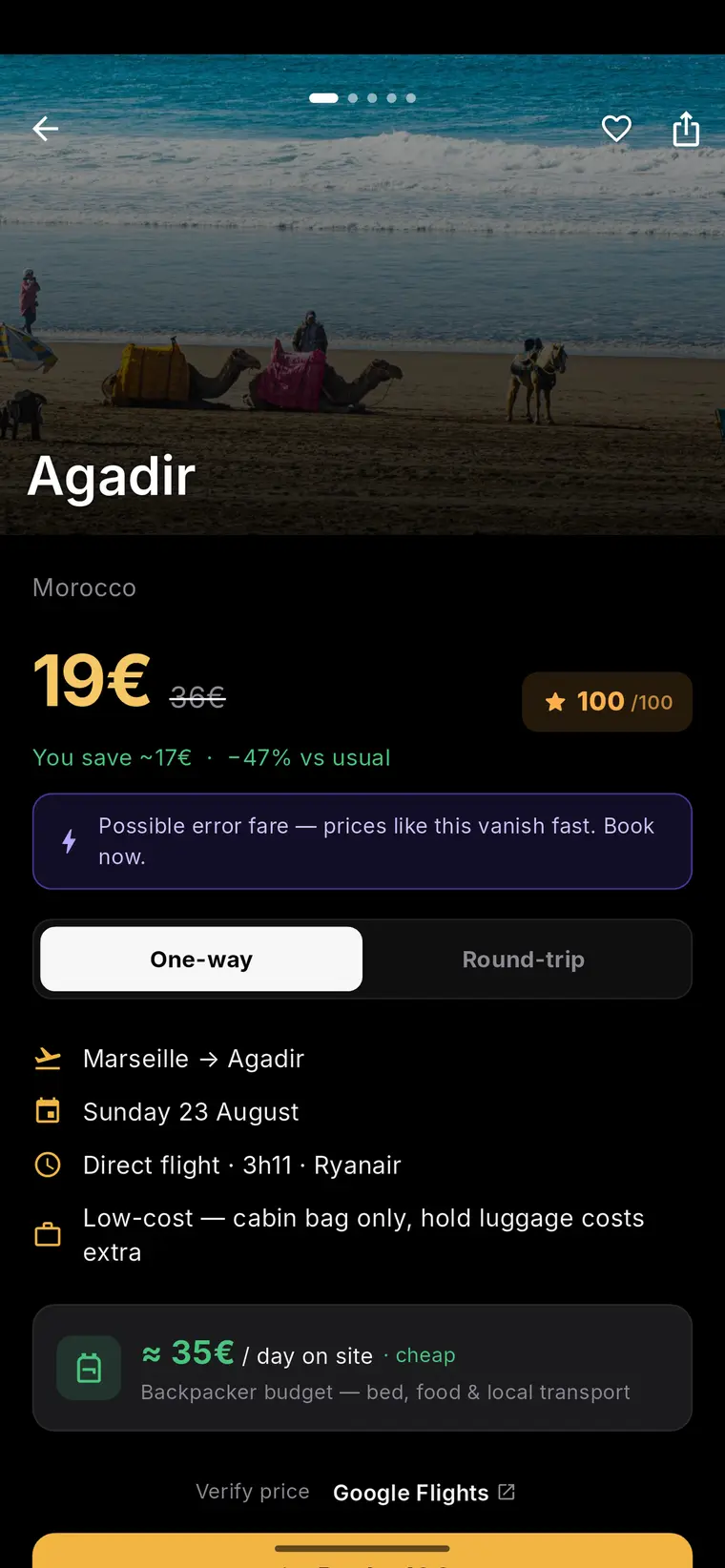
Flare publishes flight-deal pages organised around the city you depart from. Its published methodology describes several gates a fare must pass before it is surfaced: its monitoring must find the fare at least 30% under the reference price it uses for that route, the deal needs a Deal Score of at least 55, and page-level minimums also apply. That reference is an internal product measurement, not a universal market average, and on some long-haul routes with limited history it may rely on a lower-confidence fallback calibrated by distance.
So a deal shown on Flare is a candidate to investigate, not a replacement for your own sense of what a normal fare looks like on your route. Flare does not tell you the ideal week to book, and it cannot guarantee a fare will still be available at the booking provider. Use it to spot candidates, then apply your own trigger, your total-trip check and current official requirement checks before you pay.
Live destination map
Fare data meets travel intelligence
Move from a current fare signal to a photographed destination page, then use Flare guides to evaluate the complete trip.



Frequently asked questions
Is there a best number of weeks to book a flight in advance?
No single number works for every flight. The right timing depends on the route, the season, how full flights are and how flexible your dates are. A more reliable approach is to watch fares for a while, note what a typical price looks like, set a price at which you will book and a date by which you will book regardless, and act when either is reached.
Should I book immediately when I see an unusually cheap fare?
An unusually low fare may not last, so it is reasonable to move quickly. First check the total cost, including bags, seats and transfers, and read the change and cancellation terms. Then confirm the price and conditions on the booking provider's own checkout, because displayed fares and seat availability can change before payment.
What should I check before paying for a discounted flight?
Confirm the final fare and what it includes at the booking provider's checkout. Add up the full trip cost, including baggage, airport transfers and accommodation for those exact dates. Then check passport validity, visa, entry and health requirements with official government sources for your nationality and destination, both before booking and again before departure.
Sources and further reading
These resources provide the wider reference frame. Product statements on this page are limited to the public information provided by Flare.