


When to buy airfare to Europe: the short answer
Many people searching for when to buy airfare to Europe hope for one date on the calendar. A more useful answer is a set of conditions: buy when a fare is clearly low for your particular route, the dates and documents work for you, and the total trip still makes sense. A rule about a weekday or a fixed number of weeks ahead cannot account for your departure city, your flexibility or the moment you happen to search.
This guide from Flare, which publishes flight-deal pages organised around where a traveller departs from, focuses on judgement rather than timing myths. It covers how to recognise a fare worth acting on, what to check before paying, and where the limits of any price signal sit.
Judge a Europe fare against a reference, not the calendar
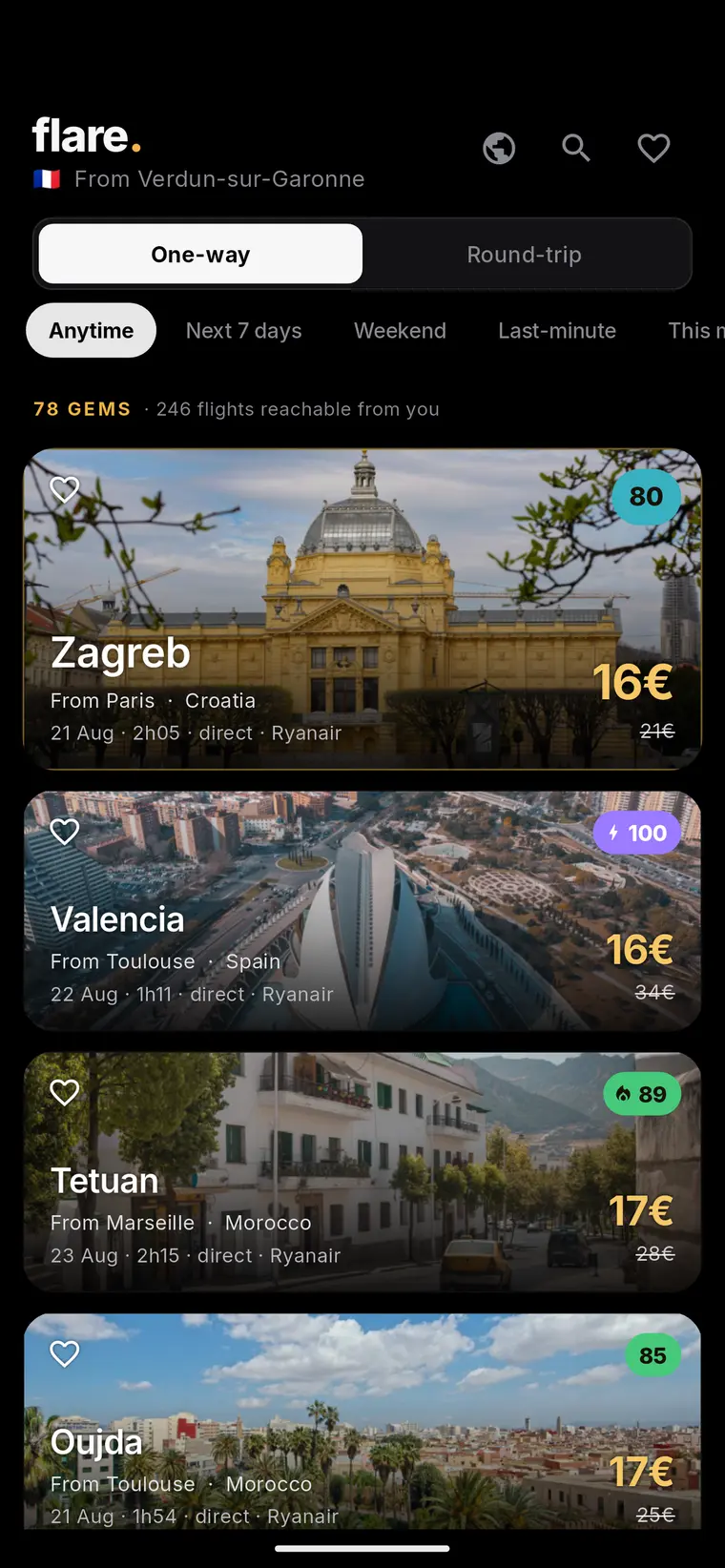
A price only looks cheap relative to something. Flare's methodology compares a current amount with a route reference that, where enough history exists, is a median of observed baseline prices after the outer 10% of observations are trimmed. A fare appears on its public pages only when it sits at least 30% under that reference and reaches an internal Deal Score of at least 55.
The transferable lesson is the method, not the exact threshold. Decide what normal looks like for your route before deciding whether today's number is good. If you watch the same route for a few weeks, you build your own rough reference and stop reacting to prices that merely feel low.
Keep the limits in view. Flare describes its Deal Score as a prioritisation signal rather than an outside rating, and its pages show timestamped observations, not quotes. A large measured drop tells you a difference existed when the price was seen. It does not explain why, and it does not promise the seat is still there.
Flexibility often matters more than timing
For flexible travellers, the stronger lever is usually what you are willing to change rather than when you click. Comparing several combinations side by side gives you more chances to meet a genuinely low price than waiting for one fixed itinerary to fall.
Flexibility has costs, though. A cheaper fare with an extra stop, a long connection or a late-night arrival can lose its advantage once you add a hotel night, a taxi or a lost day of holiday. Flare's own scoring weighs stops, duration and trip shape alongside the size of a drop, which is a reminder that the headline number is only part of the picture.
- List two to four European arrival cities you would genuinely accept.
- Test moving departure and return by a few days in each direction.
- Compare stops and total journey time, not just price.
- Consider whether a different trip shape, such as flying into one city and out of another, fits your plans.
Price the whole trip before you commit
A ticket is one line in a budget. Before treating a fare as a win, add what the booking provider charges for the bags you will actually carry, seat selection if it matters to you, transport from the arrival airport, and any accommodation that has to shift to match the new dates. Also check what happens if plans change, because a low fare is often the least flexible one.
Example (hypothetical, illustrative numbers only): a traveller has seen a return to Lisbon priced around 600 in their own tracking, so they treat 600 as their reference. Option A appears at 400, about 33% lower, but arrives at 23:30 and charges 50 each way for a checked bag; with a 60 late-night taxi, the real cost is 560, only about 7% under the reference. Option B costs 470 with a bag included and a daytime arrival, so its real cost stays 470, about 22% under. The smaller headline drop is the better trip.
The point of the example is the habit, not the figures: convert every candidate into a full trip cost and compare those totals against the same reference.
Very low fares, mistake fares and verification
An unusually low price is not automatically a mistake fare. That label describes a ticket the seller never intended to publish, for instance because of human error, a technical problem or a currency conversion issue, and such tickets may later be cancelled. Flare's guidance is explicit that it can confirm an observed amount, route, time and difference from its reference, but not the cause behind a price unless the seller or a reliable source confirms it.
The practical response differs by situation. For an ordinary measured drop, the main risk is that the price or availability has already moved, so repeat the exact search with the booking provider and treat that result as the real offer. If a fare looks like an error, avoid stacking non-refundable hotels or activities on top of it until the ticket is confirmed.
A pre-purchase checklist, including official requirements
Entry, passport, visa and health rules depend on who is travelling and where they are going, and they can change. Check current official sources for your nationality and every country on the itinerary, including transit points, before booking and again before departure. This guide cannot tell you what applies to you.
Used together, these steps answer the timing question better than any calendar rule: buy when a verified, fully costed fare beats your reference and your documents are in order.
- Is the fare clearly below a reference you trust for this route?
- Have you confirmed the price and seats directly with the booking provider?
- Does the full trip cost, with bags and transfers, still beat your reference?
- Do the arrival time, stops and duration work in practice?
- Have you checked current official entry, passport, visa and health requirements?
- Do you understand the change and refund conditions of this fare?
Live destination map
Fare data meets travel intelligence
Move from a current fare signal to a photographed destination page, then use Flare guides to evaluate the complete trip.



Frequently asked questions
Is there a best day of the week to buy airfare to Europe?
No single day reliably produces the lowest fare for every route and traveller. A more dependable approach is to learn what a normal price looks like for your specific route, compare flexible dates and airports, and act when a confirmed fare is clearly below that normal level after counting bags, transfers and other trip costs.
How can I tell if a cheap flight to Europe is a mistake fare?
A low price alone does not prove a mistake fare, which means a ticket the seller did not intend to publish. Only the airline, agency or a reliable source can confirm that. Repeat the exact search with the booking provider, and if the fare seems unintended, avoid non-refundable hotel or activity bookings until the ticket is confirmed.
Does a flight deal shown on a fare-tracking page guarantee the price?
No. Fare-tracking pages typically show observations made at a specific time, and both price and seat availability can change afterwards. Always confirm the current fare and conditions directly with the booking provider, and check official entry and health requirements before you pay.
Sources and further reading
These resources provide the wider reference frame. Product statements on this page are limited to the public information provided by Flare.